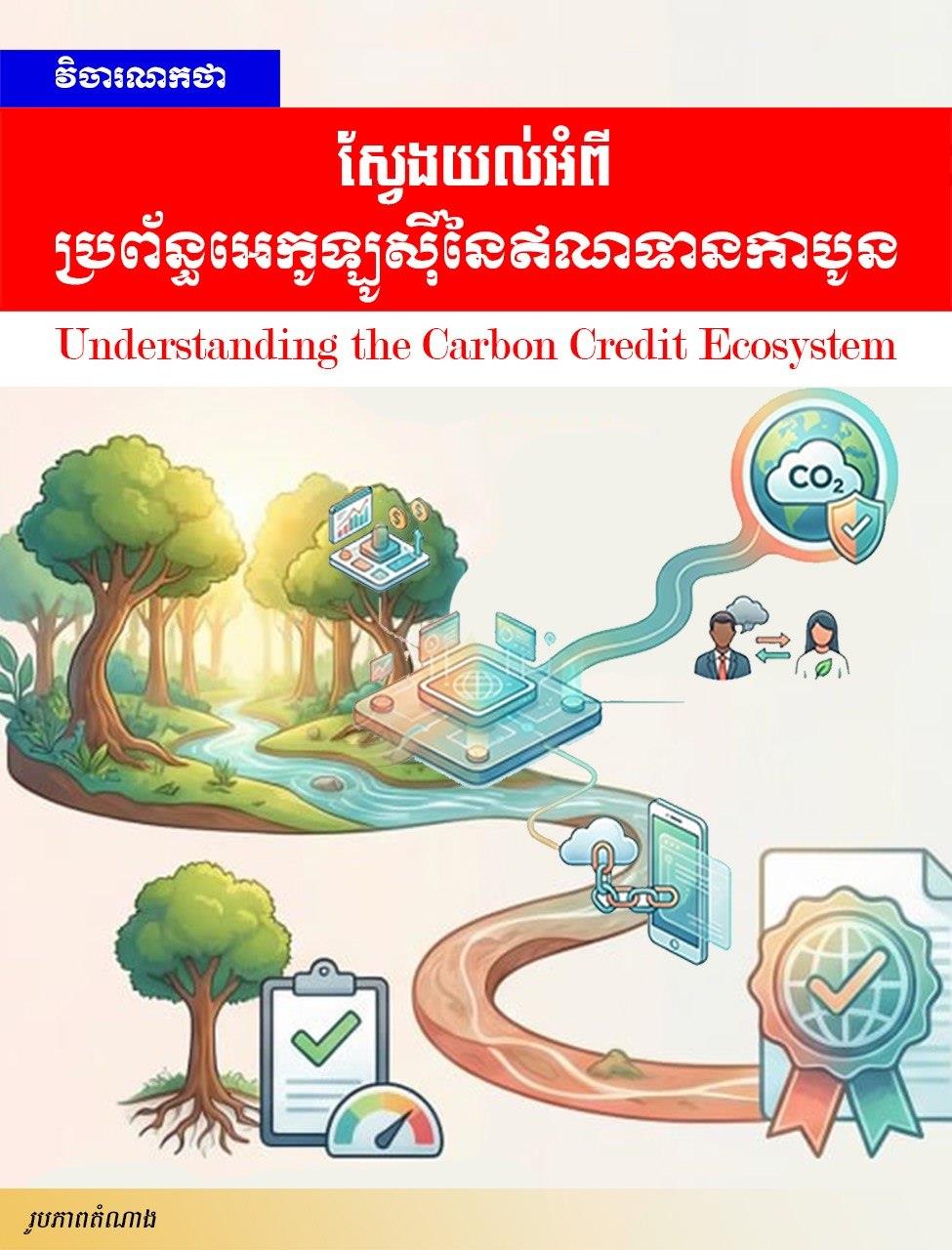
(Phnom Penh): Carbon credits are often discussed as a simple climate instrument, where one credit equals one tonne of carbon dioxide ($CO_2$) reduced or removed. However, behind this simple concept lies a complex ecosystem involving numerous participants working together to ensure accuracy, credibility, and market efficiency.
1- Carbon Offset Projects
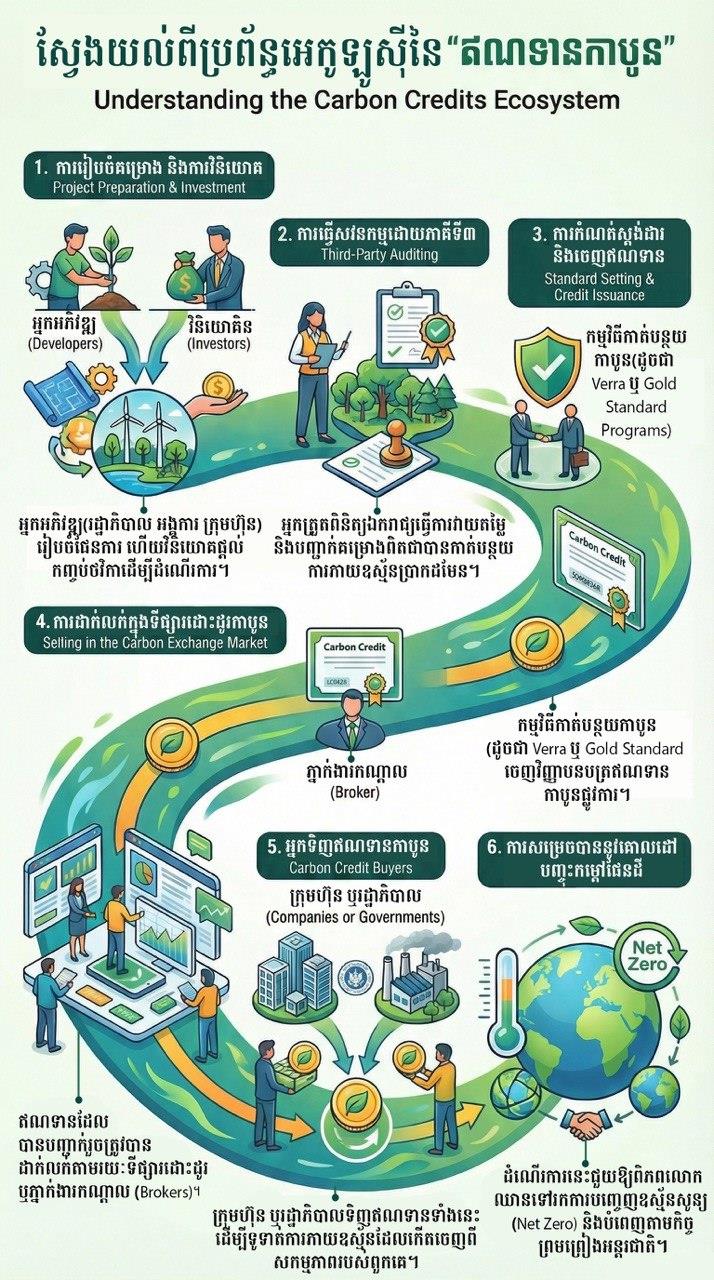
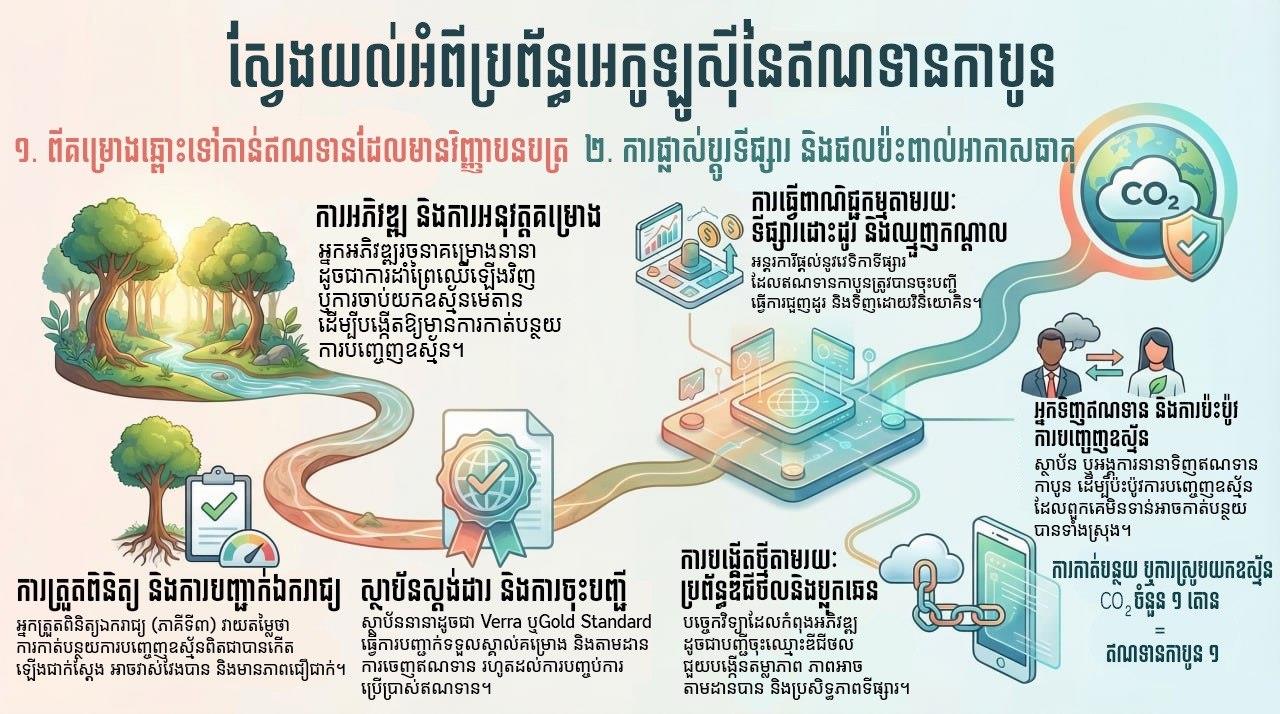
At the heart of this system are carbon offset projects, activities aimed at reducing or removing greenhouse gas emissions. These projects can take various forms, such as reforestation, methane capture, renewable energy development, and ecosystem restoration. Generally, they are developed and implemented by companies, NGOs, and government agencies.
2- Key Stakeholders and Credibility Assurance
Surrounding these projects are several key stakeholders who play vital roles in maintaining the system’s integrity:
-Project Developers: Tasked with designing and implementing projects to ensure that emission reductions actually occur.
-Third-party Auditors: Independent entities that inspect and verify that those reductions are real, measurable, and compliant with international standards.
-Standards and Registries: Organizations such as Verra and Gold Standard provide the formal framework for this system. They are responsible for certifying projects, issuing carbon credits, and maintaining detailed data on issuance, transfers, and retirements to prevent double-counting and ensure transparency.
3- Market Mechanisms and Investment
Simultaneously, carbon exchanges and brokers serve to create platforms that allow for the listing, trading, and purchasing of credits. They help connect supply and demand, ensuring the market operates smoothly. Meanwhile, investors play a crucial role by providing funding to projects to scale up and increase positive environmental impacts.
At the end of this chain are the carbon credit buyers, including corporations, governments, and various organizations. They purchase credits to offset emissions that cannot yet be eliminated within their operations or value chains, making carbon credits a supplementary tool in a broader decarbonization strategy.
Conclusion
Understanding this system is of great importance because the trust and efficiency of the carbon market depend on the integrity and clarity of every link in the chain. As voluntary carbon markets continue to evolve, we are seeing the emergence of new technologies such as digital registries and Blockchain, which enhance transparency, traceability, and efficiency. Carbon credits can help mobilize funds for climate mitigation and nature-based solutions.
However, their effectiveness ultimately depends on robust governance, reliable verification, and responsible use alongside actual emission reductions.
=FRESH NEWS