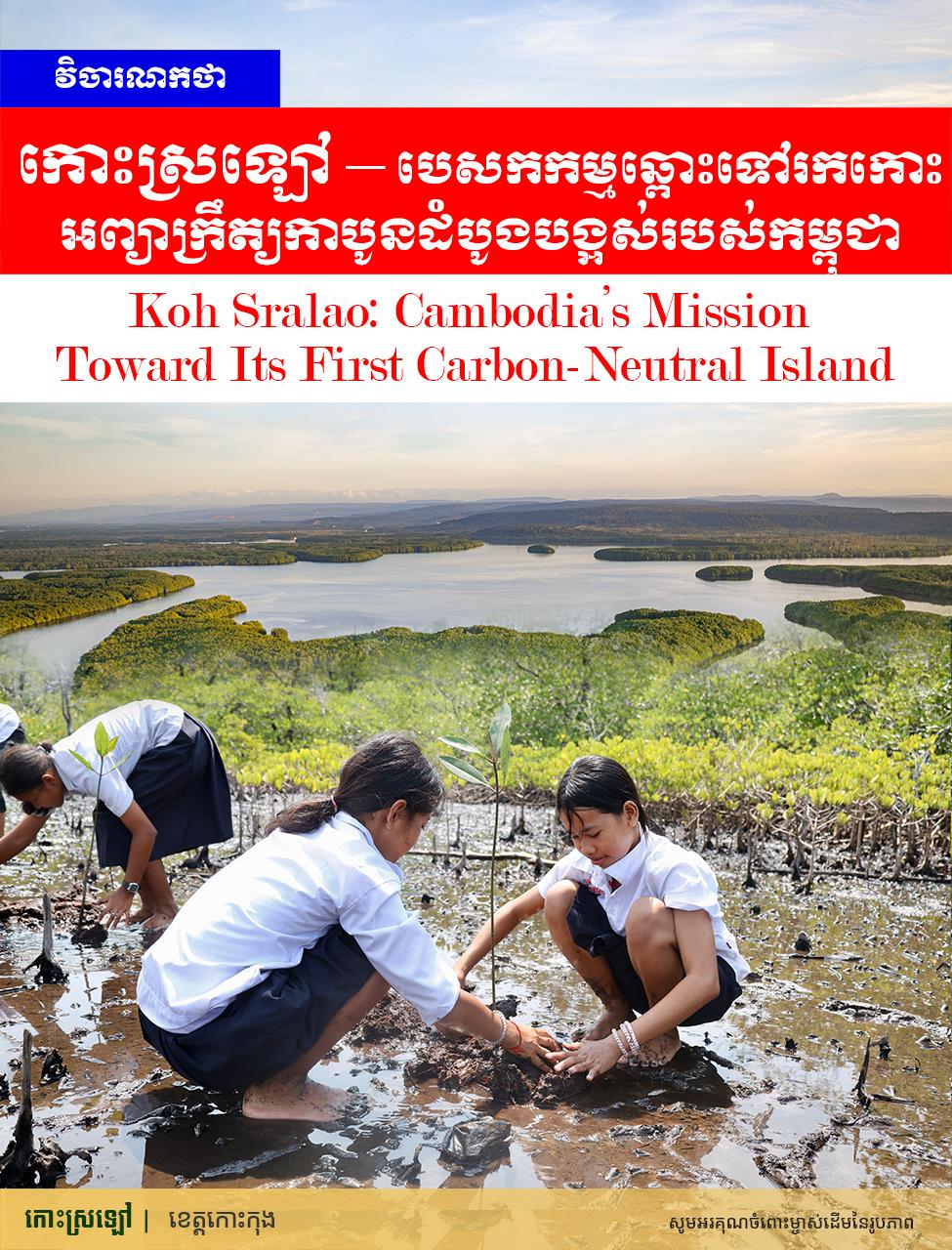
(Phnom Penh): The Ministry of Environment has announced a large-scale mangrove restoration campaign aimed at transforming "Koh Sralao" into the nation’s first model "Carbon-Neutral" (Carbon Neutrality) zone.
This strategic project is a vital component of Cambodia’s climate roadmap, leveraging natural resources to combat climate change.
1-The Power of "Blue Carbon"
The ecological restoration of mangroves on Koh Sralao is the heart of this initiative.
Mangroves are internationally recognized as "Blue Carbon" due to their superior capacity to sequester and store significantly more carbon dioxide than terrestrial forests, playing a critical role in greenhouse gas reduction.
2-Clean Energy Transition and Waste Management
Beyond nature conservation through reforestation and granting direct management ownership to the community, the project integrates low-carbon living transitions, including:
- Green Energy: Installing solar power systems for over 350 households on the island to replace fossil fuels and expand clean energy access.
- Community Sanitation: Supplying waste bins and collection means to reduce pollution and promote environmentally friendly behaviors.
3-Strategic Government Vision
Eang Sophalleth, Minister of Environment, stated that Koh Sralao is a "strategic starting point." He emphasized: "To achieve carbon neutrality nationwide, we must first build success from this model island before expanding the scope to other communities."
Simultaneously, the Minister extended special thanks to GIZ, UNDP, and GGGI, as well as all development partners and the private sector, for their support, which serves as a crucial driving force in the project's implementation.
Conclusion
The success of the Koh Sralao project will serve as a valuable lesson for Cambodia. Specifically, it paves the way for similar projects nationwide by linking coastal biodiversity conservation and local economic empowerment through green tourism with Cambodia’s national climate change mitigation commitments.
This is not only about protecting the planet but also about building a resilient future for Cambodia’s coastal communities.
=FRESH NEWS