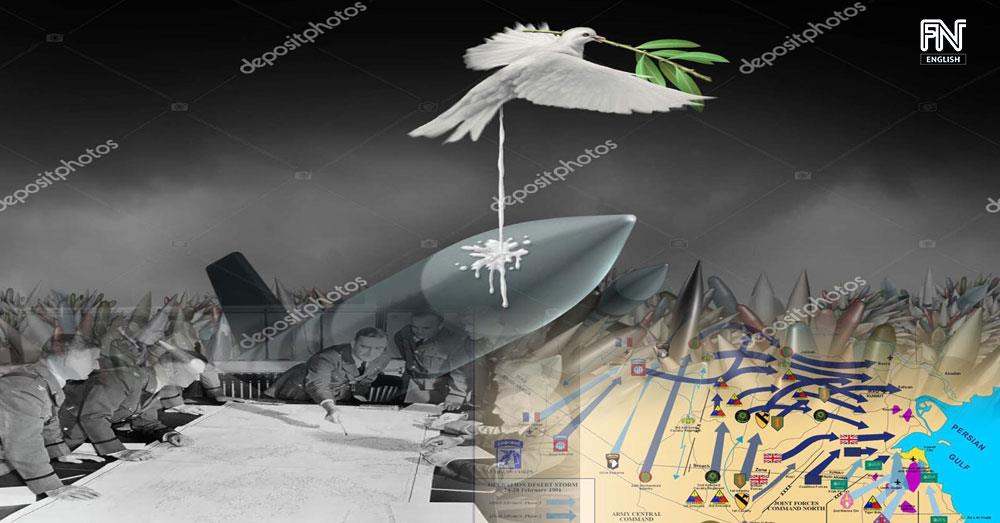
(Phnom Penh): The five-day suspension of strikes announced by U.S. President Donald Trump, at a time when there are signals of negotiations with Iran, has raised a major question on the international political stage: Is this a window for peace, or a pause to prepare for the next phase of war?
The current situation does not appear to be moving toward the end of the war. Instead, it looks more like a shift in strategy. While the United States claims that negotiations are taking place, Iran has denied that any talks are occurring, even as strikes continue in the Middle East. This shows that the conflict is unfolding simultaneously on multiple fronts — military, political, and informational.
A Pause Does Not Mean Peace
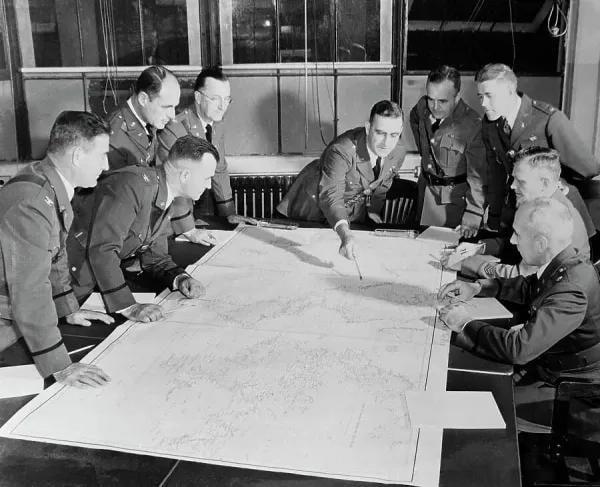
In military strategy, there is a term known as an “Operational Pause,” which refers to a temporary halt in operations in order to prepare for the next phase of operations. A temporary halt does not mean the war is over. Rather, it is a pause to reorganize forces, logistics, command structures, and target planning for future operations.
During a five-day pause, many activities may be taking place behind the scenes, such as repositioning naval forces, strengthening missile defense systems, gathering intelligence, identifying strike targets, and preparing cyber operations. In strategic terms, a pause does not necessarily mean peace — it may simply mean preparation for what comes next.
U.S. Forces Are Not Withdrawing — They Are Repositioning
President Donald Trump stated that there were “major points of agreement” with Iran after talks continued into Sunday evening with two senior U.S. envoys, adding that the United States would wait to see where the discussions lead.
However, in strategic analysis, military observers often look not only at political statements but at troop movements on land, sea, and air. Throughout history, political statements may change, but troop movements often reveal the real strategic intentions.
In the current situation, U.S. forces have not withdrawn from the Middle East. Instead, they have repositioned and increased their presence around the region. This suggests that the situation is not necessarily de-escalating, but rather that forces may be preparing for possible military options in the next phase.
In U.S. military strategy, forces are often moved and positioned first, and only later is the decision made whether to strike or not. This means that troop movements are often a more important strategic signal than political statements.
Iran Still Has Long-Range Strike Capability
Iran’s launch of ballistic missiles with ranges exceeding 2,000 kilometers targeting military bases in the Indian Ocean region has demonstrated that Iran still retains long-range retaliatory capabilities. This means that the conflict cannot be viewed as a limited regional skirmish; it has the potential to expand into a broader regional conflict affecting military bases, shipping routes, and energy infrastructure across multiple regions.
The Trump administration had previously faced criticism from some analysts and military officials for underestimating Iran’s retaliatory capabilities when strikes began in late February. The recent long-range missile strikes may be seen as a demonstration that Iran still possesses significant military capabilities that cannot be underestimated.
Iran’s strategy is not to fight in a conventional manner like major powers. Instead, it relies on asymmetric warfare — targeting weaknesses rather than confronting superior forces directly. This includes targeting military bases, oil tankers, energy infrastructure, and major shipping routes. In this sense, Iran may not need to win the war militarily; it only needs to make the war costly, prolonged, and difficult for its opponent.
At the same time, Iran has denied that any negotiations are taking place with Washington, dismissing President Trump’s claims as political strategy aimed at lowering energy prices and buying time for U.S. military planning. This accusation shows that the confrontation between the two sides is not only taking place on the military battlefield but also on the political and information battlefields.
The Biggest Danger Is the Lack of Trust
The most dangerous factor in this conflict may not be weapons or missiles, but the lack of trust between the parties. Iran no longer trusts U.S. statements, and the United States does not trust Iran’s commitments. When trust disappears, negotiations become difficult, and the risk of miscalculation increases significantly.
Iran also has a recent lesson that has deepened its mistrust of negotiations with the United States. At a time when negotiations were reportedly moving toward a possible agreement, an airstrike by the U.S.–Israel alliance on February 28 resulted in the death of Iran’s top leader. This event reinforced Tehran’s belief that negotiations and military strikes can occur simultaneously, further reducing trust in diplomatic processes.
Throughout history, many major wars did not begin because one side deliberately wanted war, but because of misunderstandings, misinterpretations, and miscalculations about the other side’s intentions. When one side believes the other is preparing to attack, while the other believes it is only preparing to defend, such misunderstandings can lead to preemptive strikes and unintended escalation.
Therefore, in this conflict, the most dangerous factor may not be missiles or bombs, but miscalculation and the lack of trust between the parties, which could turn a single wrong decision into a much larger regional confrontation.
This War Is Moving in Waves
From a strategic perspective, the Iran conflict does not appear to be moving in a straight line. Instead, it is unfolding in waves — repeating cycles that seem to have no clear end: strikes lead to rising tensions, rising tensions affect oil prices, oil prices create political pressure, political pressure leads to negotiation signals, negotiations lead to temporary pauses, and then strikes resume again.
This pattern suggests that the war is not progressing in a single direction but is moving in cycles between military action, economic pressure, and negotiation. Every time negotiations appear, it does not necessarily mean the war is ending. Often, it simply means the war is entering a new phase.
In other words, the Iran conflict is not moving in a straight line from war to peace. Instead, it is shifting back and forth between war and negotiation, like waves that rise and fall but never truly become calm.
In modern warfare, negotiations often do not mark the end of war — they are part of the war itself.
Conclusion
The five-day suspension of strikes may appear to be a step toward peace, but from a strategic perspective, it may also be a pause between phases of war. Previously, when Iran showed signs of moving toward negotiations, the United States launched strikes that resulted in the death of Iran’s top leader. Now, as the United States signals interest in negotiations, Iran is demonstrating its long-range strike capability. This suggests that both sides are using negotiation and military capability simultaneously.
The biggest question now is not whether the war will end soon, but whether this five-day pause is a window for peace — or a pause to prepare for the next phase of war.
In modern warfare, moments of silence are not always signs of peace; sometimes they are signs of a storm that is still gathering strength.