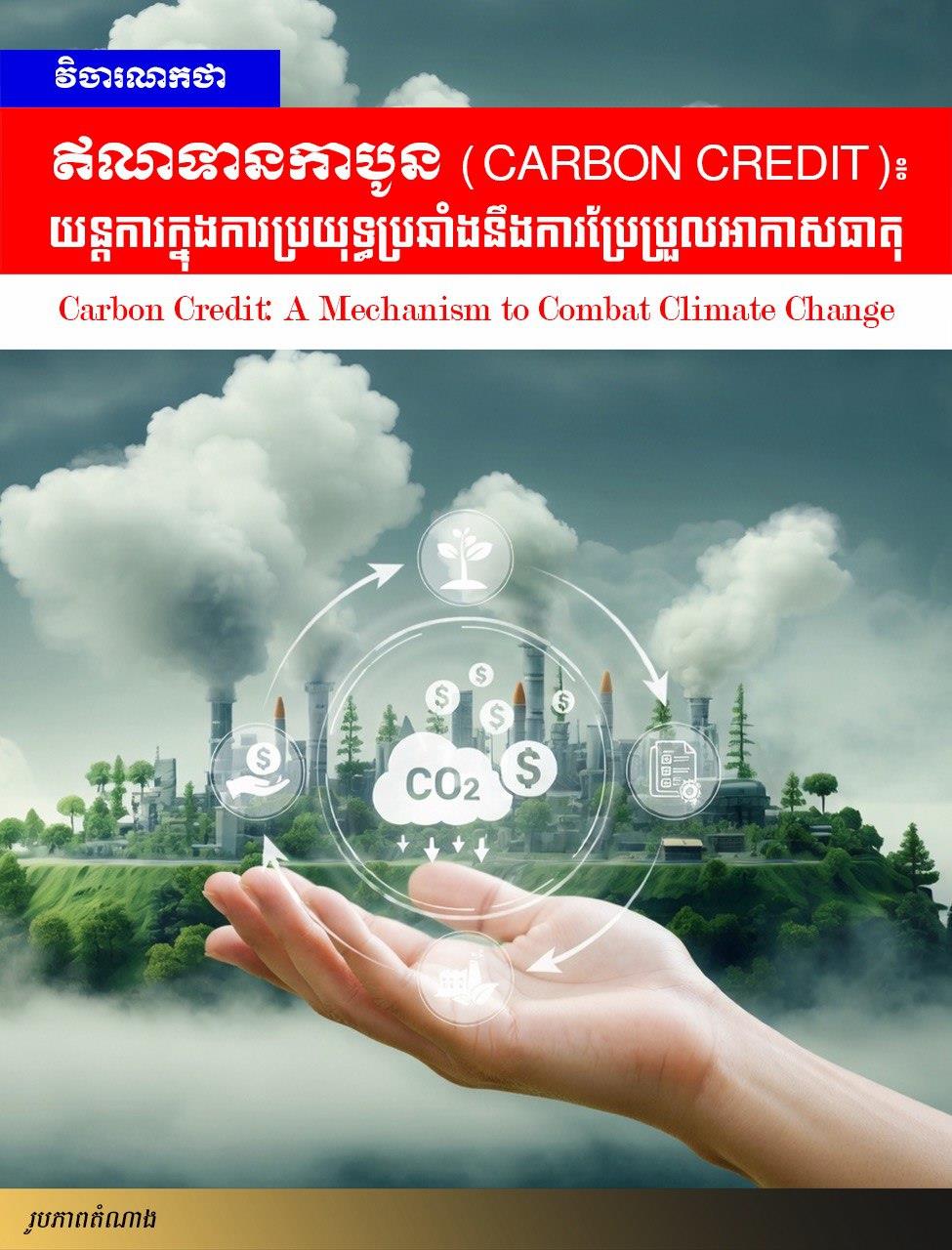
(Phnom Penh): While carbon credits encourage innovation and environmental responsibility, their effectiveness depends on proper regulation, transparency, and genuine emission reductions rather than just offsetting pollution.
1. What is a Carbon Credit?
A carbon credit is a carbon offset, calculated as a financial unit of measurement representing the sequestration of one ton of carbon dioxide equivalent (CO2e) greenhouse gases from the atmosphere. Carbon credits are financial instruments and units of measurement created to reduce global greenhouse gas emissions. Simply put, 1 unit of carbon credit represents the right to emit, or the result of sequestering, 1 ton of carbon dioxide (CO2) from the atmosphere. It is a mechanism that helps the world manage and reduce the impacts of climate change effectively.
2. Sources and Generation of Carbon Credits
Carbon credits are generated through various environmental projects that provide emission reduction solutions. These projects include reforestation, protection of natural forests, development of clean energy (such as wind and solar power), or the capture of methane gas from landfills. When these projects demonstrate verifiable results in reducing or sequestering carbon, they are converted into tradable carbon credits.
3. Carbon Offsetting Mechanism
Companies, organizations, or individuals can purchase carbon credits to "offset" the emissions resulting from their activities. For example, a company that cannot yet fully reduce emissions within its production chain can choose to purchase carbon credits from environmental protection projects elsewhere instead. Through this method, the total amount of greenhouse gases released into the atmosphere is reduced and balanced.
4. Incentivizing Sustainable Development
This mechanism is part of an incentive system for the private sector to increase environmental responsibility. Putting a price on carbon emissions creates an economic drive that compels companies to pivot toward investing in clean technology and implementing sustainable development principles to reduce costs associated with carbon credits.
Conclusion
In summary, carbon credits provide a practical and flexible solution to addressing the climate change crisis. They do not only support environmental protection projects but also drive green development and encourage all stakeholders to contribute to protecting the planet for future generations.
=FRESH NEWS