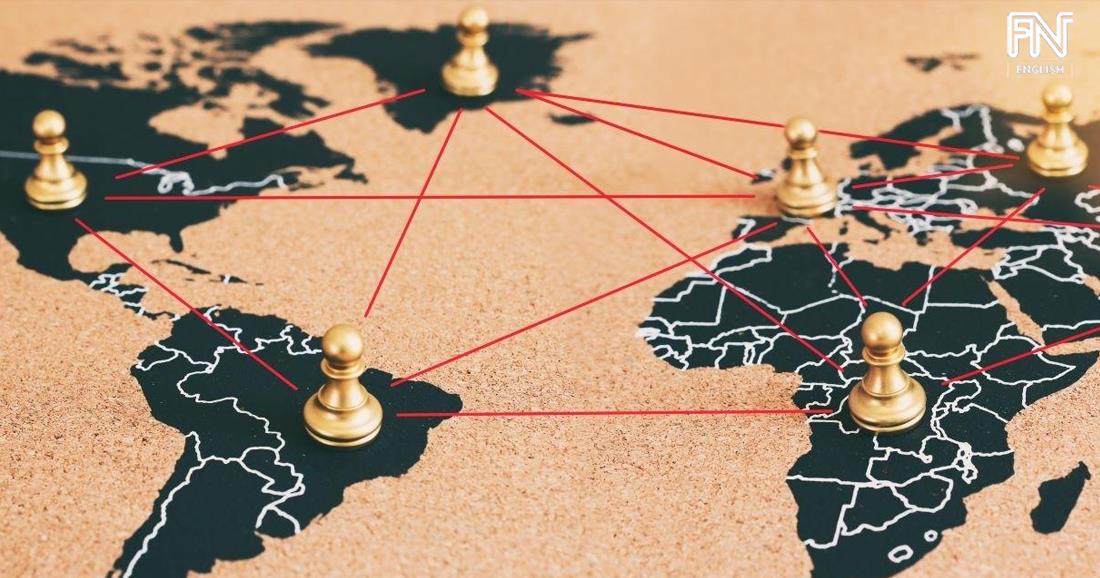
(Phnom Penh): The dramatic sequence of events in early 2026, from the capture of Venezuelan President Nicolás Maduro to the relentless US-Israeli military campaign against Iran, signals a radical shift in American grand strategy. Washington is no longer merely managing great power competition; it is executing a doctrine of "deep denial."
By preemptively dismantling the critical nodes of the anti-Western axis, the United States and its allies are attempting to achieve two monumental goals: neutralising threshold nuclear threats before they become a "second North Korea," and systematically starving China of the geopolitical and resource partnerships it needs to challenge US dominance.
However, as the dust settles in Caracas and Tehran, a complex geopolitical paradox is emerging. The strategy designed to stifle Beijing is inadvertently handing Moscow its greatest strategic windfall in years, creating a volatile new dynamic between Russia and China.
The strategic logic behind targeting Venezuela and Iran relies heavily on their roles as critical energy arteries for China. Before these operations, Beijing fueled its economy on highly lucrative, heavily discounted oil from these sanctioned nations. By removing these regimes or crippling their export capacities, Washington is attempting to cut off China’s secure, non-dollar-denominated energy lifelines.
China is not capitulating, but it is bleeding. To survive the squeeze, Beijing is leaning heavily on its independent "teapot" refineries and a sprawling "dark fleet" of off-the-books tankers to smuggle whatever Iranian oil can escape the contested Strait of Hormuz. More importantly, China is drawing down its massive, billion-barrel Strategic Petroleum Reserve (SPR).
But an SPR is a buffer, not a permanent solution. If the Middle East conflict drags on and China’s reserves deplete, Beijing will be forced to buy significantly more expensive oil on the global market, triggering domestic rationing, industrial slowdowns, and severe economic contraction.
Herein lies the profound unintended consequence of the US blueprint: by choking China’s access to the Middle East and Latin America, Washington has inadvertently empowered Vladimir Putin.
For years, Russia has been the junior partner in its "no limits" partnership with Beijing. The 2026 operations have flipped that script. With global oil benchmarks surging due to Middle East volatility, Moscow is reaping a massive financial windfall to fund its war economy. More strategically, a desperate China is now hyper-dependent on secure, overland Russian oil. Moscow suddenly holds immense leverage over its eastern neighbour.
Putin is already weaponising this chaos, threatening to preemptively cut off remaining gas supplies to Europe in an attempt to fracture Western unity and pivot those resources to a captive Asian market.
Yet, this windfall comes with a devastating catch for the Kremlin. The explicit goal of the US-Israeli campaign is the systematic destruction of Iran's military-industrial complex. As Iranian drone factories and missile silos are turned to rubble, Russia is losing the critical weapons pipeline it has relied upon to sustain its own war effort in Europe.
While Putin may appear to hold the upper hand in energy leverage, Beijing is far from defenceless. If Russia completely severs ties with the EU, its massive Western Siberian gas fields become stranded assets. The only viable outlet is pipeline export to China via the proposed Power of Siberia 2.
Beijing knows it is Russia’s only geographical and political option. China is ruthlessly exploiting this monopsony power, the advantage of being the only buyer. Chinese negotiators are stalling the project, pitting Russia against Central Asian gas suppliers, and demanding that Moscow foot the bill for the $15 billion pipeline while selling the gas at rock-bottom, subsidised domestic rates. Russia may get the optics of an Asian pivot, but China will get the energy for pennies on the dollar.
To manage this shifting landscape, the US has fundamentally altered its sanctions playbook. Having exhausted traditional primary sanctions against the Russian state, Washington is unleashing aggressive secondary sanctions.
The US Treasury is systematically targeting the shadow fleets, the maritime insurance companies, and the regional Chinese banks that facilitate illicit Russian and Iranian trade.
Washington is forcing foreign entities into a stark binary: stop enabling the anti-Western axis, or lose all access to the US financial system. The ultimate deterrent, cutting major Chinese state banks out of the SWIFT system entirely, remains on the table, a financial nuclear option held in reserve to prevent Beijing from fully backfilling Russia’s hollowed-out military.
The 2026 operations in Venezuela and Iran represent a high-stakes gamble. The Deep Denial doctrine effectively checks Iran's nuclear ambitions and corners the Chinese economy, but it relies on a perilous balancing act. It assumes the US can manage a protracted Middle East conflict, absorb the shockwaves to global energy markets, and successfully navigate the deepening, albeit friction-filled, alliance between a cash-flush Russia and an energy-starved China.
Whether this blueprint secures a renewed era of American primacy or triggers an unmanageable global blowback will depend on how long the current conflicts endure, and how ruthlessly Beijing and Moscow are willing to exploit each other in the face of American pressure.
Vichana Sar is a researcher of digital governance and geopolitical trends. The views and opinions expressed are his own.
=FRESH NEWS