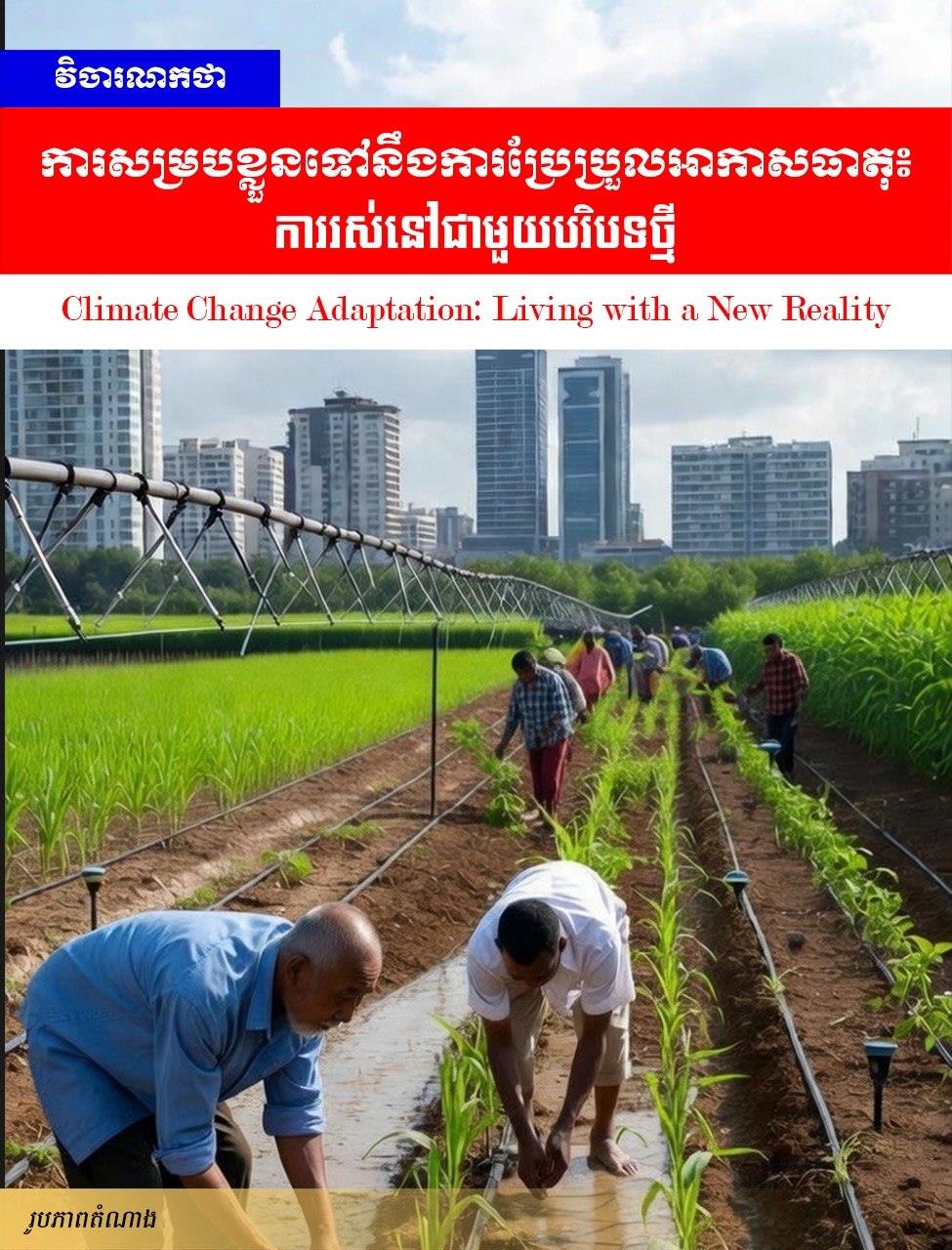
(Phnom Penh): Climate change is already impacting regions across the globe. Rising temperatures and natural disasters, such as intensifying storms, floods, droughts, and rising sea levels, are creating severe challenges for communities, economies, and ecosystems.
While reducing greenhouse gas emissions is critical, preparing ourselves to withstand the impacts currently unfolding is equally essential. This is known as Climate Change Adaptation.
1-Strengthening Resilience in Key Sectors
Climate change adaptation refers to actions that help people and nature adjust to the current and future impacts of a changing climate. The goal is to reduce risks and enhance community resilience.
For example:
-Agriculture: Farmers can adapt by planting drought-resistant crops, improving irrigation systems, or adjusting planting seasons to align with new weather patterns.
-Urban & Coastal Communities: Cities require robust infrastructure, improved drainage systems, and coastal protection, such as planting mangroves or building sea barriers, to mitigate the risks of floods and storms.
-Safety Systems: In many regions, early warning systems for extreme weather are vital for saving lives and protecting property.
2-Nature-Based Solutions
Nature-based solutions play a pivotal role in adaptation. Protecting forests, wetlands, and rivers helps manage water resources, reduces the risk of landslides, and supports biodiversity. These natural systems serve as a protective shield against extreme weather events.
Conclusion
Adaptation requires close collaboration between governments, scientists, businesses, and local communities. Education, strategic planning, and investment are essential to ensuring that society can withstand the impacts of climate change.
Ultimately, climate change adaptation is about protecting people, livelihoods, and ecosystems. By preparing today, we can reduce risks, build resilience, and create a safe and sustainable future for everyone.
=FRESH NEWS