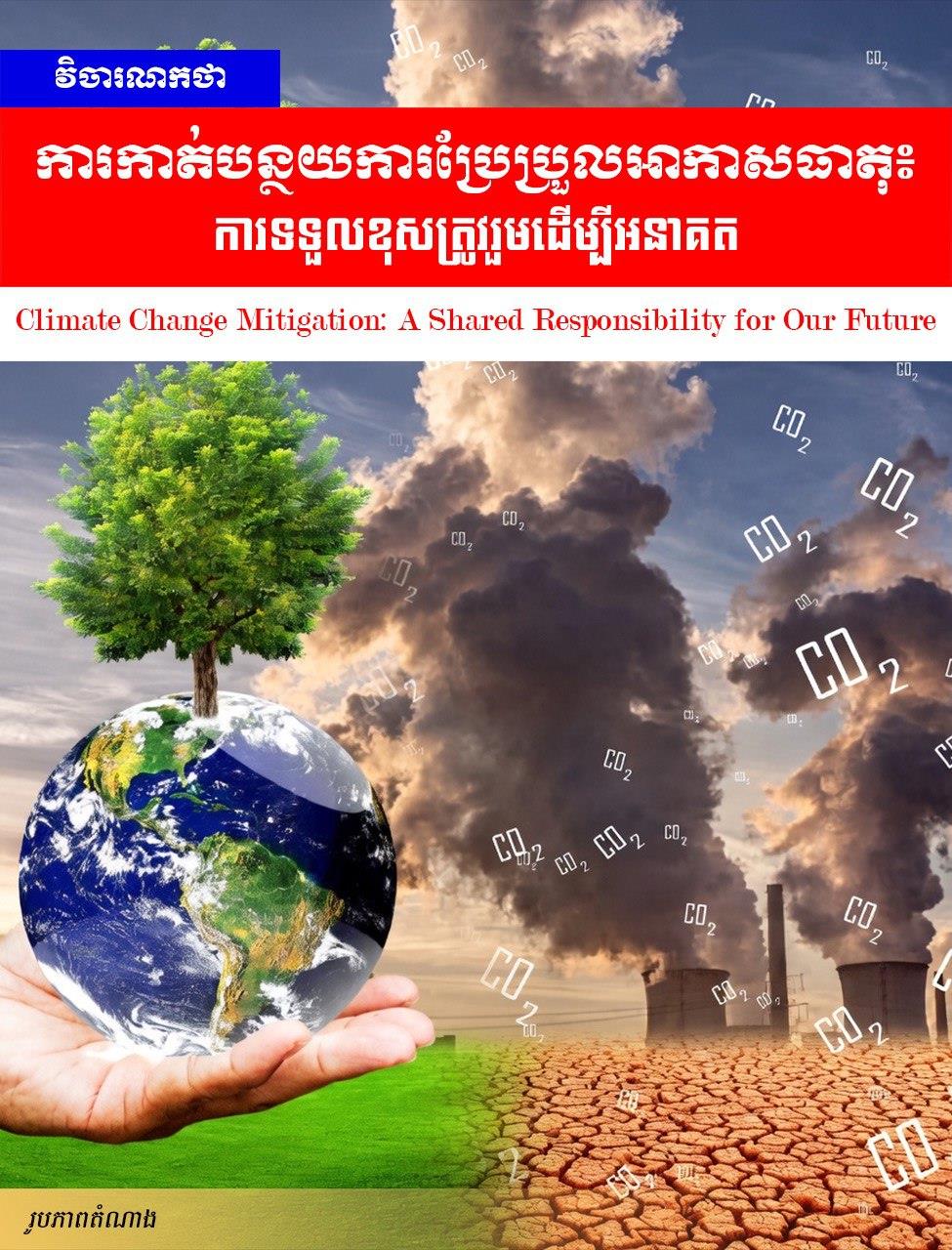
(Phnom Penh): Climate change is one of the greatest challenges facing humanity today. Rising global temperatures, intensifying storms, prolonged droughts, and rising sea levels are impacting communities across the globe. Climate change mitigation refers to taking action to reduce or prevent the emission of greenhouse gases, which are the primary drivers of global warming. By reducing these emissions, society can slow the pace of climate change and protect the planet for future generations.
Key Strategies for Change
To combat this crisis, we must focus on several essential pillars:
-Reducing Reliance on Fossil Fuels: A primary method for climate mitigation is decreasing our dependency on coal, oil, and gas. These fuels release vast amounts of carbon dioxide ($CO_2$) when used for electricity, transportation, and industry. Shifting to renewable energy, such as solar, wind, and hydropower, helps lower greenhouse gas emissions and provides sustainable clean energy.
-The Role of Forests and Natural Ecosystems: Forests and natural ecosystems play a vital role in climate mitigation. Trees absorb carbon dioxide from the atmosphere and store it in their trunks, roots, and soil. Protecting forests, restoring degraded land, and planting more trees help remove carbon from the air while preserving biodiversity and supporting local livelihoods.
-Individual Participation: Every individual can contribute. Simple actions, such as saving energy, using public transportation, reducing food waste, and choosing eco-friendly products, can have a significant impact if adopted widely. Governments, businesses, and communities must work together to implement policies and technologies that promote low-carbon development.
Conclusion
Climate change mitigation is about more than just protecting the environment; it is about safeguarding human health, economic stability, and the well-being of all humanity. By starting today, we can build a resilient and sustainable world for everyone.
=FRESH NEWS