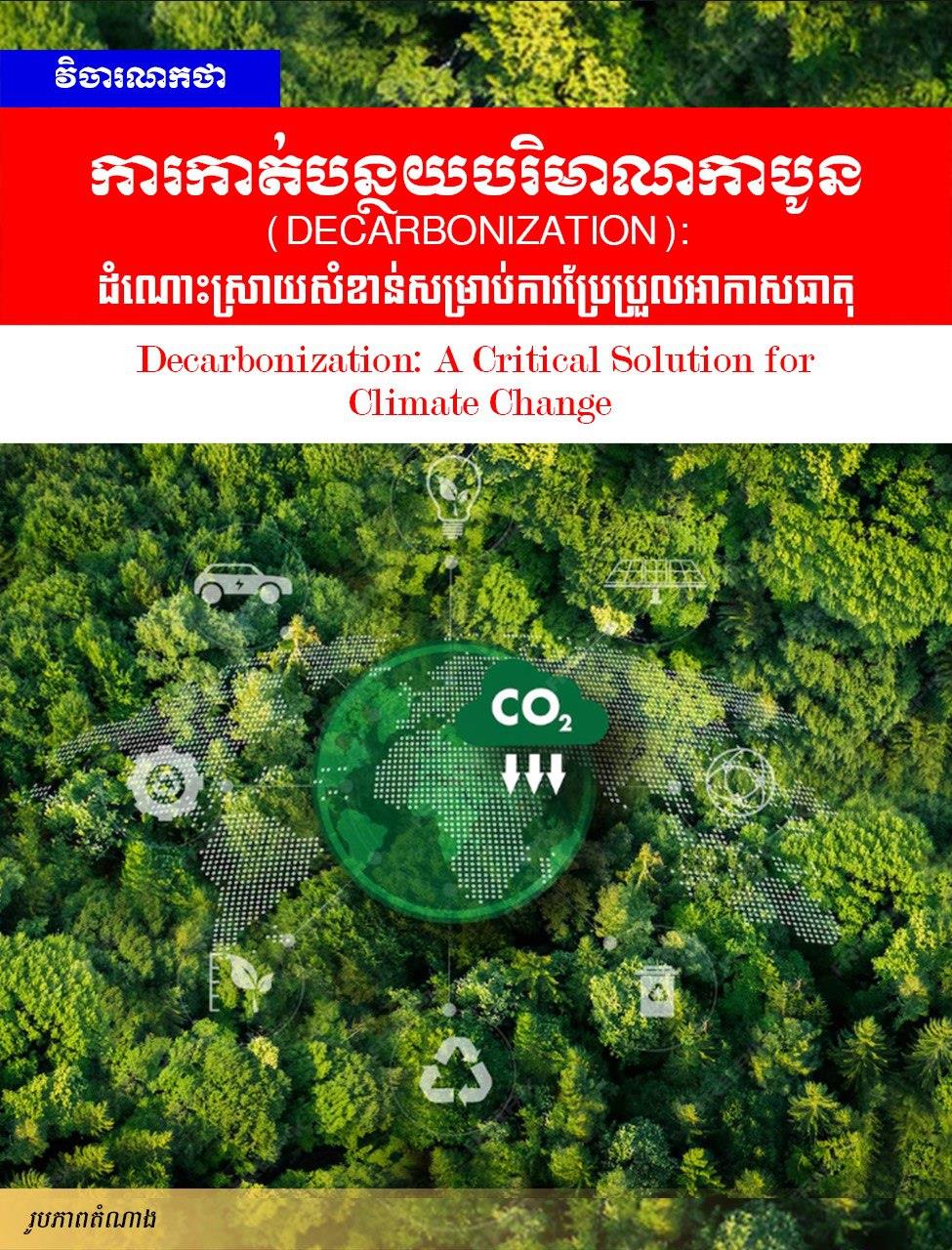
(Phnom Penh): Decarbonization is the process of reducing or eliminating carbon dioxide ($CO_2$) emissions resulting from human activities, particularly those related to energy production, transportation, and industrial processes. It is a vital strategy for addressing climate change and limiting global temperature rise. By reducing reliance on fossil fuels, such as coal, oil, and natural gas, society can significantly decrease the volume of greenhouse gases released into the atmosphere.
Decarbonization Strategies
Achieving decarbonization requires a multi-faceted approach:
-Transition to Renewable Energy: A primary method of decarbonization is shifting to renewable energy sources. Solar, wind, and hydroelectric power, along with other renewable technologies, generate energy without emitting large amounts of $CO_2$. Increasing the use of these clean energy sources helps reduce carbon emissions from electricity generation.
-Improving Energy Efficiency: Another essential aspect of decarbonization is enhancing energy efficiency. Using energy more efficiently in buildings, industries, and transportation reduces the amount of fuel needed to perform the same tasks. For example, electric vehicles (EVs), energy-saving appliances, and modern industrial technologies can significantly lower carbon emissions.
-Protection and Restoration of Natural Ecosystems: Decarbonization also includes protecting and restoring natural ecosystems such as forests, wetlands, and oceans. These ecosystems act as "carbon sinks," capable of absorbing and storing carbon dioxide from the atmosphere.
Conclusion
In summary, decarbonization is essential for creating a sustainable and low-carbon future. Through the adoption of renewable energy, improvements in energy efficiency, and environmental protection, countries and communities can reduce carbon emissions and help mitigate the impacts of climate change.
=FRESH NEWS