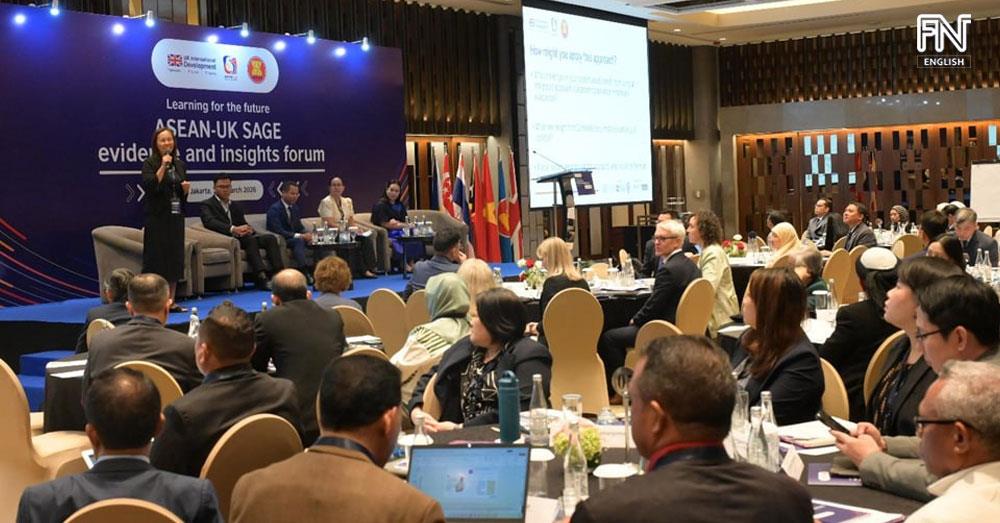
(Phnom Penh): The UK and ASEAN have this week shared new regional evidence to support stronger education systems and improved learning outcomes across Southeast Asia.
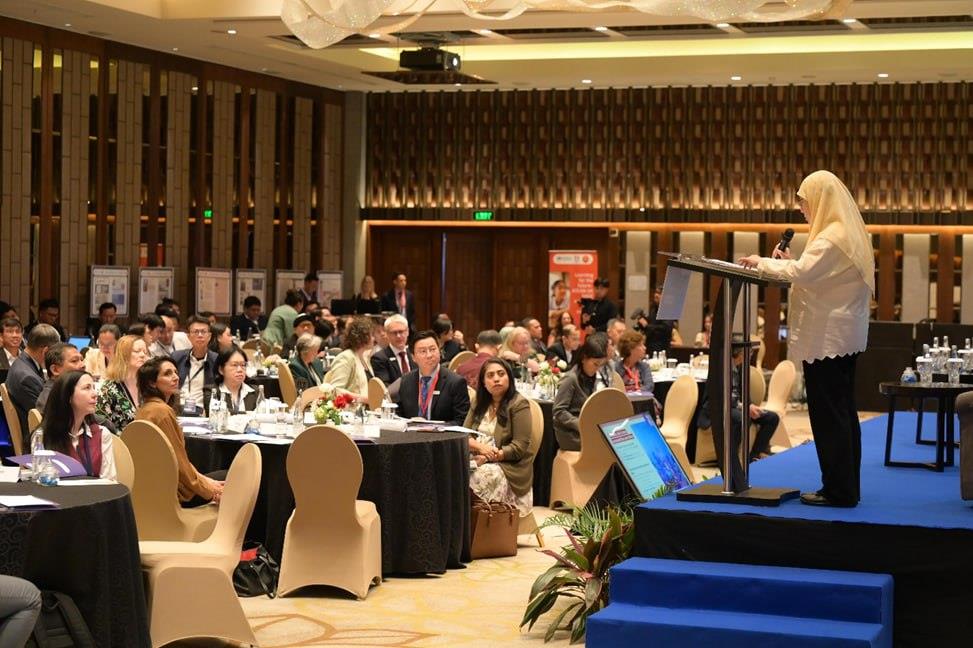
Senior officials from ASEAN Member States, the ASEAN Secretariat, and international partners gathered in Jakarta for the Learning for the Future: ASEAN–UK SAGE Evidence and Insights Forum, marking the conclusion of Phase 1 of the ASEAN–UK Supporting the Advancement of Girls’ Education (ASEAN–UK SAGE) programme.
The event forms part of the UK–ASEAN Dialogue Partnership and the UK’s support for equitable, evidence‑driven education systems across the region.
New findings were presented from the Southeast Asia Primary Learning Metrics (SEA‑PLM) 2024 regional learning assessment, alongside insights from proof‑of‑concept interventions in Cambodia, Lao PDR, the Philippines, and Timor‑Leste. Evidence on barriers facing out‑of‑school children and on responsible digital transformation in education was also shared.
SEA-PLM results show improvement since 2019, with 53% of students now achieving minimum proficiency in reading and 67% in maths. However, learning gaps remain significant, particularly for disadvantaged learners. In several countries, large numbers of children still complete primary school without achieving proficiency in reading.
Helen Fazey, UK Ambassador to ASEAN, said: “As we mark five years since the UK became an ASEAN Dialogue Partner, our collaboration on education continues to demonstrate the strength and potential of this partnership. The ASEAN-UK SAGE programme reflects our shared commitment to ensuring every child in Southeast Asia has the education they need to thrive, starting from the basics. I am grateful to all our ASEAN partners for their dedication, and I look forward to deepening our cooperation in the years ahead”
Key outcomes showcased at the forum included:
- Evidence from proof-of-concept interventions to improve learning in Cambodia, Lao PDR, and the Philippines, and expand access to skills education in Timor-Leste.
- Insights from the Southeast Asia Primary Learning Metrics (SEAPLM) 2024 assessment to inform national policy.
- Findings from new research on barriers facing out-of-school children.
- Progress on evidence-driven, inclusive digital transformation aligned with foundational learning priorities.
The ASEAN–UK SAGE programme, delivered with partners including the British Council, SEAMEO, ACER, and the EdTech Hub, has generated new insights to inform national reform efforts and support more equitable learning outcomes across ASEAN.
British Council Director for Southeast Asia, Summer Xia, said: “It is inspiring to see colleagues and Ministries from across ASEAN come together to discuss the future of education in the region. I would like to thank all our programme partners and implementers for their tireless work over the last three years. We look forward to seeing how these findings inform the next steps and to supporting the future of education in ASEAN”
Datuk Dr Habibah Abdul Rahim, Director, SEAMEO Secretariat, said: “Southeast Asia continues to confront a learning crisis. The SEAPLM 2024 findings show that one in every two Grade 5 students is not yet reading at the expected level. This is not a mere statistic; it is a call to action. The evidence generated through ASEANUK SAGE, alongside other valued partnerships, must inform our way forward. Together, we will support Ministries of Education to strengthen foundational learning and ensure equitable, quality outcomes by 2030.”
Jeaniene Spink, Research Director, ACER, said: “ACER is proud to participate in this important forum, alongside colleagues dedicated to improving education across the ASEAN region. By sharing robust evidence and new approaches, we can work together to identify promising pathways that strengthen learning outcomes for all children.”
Haani Mazari, Asia Lead, EdTech Hub, said: “As countries accelerate digital transformation, the question is not whether to adopt technology, but how to do so responsibly and effectively. Through ASEANUK SAGE, EdTech Hub, and our partners have supported Ministries to interpret evidence in ways that align with foundational learning priorities and long-term system strengthening. Importantly, the programme has fostered regional exchange, enabling policymakers to learn from one another and strengthen their approaches.”
The forum concluded with a high-level ASEAN roundtable discussion exploring the regional implications of the evidence and insights shared.
=FRESH NEWS