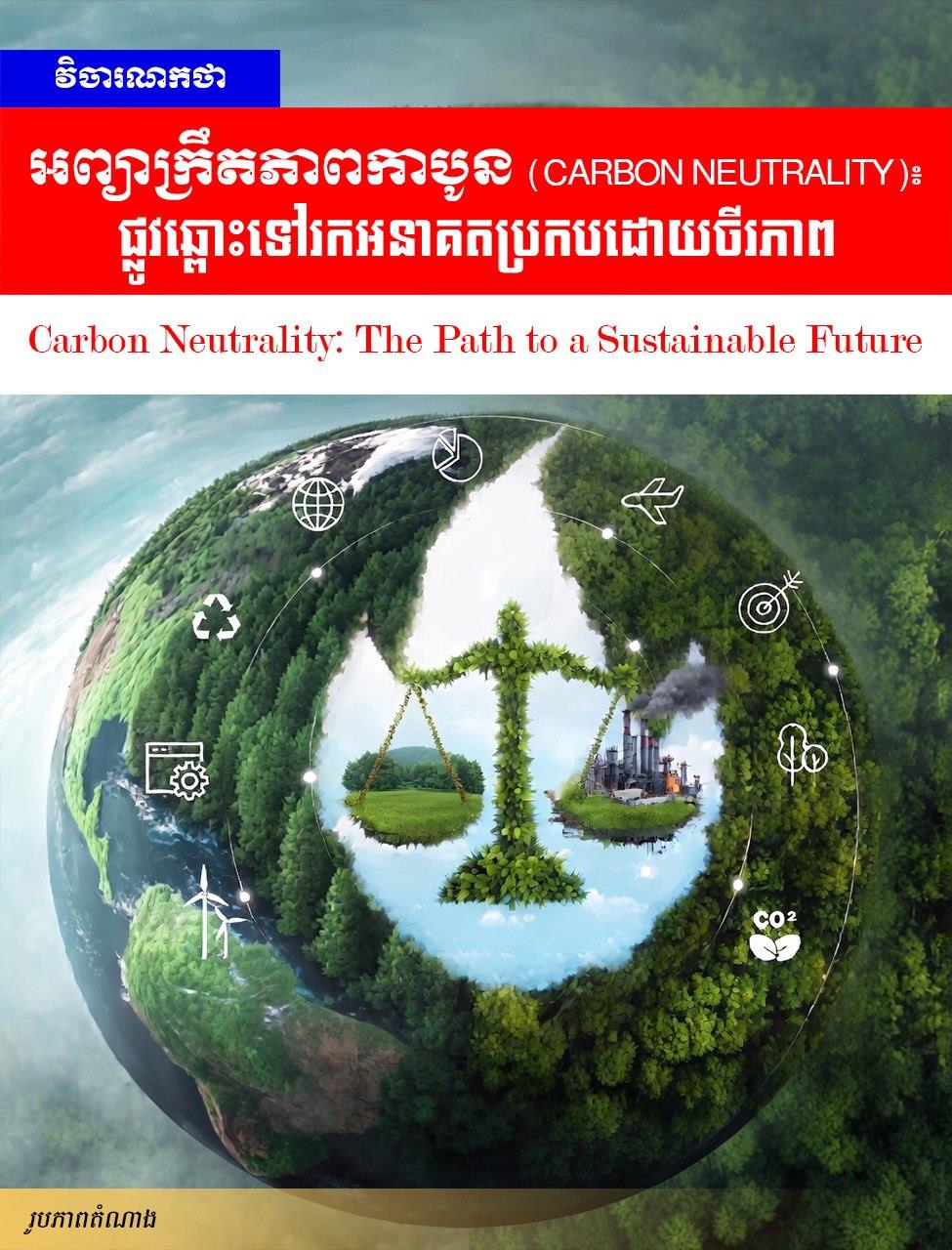
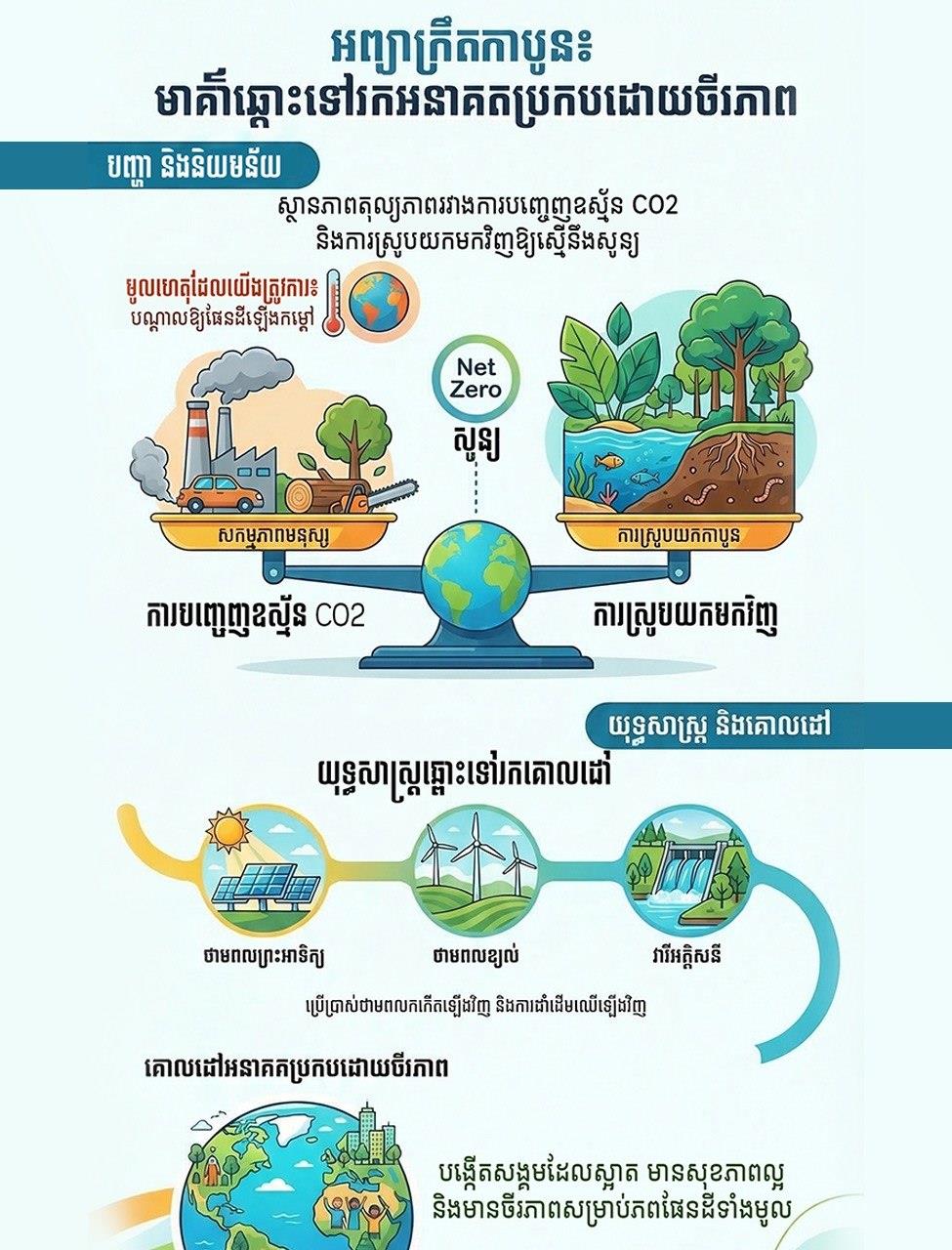
(Phnom Penh): Carbon Neutrality refers to a state of balance between the amount of carbon dioxide (CO2) emitted into the atmosphere and the amount sequestered or removed.
Simply put, it means achieving "Net Zero" emissions to halt global warming. Reaching carbon neutrality has become a primary global objective in the fight against climate change.
1-Why do we need Carbon Neutrality?
Human activities, such as transportation, industrial manufacturing, electricity production, and deforestation, release vast amounts of carbon dioxide into the atmosphere. These emissions increase greenhouse gas concentrations, which trap heat and cause global temperatures to rise.
To achieve carbon neutrality, nations, corporations, and individuals must reduce their carbon footprint and adopt cleaner, more sustainable practices.
2-Strategies to Reach the Goal
There are various pathways to achieving carbon neutrality. A key method is transitioning from fossil fuels to renewable energy sources, such as solar, wind, and hydropower. Enhancing energy efficiency, promoting public transportation, and advancing sustainable agriculture also significantly reduce emissions.
Furthermore, reforestation and forest protection are vital for absorbing CO2 and offsetting residual emissions.
Many governments and organisations worldwide have set targets to achieve carbon neutrality within the coming decades. Success in these efforts requires robust policies, advanced technology, and strong international cooperation.
Conclusion
In summary, carbon neutrality is a crucial strategy for addressing climate change and protecting the environment. By reducing carbon emissions and supporting sustainable solutions, society can move toward a cleaner, healthier, and more sustainable future for our planet.
=FRESH NEWS