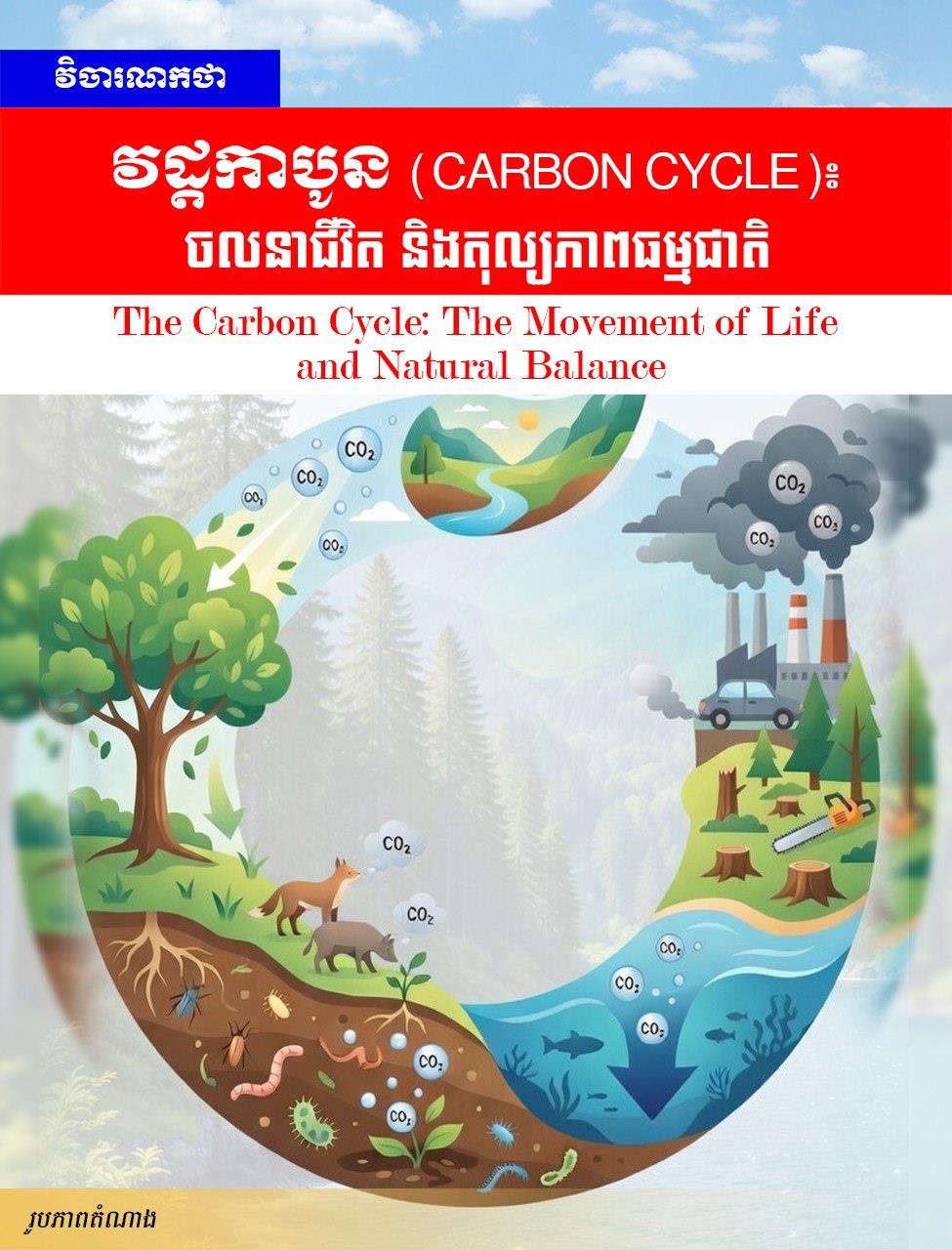
(Phnom Penh): The Carbon Cycle refers to the flow of carbon in various forms, such as carbon dioxide and soot, through the atmosphere, oceans, terrestrial biosphere, and lithosphere.
Put simply, it is the vital process by which carbon moves between the atmosphere, living organisms, soil, oceans, and the Earth's layers. Carbon is the fundamental building block of life, continuously used and recycled to sustain the global ecosystem.
1-Mechanisms of the Carbon Cycle
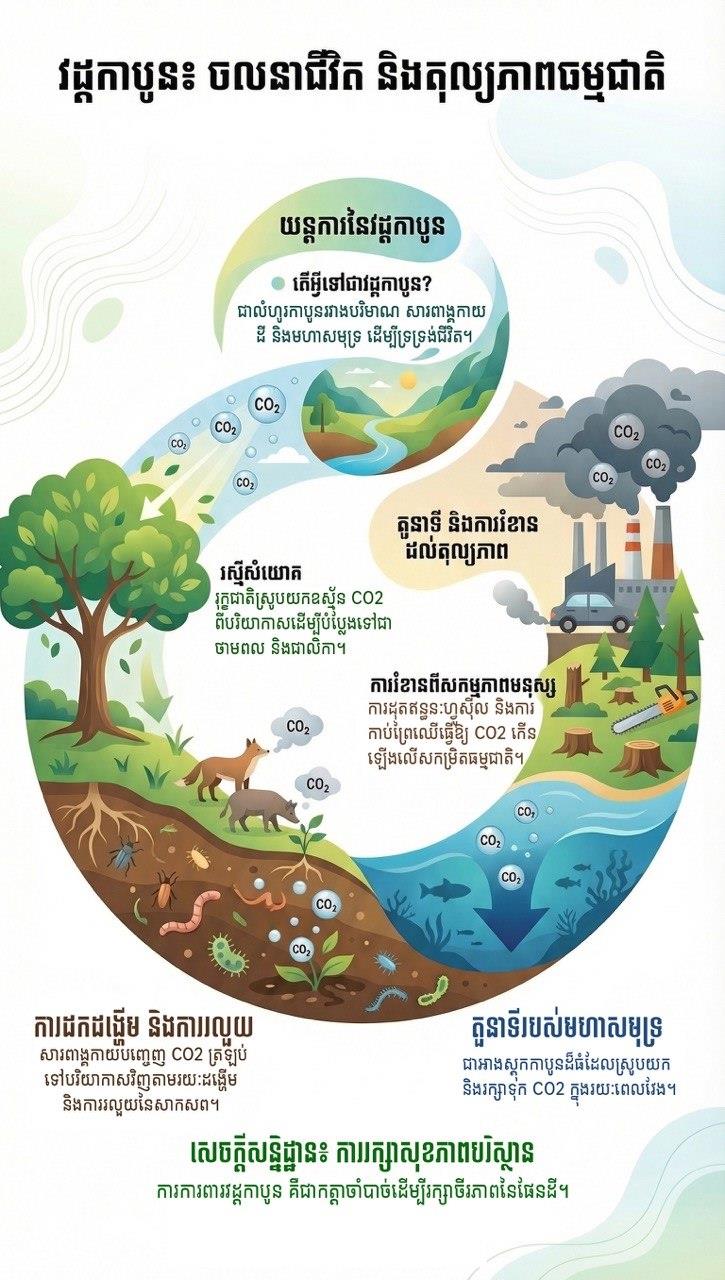
(a) Photosynthesis: Plants absorb carbon dioxide (CO2) from the atmosphere and convert it
into energy and organic tissue. This carbon is then transferred to humans and animals
through the food chain.
(b) Respiration & Decomposition: During respiration, organisms release CO2 back into the
atmosphere. Furthermore, when plants and animals perish, microorganisms break down
the organic matter, returning carbon to the soil and the air.
(c) The Role of Oceans: The ocean serves as a massive carbon reservoir, absorbing CO2
from the atmosphere and storing it within marine life and sedimentary layers on the
seabed over the long term.
2-Disruption of the Natural Equilibrium
While this cycle is naturally self-balancing, human activities, such as the burning of fossil fuels
and large-scale deforestation have increased CO2 levels beyond natural limits, leading to
climate change.
Conclusion
In summary, the carbon cycle is a crucial process that maintains the Earth's carbon balance and
supports all life; it is the backbone of our planet's existence. Understanding and protecting this
cycle by reducing greenhouse gas emissions is essential for maintaining environmental health
and ensuring the sustainability of our planet.
=FRESH NEWS