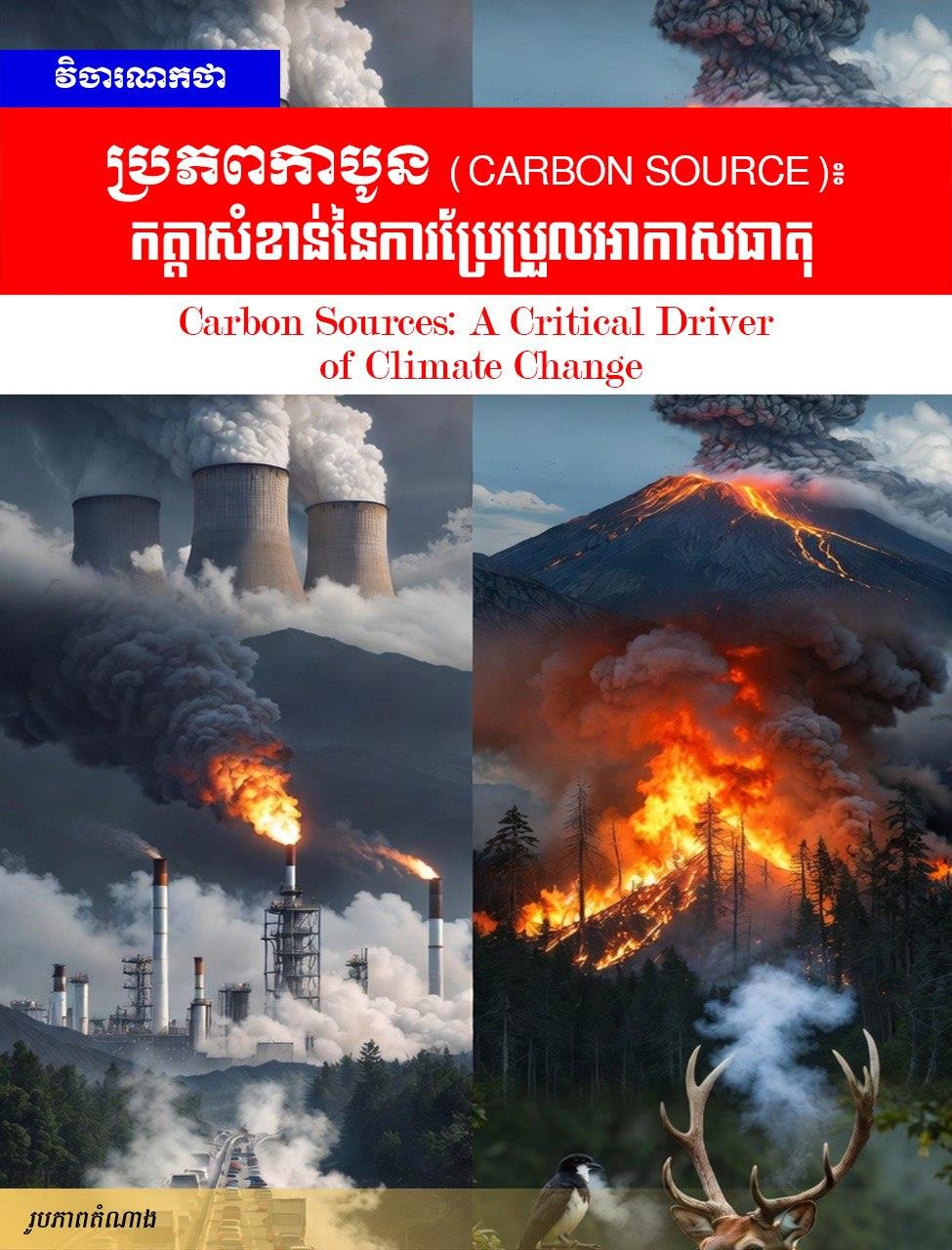
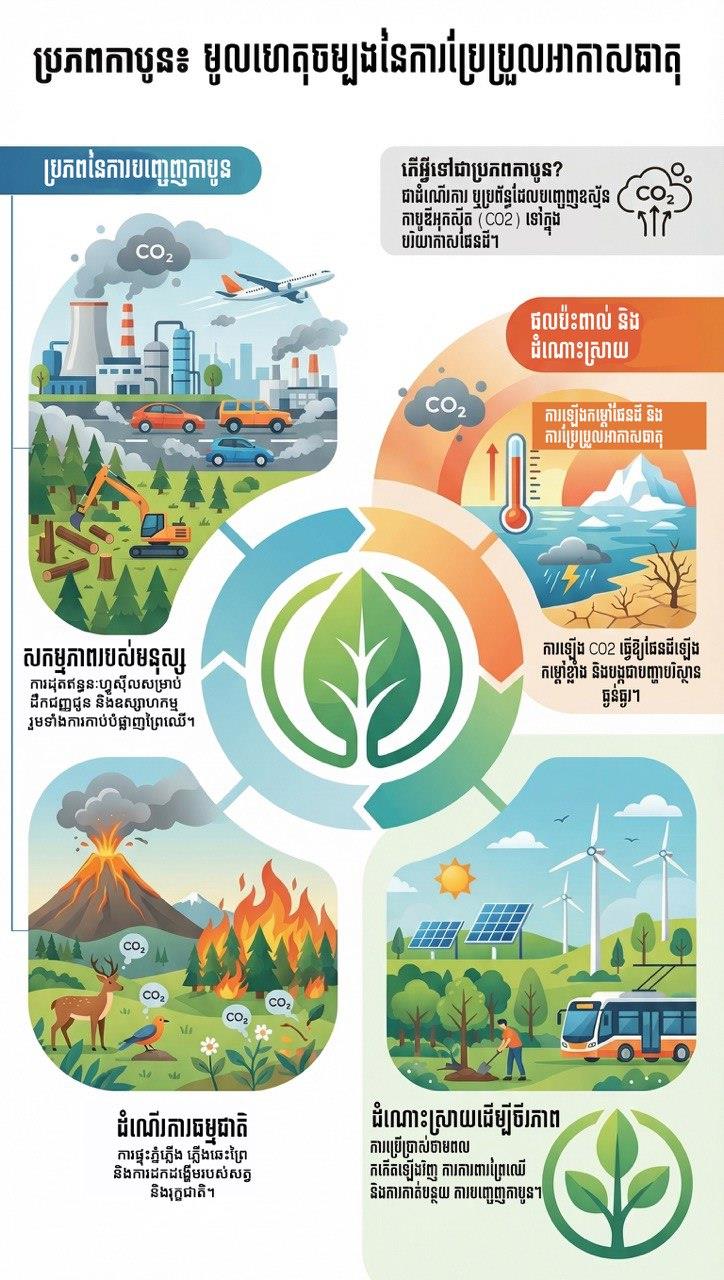
(Phnom Penh): A Carbon Source refers to any process, activity, mechanism, or system that releases carbon dioxide (CO2) or other carbon-based gases into the atmosphere.
Carbon sources play a fundamental role in the global carbon cycle and are inextricably linked to climate change. As the volume of carbon emitted into the atmosphere rises, it increases greenhouse gas concentrations, leading to a rise in global temperatures.
(1) Anthropogenic (Human-Induced) Carbon Sources
The majority of carbon sources arise from human activities. The combustion of fossil fuels, such as coal, oil, and natural gas, for transportation, electricity generation, and industrial manufacturing remains one of the largest contributors to carbon emissions. Deforestation is another significant carbon source; when trees are cut down, the carbon stored within the vegetation is released ba(CO2).
(2) Natural Carbon Sources
Certain natural processes also function as carbon sources. For instance, volcanic eruptions, wildfires, and the respiration of animals and plants all release carbon dioxide into the atmosphere. While these natural processes have existed for millions of years, the rapid acceleration of carbon emissions caused by human activity has dramatically increased total atmospheric carbon levels.
The surge in carbon sources leads to global warming and climate instability. Rising CO2) levels trap heat on Earth, resulting in extreme weather events, ecological shifts, and various environmental challenges.
Conclusion
In summary, carbon sources are a decisive factor affecting the atmospheric carbon balance. Reducing emissions from major sources, transitioning to renewable energy, and protecting our forests are essential steps in mitigating climate change and ensuring a sustainable future.
=FRESH NEWS