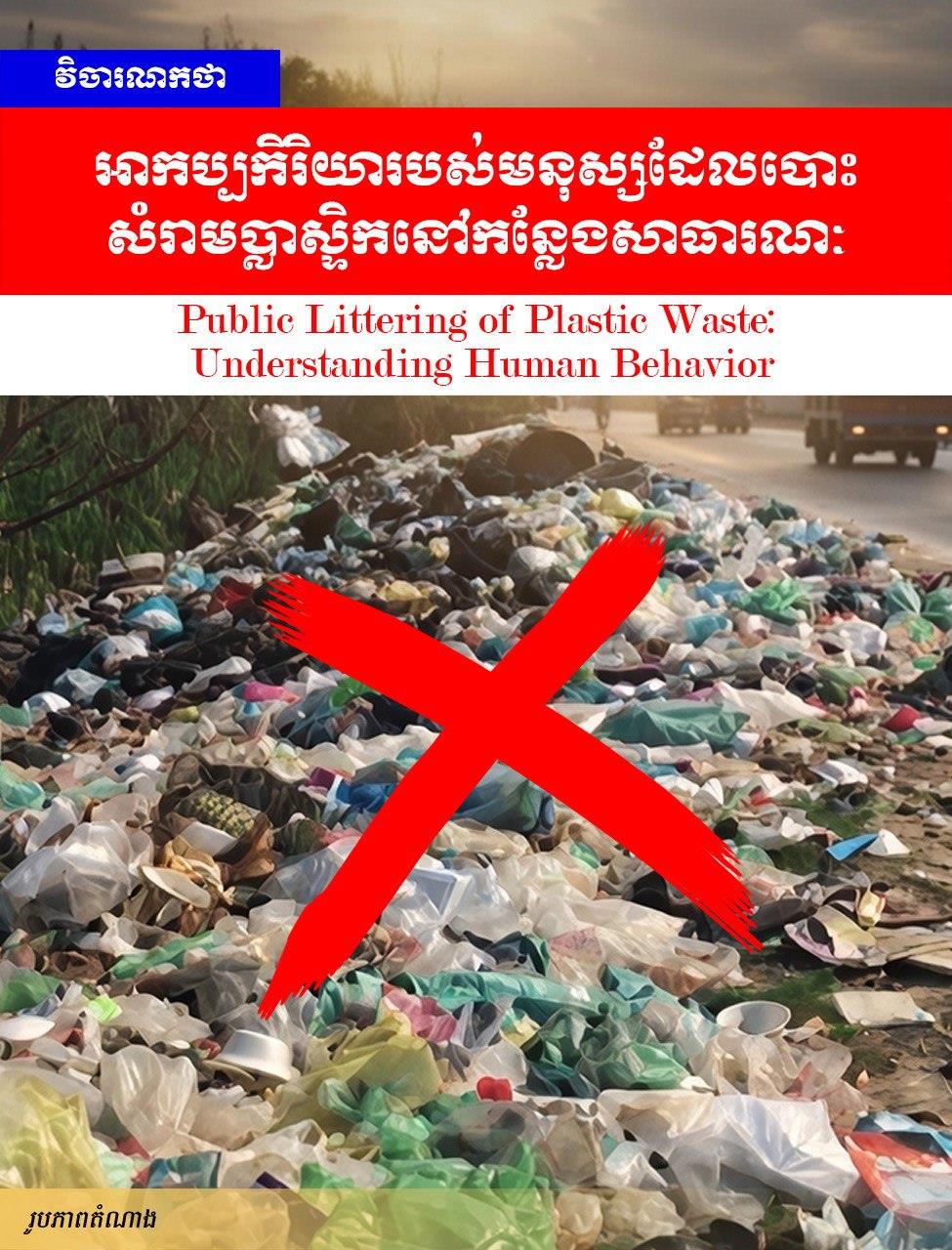
(Phnom Penh): Plastic pollution in public spaces remains a significant challenge in both urban and rural areas worldwide. Along streets, in parks, near riverbanks, and in markets, plastic bags, water bottles, papers, and food wrappers are frequently seen strewn about. While waste management systems and government policies are crucial, a key factor that perpetuates this issue is human behavior itself.
1-Priority of Convenience and Lack of Awareness
A primary cause is the choice of convenience. Many individuals prioritize immediate ease over long-term environmental responsibility. Carrying a plastic bottle or food wrapper until a bin is found can be perceived as inconvenient, especially when bins are scarce or overflowing. In such situations, some choose the easiest path: discarding it immediately without considering the long-term impact.
Another factor is the lack of environmental awareness and education. Some may not fully grasp the long-term consequences of plastic. Unlike natural materials, plastic does not decompose quickly and can take hundreds of years to break down, contaminating soil and water sources while endangering wildlife. Without proper education, people may overlook the gravity of littering.
2-Influence of Social Norms and Environment
Social norms play a powerful role, as the surrounding environment strongly influences the human psyche. In areas where litter is already prevalent, people tend to add more waste without feeling guilty, perceiving it as "normal" within that society. When public spaces are already dirty, some feel that their additional trash makes little difference, leading to the conclusion that society does not value cleanliness.
3. Perspectives on Public Property
A lack of a "sense of ownership" over public spaces is a major obstacle. Some view cleaning as the exclusive duty of authorities or sanitation workers. This mindset diminishes personal responsibility, forgetting that public spaces are a shared home for every member of society.
4-Economic and Infrastructure Factors
In areas with weak waste collection systems, limited bins, or a lack of recycling facilities, disposing of waste correctly becomes increasingly difficult. Even individuals with good intentions may face obstacles if the infrastructure does not support their efforts.
5-The Factor of Bad Habits
Psychological factors, such as habit and impulsive actions, are also significant. Littering can become a routine if an individual grows up in an environment where such behavior is considered normal. Changing these habits requires consistent motivation and ongoing education.
6-Solutions
Addressing this issue requires a multifaceted approach to behavior change and systemic support.
Raising awareness helps people understand the environmental and health impacts. Schools should integrate environmental education into their curricula. Simultaneously, authorities must provide adequate bins, enforce anti-littering laws, and promote recycling programs.
Community participation is equally vital; clean-up programs can foster a sense of collective responsibility. When people participate in caring for their environment, they respect and protect it more.
Conclusion
Plastic littering in public spaces is not merely an issue of carelessness; it is intertwined with convenience, social norms, education, infrastructure, and personal habits.
Understanding these factors is essential for finding effective solutions. By combining education, robust policies, and community engagement, society can encourage responsible behavior and successfully reduce plastic pollution.
=FRESH NEWS