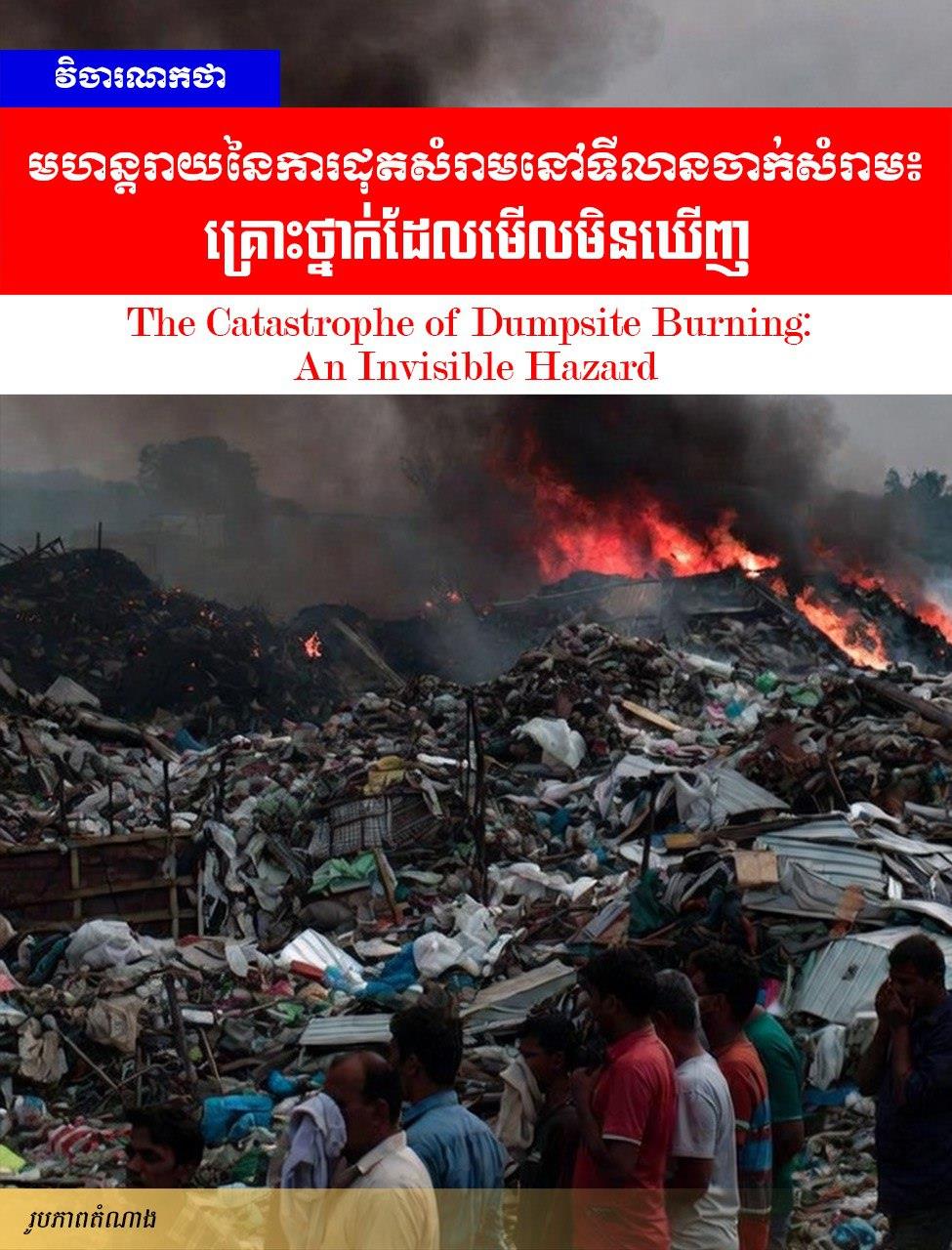
(Phnom Penh): Burning waste at dumpsites might appear to be an easy solution for reducing waste volume, but it is an "invisible killer" that devastates public health and the environment in the long run. For communities living near open dumpsites, these toxic fumes represent a direct threat to life.
(1) Air Toxicity and Health Risks
When mixed waste, such as plastics, rubber, and e-waste, is burned, it releases a cocktail of lethal toxic gases, including Dioxins, Carbon Monoxide (CO), and Fine Particulate Matter (PM2.5). These substances trigger asthma, chronic respiratory inflammation, and heart disease. They pose the greatest danger to vulnerable groups, particularly children, the elderly, and pregnant women.
(2) Ecological and Food Chain Contamination
Toxic smoke does not remain confined to the air; hazardous particles settle onto nearby agricultural land and seep into groundwater. Over time, these toxins are absorbed by crops and livestock, eventually entering the human "food chain." This creates long-term health risks that are incredibly difficult to reverse.
(3) Climate Change and Community Safety
Dumpsite burning emits massive quantities of greenhouse gases, such as CO2 and Methane, which accelerate global warming. Furthermore, unintentional fires at dumpsites can spread rapidly, threatening property and the physical safety of community residents.
(4) Quality of Life and Economic Value
Beyond health and environmental impacts, the persistent stench and haze cause significant mental stress for families and drive down local property values. This environmental degradation also acts as a barrier to attracting investment and developing a modern, civilised community.
(5) Solutions
The solution lies in superior waste management. Instead of burning, waste should be segregated, collected, recycled, composted, and disposed of through safe methods at properly managed facilities. Raising public awareness, enforcing government regulations, and encouraging community participation are essential steps toward ending open waste burning.
Conclusion
Burning waste at dumpsites is neither a safe nor a sustainable practice. It endangers health, destroys the environment, and contributes to climate change. Protecting our communities requires responsible waste management and a transition to cleaner, safer disposal methods.
=FRESH NEWS