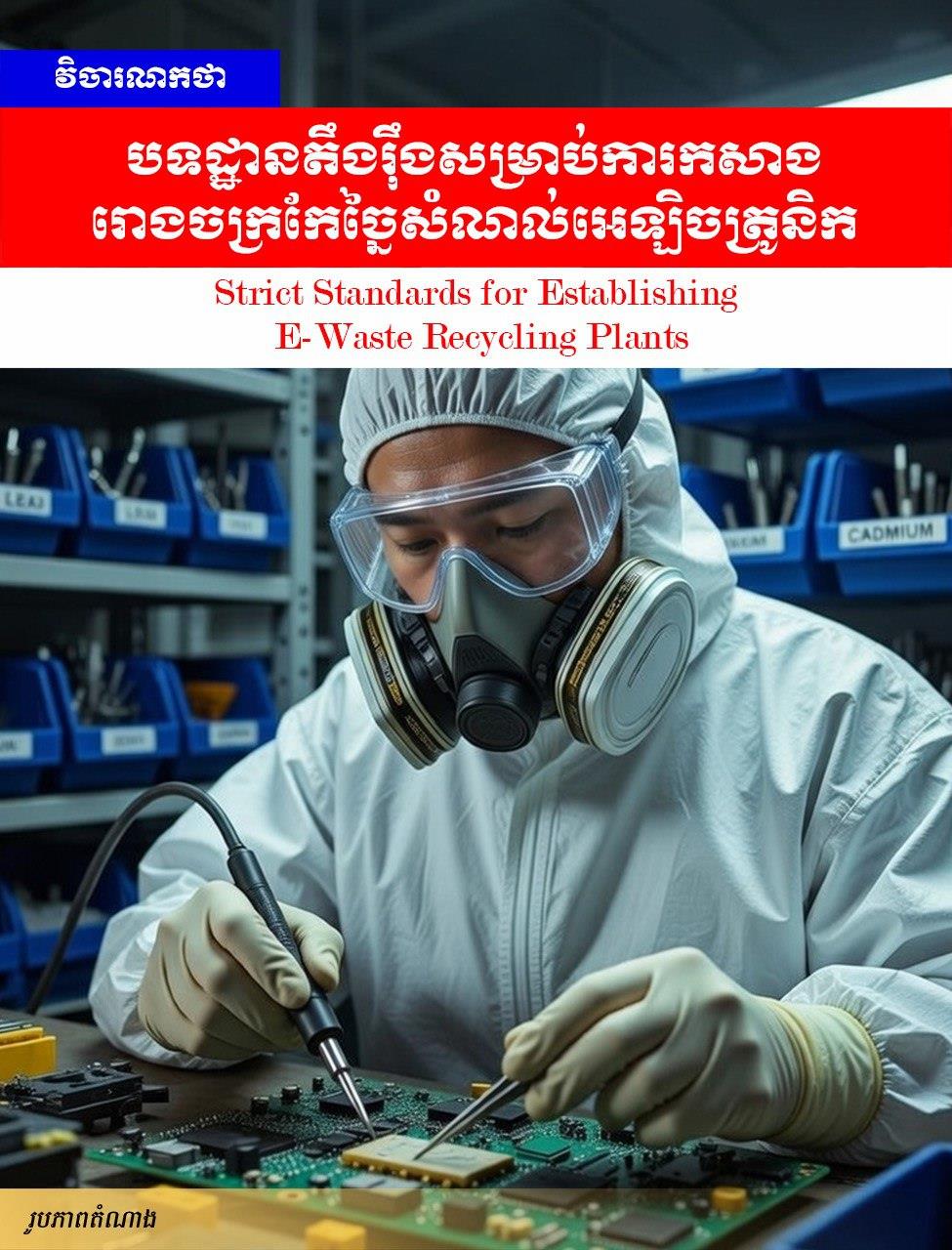
(Phnom Penh): The construction of electronic waste (E-waste) recycling plants requires stringent conditions to ensure environmental protection, public safety, and long-term sustainability. In a context where electronic consumption is skyrocketing, establishing an E-waste recycling facility is not merely a business venture—it is a profound commitment to the environment and public wellbeing. To ensure lasting sustainability, relevant institutions must adhere to the following rigorous requirements:
1. Site Selection and Environmental Impact Assessment (Location & EIA)
First and foremost, site selection is critical. Facilities must be located within legally designated industrial zones, far from residential communities, schools, and water sources. Before construction begins, land-use permits and approvals from environmental authorities are mandatory. Conducting a comprehensive Environmental Impact Assessment (EIA) is a top priority to identify and prevent potential risks to soil, air, and groundwater.
2. Technology and Toxics Management
Strict adherence to environmental protection standards is non-negotiable. Plants must be equipped with advanced pollution control systems, including air filtration, wastewater treatment, and secure storage for hazardous substances such as lead, mercury, and cadmium. Waste disposal methods must comply with both national and international regulations to prevent toxic contamination.
3. Occupational Health, Safety, and Human Resources
Technical and operational conditions are equally vital. Institutions must utilize certified recycling technologies capable of safely dismantling, sorting, and processing electronic components. Machinery must meet industrial safety standards and undergo regular maintenance. Furthermore, robust ventilation and fire suppression systems are essential, as certain electronic materials are highly flammable.
Worker safety and training are indispensable. Staff must receive specialized training in handling hazardous materials and operating recycling equipment. The provision of Personal Protective Equipment (PPE), regular health check-ups, and emergency response plans is required to ensure a safe workplace.
4. Legal Compliance and Corporate Social Responsibility (Compliance & CSR)
Operators must secure all necessary licenses and legal documentation from environmental, industrial, and local authorities. Regular inspections and compliance audits ensure that the plant continues to operate within the framework of the law.
Finally, community engagement and transparency are becoming increasingly important. Investors may be required to hold public hearings and provide clear information regarding environmental safeguards. Well-managed facilities also implement Corporate Social Responsibility (CSR) programs to support local communities.
Conclusion
Establishing an E-waste recycling plant involves far more than just constructing a building; it requires rigorous environmental protection, advanced technology, a skilled workforce, and full legal compliance. Meeting these strict conditions will transform electronic waste into a significant economic opportunity without leaving an environmental burden for future generations.
=FRESH NEWS