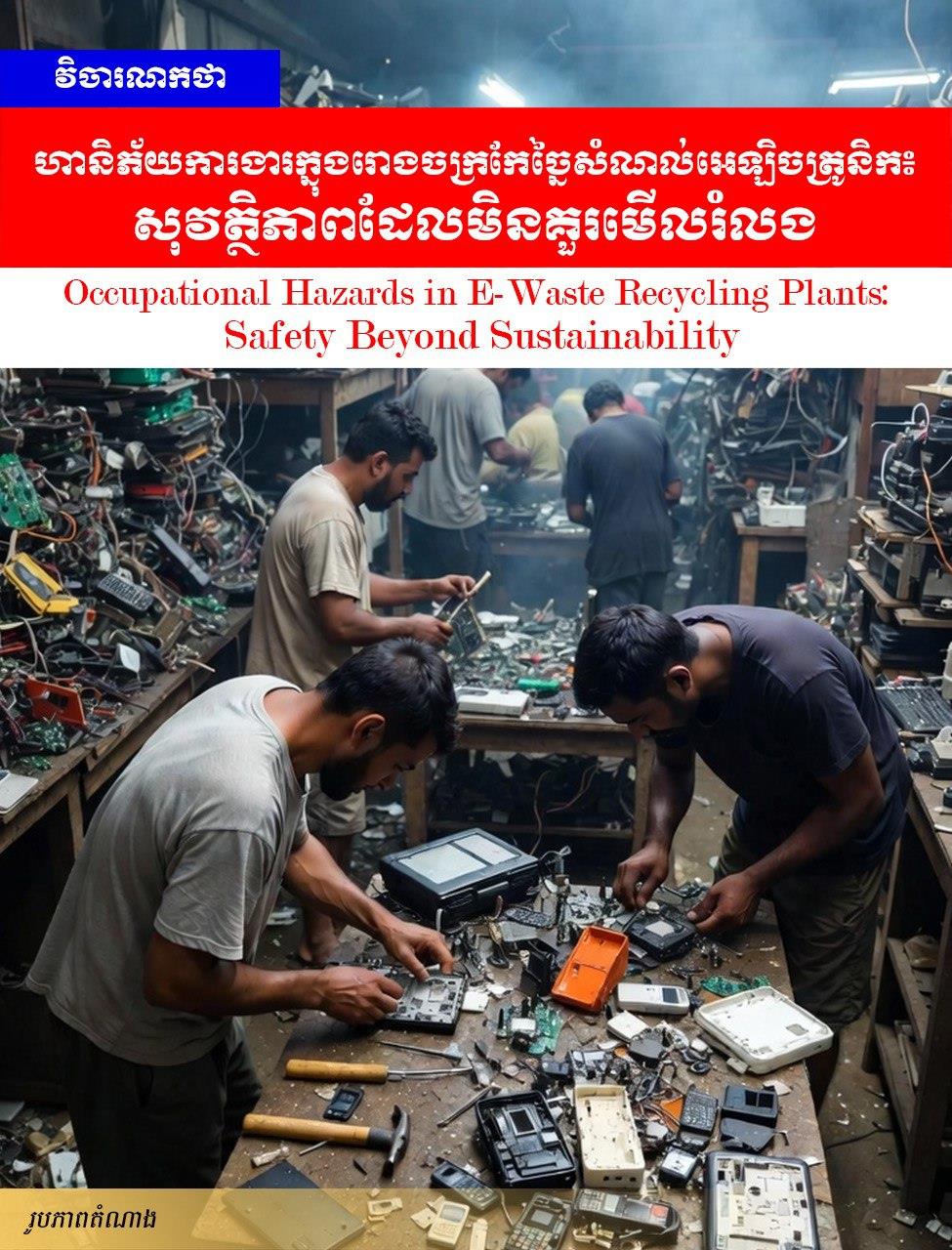
(Phnom Penh): E-waste recycling plants play a vital role in managing the increasing volume of discarded devices worldwide. By recovering precious metals and valuable components from old computers, phones, and appliances, these facilities help conserve natural resources and reduce landfill waste. However, behind these environmental benefits lie numerous occupational hazards that workers face daily.
1. Toxic and Chemical Exposure
During the dismantling or shredding of devices, hazardous substances such as Lead, Mercury, Cadmium, and Arsenic can be released as dust or toxic gases. Without standardized ventilation systems, these particles enter the body through inhalation or skin absorption, leading to respiratory illnesses, neurological damage, kidney problems, and cancer. Furthermore, using strong acids to extract metals poses risks of chemical burns and the emission of toxic fumes.
2. Physical and Mechanical Risks
Workers face direct exposure to sharp metal edges, broken glass, and heavy lifting, which cause musculoskeletal injuries. In facilities equipped with shredders and conveyors, the risk of clothing or body parts becoming entangled in machinery is a severe hazard. The process of separating metals using acids or industrial chemicals can lead to accidental spills or splashes, resulting in severe injuries, particularly to the eyes. Additionally, even in modern plants, improper removal or storage of Lithium-ion batteries can trigger fires or spontaneous explosions.
3. Noise and Ergonomic Stress
Continuous exposure to loud machinery noise leads to long-term hearing loss. Meanwhile, repetitive tasks, such as manual sorting or dismantling small components, are primary causes of joint disorders and chronic physical pain.
4. Standard vs. Reality
Risk levels vary significantly between licensed facilities and informal operations. In well-managed plants with modern technology, advanced ventilation, and strict safety protocols, many risks can be mitigated. Workers are trained, provided with Personal Protective Equipment (PPE), and undergo regular health screenings. In contrast, informal recycling operations often lack basic protective measures, leaving workers to bear the highest level of risk.
Conclusion
Protecting e-waste recycling workers requires rigorous occupational safety standards, regular inspections, appropriate equipment, and continuous training. Plant owners must prioritize safety design and risk management, while governments must strictly enforce labor and environmental laws. E-waste recycling is essential for a sustainable future, but sustainability must include worker safety. Reducing environmental waste should never come at the expense of human health. Ensuring safe working conditions is not just a legal obligation but a moral imperative in the responsible management of electronic waste.
=FRESH NEWS