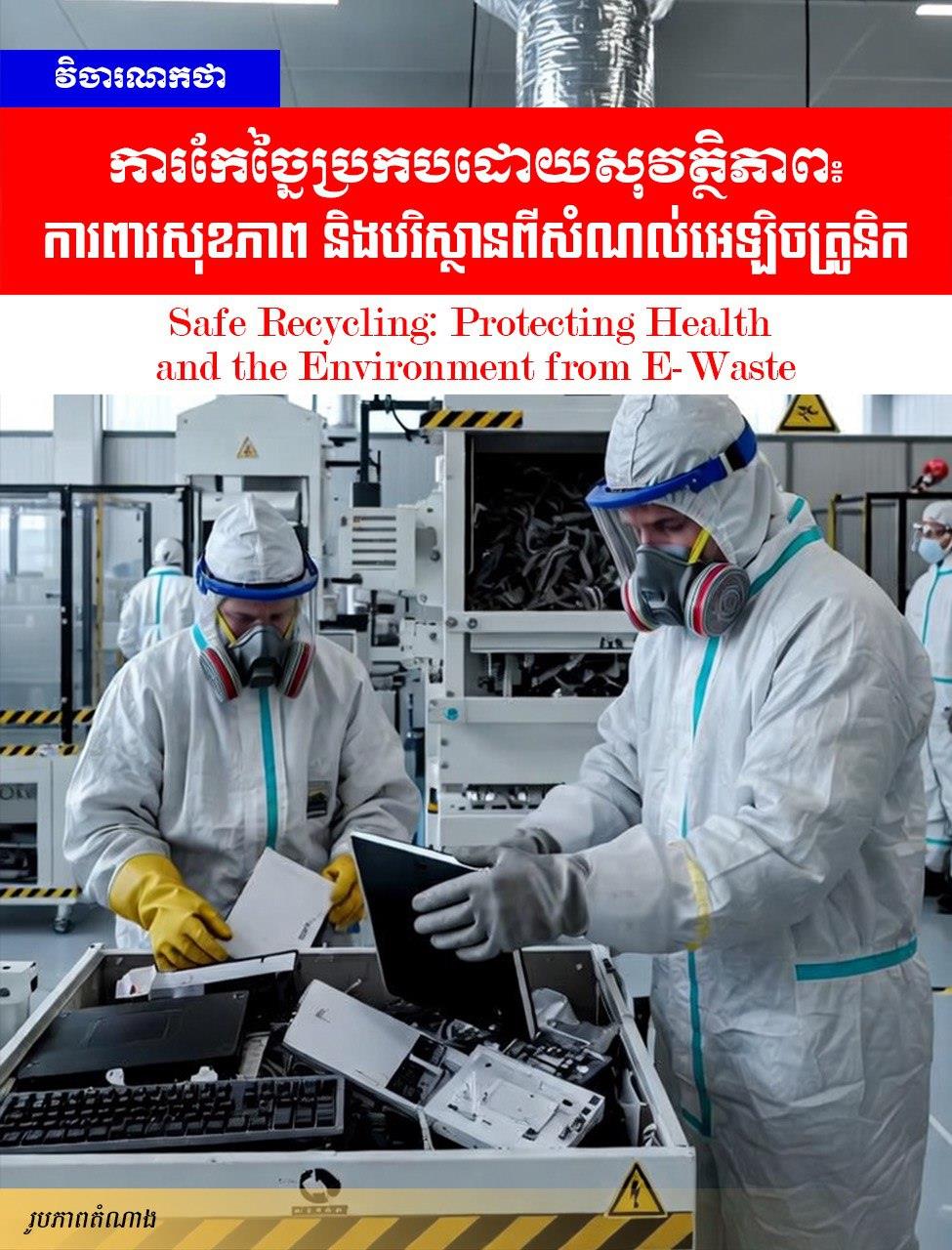
(Phnom Penh): Electronic waste, or e-waste, is one of the fastest-growing waste streams in the world. As consumers replace smartphones, computers, and household appliances more frequently, the demand for recycling continues to rise. While recycling can recover valuable materials and reduce the consumption of natural resources, it poses severe risks to the environment and public health if not managed correctly. Transitioning from informal or unregulated practices to standardized technical recycling is an absolute necessity in the digital age.
(1) Standardized Collection and Sorting
The first step toward protection is the safe and standardized collection and sorting of devices. We must stop the flow of waste into "informal scrap networks." E-waste should be consolidated at certified facilities equipped with the proper techniques to manage hazardous components, such as batteries and circuit boards, to prevent the leakage of Lead, Mercury, and Lithium.
(2) Replacing Outdated Methods with Clean Technology
We must eliminate the practice of open-air wire burning and the use of strong acids to extract metals, both of which release toxic fumes that contaminate soil and water. The solution lies in using automated shredding in closed environments and advanced metal recovery technologies that can effectively capture toxic gases and significantly reduce atmospheric pollution.
(3) Worker Protection and Oversight
-Occupational Safety: Protecting workers is paramount. Recycling facilities should provide Personal Protective Equipment (PPE), such as gloves and masks, and install proper ventilation systems. Training programs should also be provided to help workers understand chemical risks and how to handle equipment safely. When workers have the right knowledge and tools, toxic exposure is greatly minimized.
-Monitoring: Environmental monitoring is a vital part of protection. Governments and local authorities must require regular testing of air, soil, and water quality near recycling sites. Clear regulations and strict enforcement ensure that facilities comply with environmental safety standards. Transparency and openness can build public trust and encourage responsible practices.
(4) The Role of Consumers
Consumer participation is key. By using devices for as long as possible, opting for repairs, and returning waste to manufacturers or certified recycling centers, consumers can help reduce the flow of waste into unsafe, unregulated channels.
Conclusion
Recycling should not be a process of transferring pollution from landfills to communities. Through strict regulations, modern technology, and the participation of all stakeholders, e-waste recycling can become a truly sustainable solution that protects both public health and our planet.
=FRESH NEWS