(Brussels): In an era where narratives can shape a nation’s economic future, two words — “online scams” — can damage a country’s reputation faster than any conventional attack.
In an interview with Agence France-Presse (AFP) in Brussels on February 25, Cambodian Prime Minister Hun Manet made it unequivocally clear that Cambodia does not tolerate online scam networks:
“The scam networks — what we call the black economy — are destroying our honest economy, damaging Cambodia’s reputation, and disrupting investment. That is why we must clean this out, so that genuine economic activities — export-oriented industries, manufacturing, the automotive sector, and IT — can contribute more effectively to our economy.”
This statement was not a routine denial nor a defensive reaction to international criticism. It was a clear articulation of the government’s position: Cambodia refuses to allow criminal activity to define its national identity. Instead, it is prioritizing legitimate economic development and long-term national growth.
Delivering this message from Brussels — one of Europe’s key political centers — sent a broader signal to the international community: Cambodia seeks to be a responsible partner in combating transnational crime and safeguarding investor confidence.
Online Scams: A Transnational Crime in a Globalized World
When asked about international accusations directed at Cambodia regarding online scam operations, the Prime Minister further stated:
“Online scams are a transnational crime problem. No single country can solve it alone.”
This statement goes beyond a technical explanation. It reframes the issue from being a country-specific accusation to recognizing it as a global challenge that requires collective international cooperation.
Rather than engaging in rhetorical battles over labels such as “scam hub,” the Prime Minister shifted the focus to the broader concept of transnational crime.
This implies:
• The problem does not originate within the borders of any single country.
• It involves cross-border financial networks, technological platforms, and criminal actors from multiple jurisdictions.
• Effective solutions require coordinated global strategies.
By acknowledging the transnational nature of the issue, Cambodia is not denying the problem. Instead, it is positioning itself as part of the solution — a responsible international partner confronting a shared global threat.
In today’s world, where reputation equals trust and trust equals investment, this strategic framing matters. Cambodia is signaling that it will not allow negative narratives to define its identity, but will instead pursue cooperation and institutional reform to strengthen its legitimacy and sustainable development.
Brussels: A Platform for Legitimacy and International Confidence
Brussels was not a random location for such a declaration. As a political hub of the European Union — where rule of law, governance standards, and international legitimacy are central principles — the setting amplified the message.
By addressing the issue there, Cambodia’s leadership conveyed a strategic signal to European partners and the broader international community: the country is strengthening law enforcement mechanisms and improving legal frameworks to combat cybercrime and transnational criminal networks.
In this context, Brussels became a platform for legitimacy signaling and confidence building.
The government’s commitment demonstrates that the crackdown on online scams is not a temporary reaction to external pressure. It is part of a longer-term policy aimed at protecting economic stability and restoring national reputation.
Online Scams as a National Security Issue
The Prime Minister’s remarks indicate that online scams are not merely a technological problem. They represent a multi-dimensional strategic challenge affecting:
1. Economic security — Criminal networks undermine financial stability and distort legitimate market competition.
2. Investor confidence — Reputational damage and uncertainty discourage foreign investment.
3. International cooperation — Countries whose citizens are victims may exert diplomatic pressure if effective action is not taken.
In this sense, online scams are not simply a digital-sector issue; they constitute a national security concern. When transnational crime threatens long-term development and international standing, addressing it becomes not optional but a strategic obligation of the state.
A Battle of Narratives: Accuser or Crime Fighter?
In an age where rhetoric can influence political perception, direct statements from national leadership carry greater weight than emotional commentary.
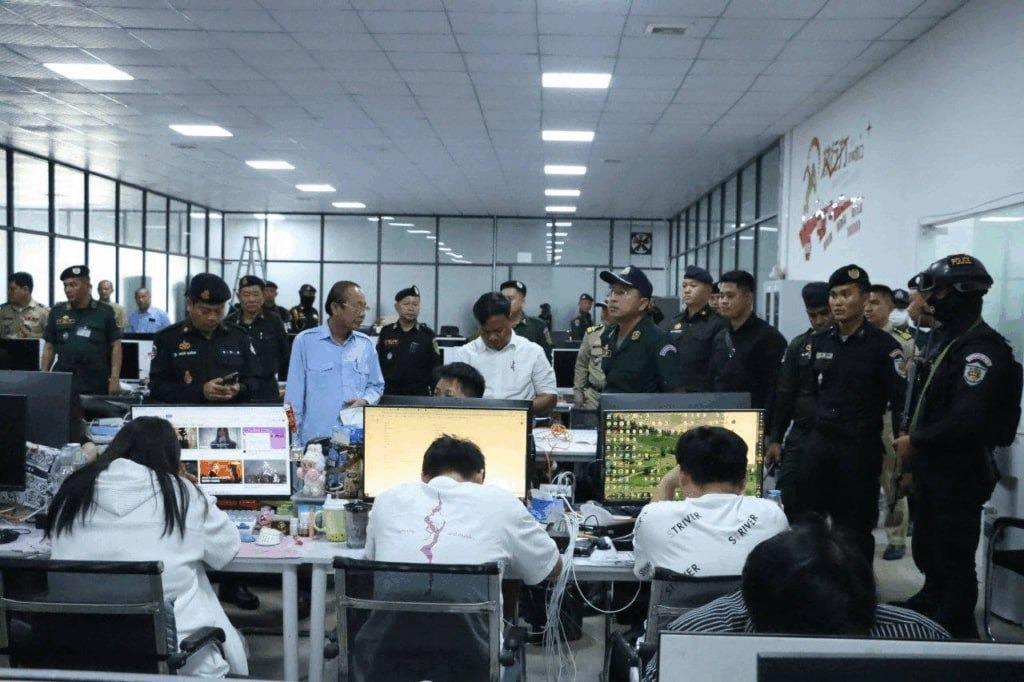
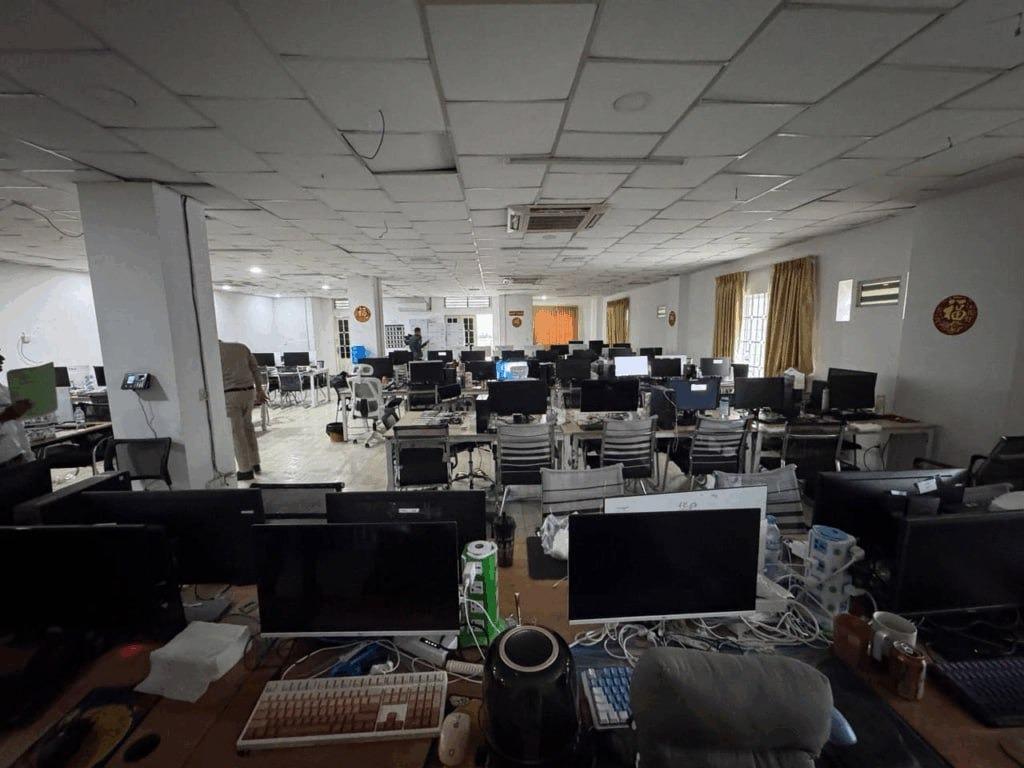
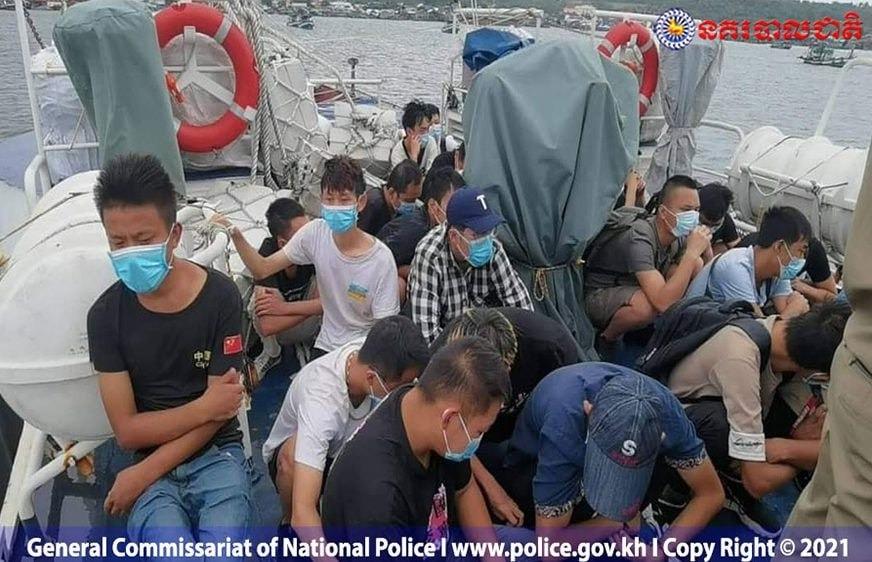
Some political critics have portrayed the online scam problem as a result of corruption or government tolerance. However, such claims often overlook the ongoing enforcement actions, including arrests, deportations, and prosecutions carried out in large-scale operations.
Government officials have made clear that dismantling online scam networks is a national priority. Commitments to intensify operations — including before the Khmer New Year in mid-April 2026 — reflect a defined policy objective with measurable timelines.
Statements delivered from Brussels further strengthened the international dimension of this commitment. They underscored that Cambodia will not allow online scam networks to operate under any guise and is actively positioning itself as a proactive participant in combating transnational crime.
Conclusion
When the Cambodian Prime Minister declared: “We do not tolerate online scams.” It was more than a media soundbite. It was a message to investors that legitimate economic activity is protected. It was a message to international partners that Cambodia is a responsible actor in fighting transnational crime. It was a message to the Cambodian public that the government will not allow criminal networks to damage national dignity.
Most importantly, it was a declaration that Cambodia will not allow negative or unbalanced narratives to define its national identity.
In a world where international image equals trust — and trust equals investment and long-term development — refusing to tolerate online scams is an act of economic defense, comparable to protecting national borders.
The statement from Brussels was not merely a response to criticism. It was a positioning of Cambodia on the global stage: Cambodia is not a country defined by transnational crime. It is a country defining itself through responsibility, integrity, and economic security.
In the battle of narratives, emotional rhetoric may spread quickly. But clear commitment and concrete action — especially when articulated directly by national leadership from a major international platform — are what ultimately restore confidence and reinforce national credibility.