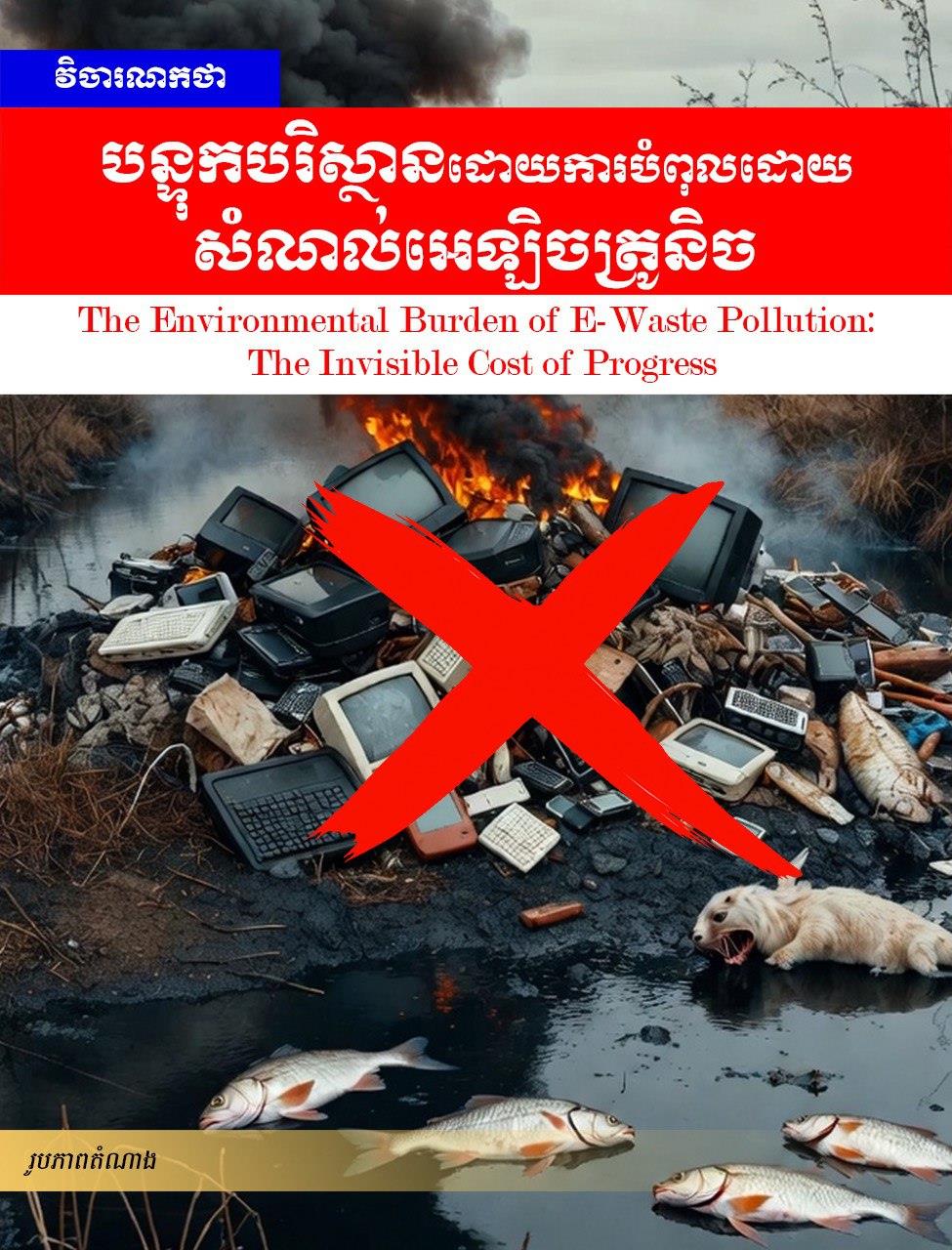
(Phnom Penh): The rapid surge in the use of smartphones, computers, and household electronics has profoundly transformed modern life. However, as these devices are replaced more frequently than ever, the growing mountains of electronic waste (e-waste) pose severe risks to the environment. Behind the convenience of constant upgrades lies a heavy environmental burden for which the world must take responsibility.
(1) Hazardous Components in E-Waste
E-waste consists of complex components. While it contains precious metals such as gold, silver, and copper, it also harbors hazardous substances like Lead, Mercury, Cadmium, and toxic Flame Retardants. When disposed of improperly, through open dumping, informal recycling, or uncontrolled burning, these toxins seep directly into the surrounding environment.
(2) Destruction of Soil and Water Resources
Soil Contamination: Heavy metals from circuit boards and damaged batteries penetrate the soil, altering its quality and reducing fertility. Crops grown on contaminated land can absorb these toxins, threatening food safety and agricultural productivity. In the long term, polluted land may become unfit for farming or habitation.
Water System Risks: Rainwater can carry toxins from e-waste sites into rivers, lakes, and groundwater. Acid-leaching methods used to extract precious metals release chemicals into nearby water sources. This pollution harms fish and aquatic life, disrupts ecosystems, and reduces access to clean water for communities.
(3) Air Pollution and Bioaccumulation
Air Pollution: Burning electronic components to recover metals releases toxic gases and fine particulate matter into the atmosphere. These emissions degrade air quality and can deposit pollutants onto plants and animals far from the original disposal site.
Wildlife Risks: Wildlife may drink contaminated water or eat tainted plants, leading to toxins accumulating in their bodies. These substances enter the food chain through a process called Bioaccumulation, which can cause reproductive failure, population decline, and long-term ecological instability.
(4) Environmental Injustice
The majority of e-waste generated by high-income countries is exported to low-income nations that often lack robust waste management systems and strict environmental protections. This inequality leaves vulnerable ecosystems and impoverished communities to bear the heaviest consequences.
(5) The Path Toward Solutions
Addressing this issue requires collective action: Product Design: Designing products that are easy to repair and recycle (Sustainable Design). Regulation: Strengthening international regulations on transboundary waste trade and investing in safe recycling technologies. Consumer Responsibility: Using devices for as long as possible, choosing certified recycling services, and supporting companies that prioritise sustainable design.
Conclusion
E-waste is an "unintended consequence" of the digital age. Managing it responsibly is not only vital for protecting human health but also for safeguarding the natural systems that support life on Earth. Without decisive action today, we will leave behind a "toxic legacy" for the generations to come.
The hazardous substances from E-wastes like Lead, Mercury, Cadmium, and toxic Flame Retardants that’s burning toxicate to the water, animals, people get posionous by those tocicate food chain.
=FRESH NEWS