(Phnom Penh): At moments when border tensions generate psychological pressure and political emotion, some countries respond by showcasing military strength. In recent weeks, however, Cambodia has chosen a different path — diplomacy and international law.
Prime Minister Hun Manet’s working visits to Switzerland and Belgium may have appeared quiet, with no dramatic joint statements or immediate agreements announced. Yet beneath the surface, the trip reveals a carefully structured and sequential diplomatic strategy, unfolding against the backdrop of Cambodia’s ongoing border dispute with Thailand.
This was not merely a courtesy tour. It was a calculated effort to position Cambodia politically and legally on the international stage before any dispute escalates to a higher level of international adjudication.
Elevating the Issue Beyond a Bilateral Dispute
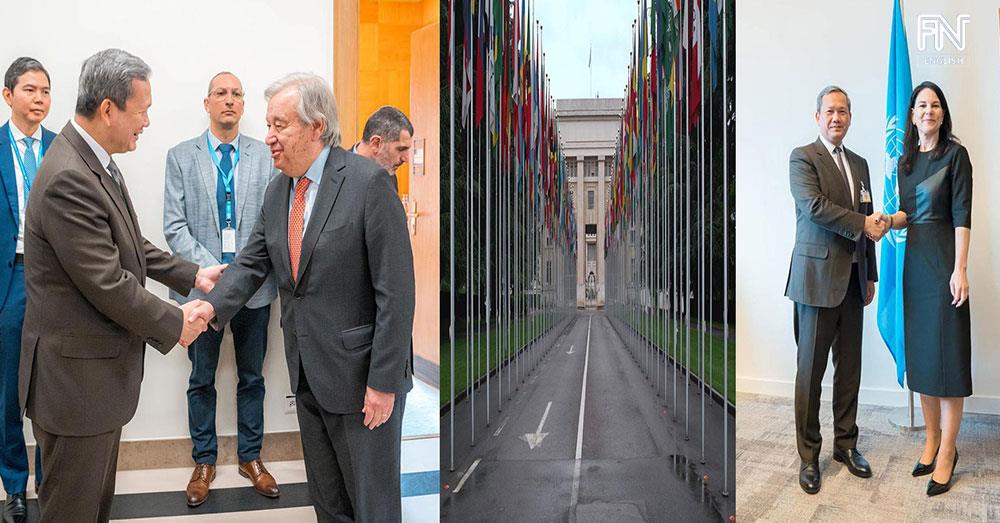
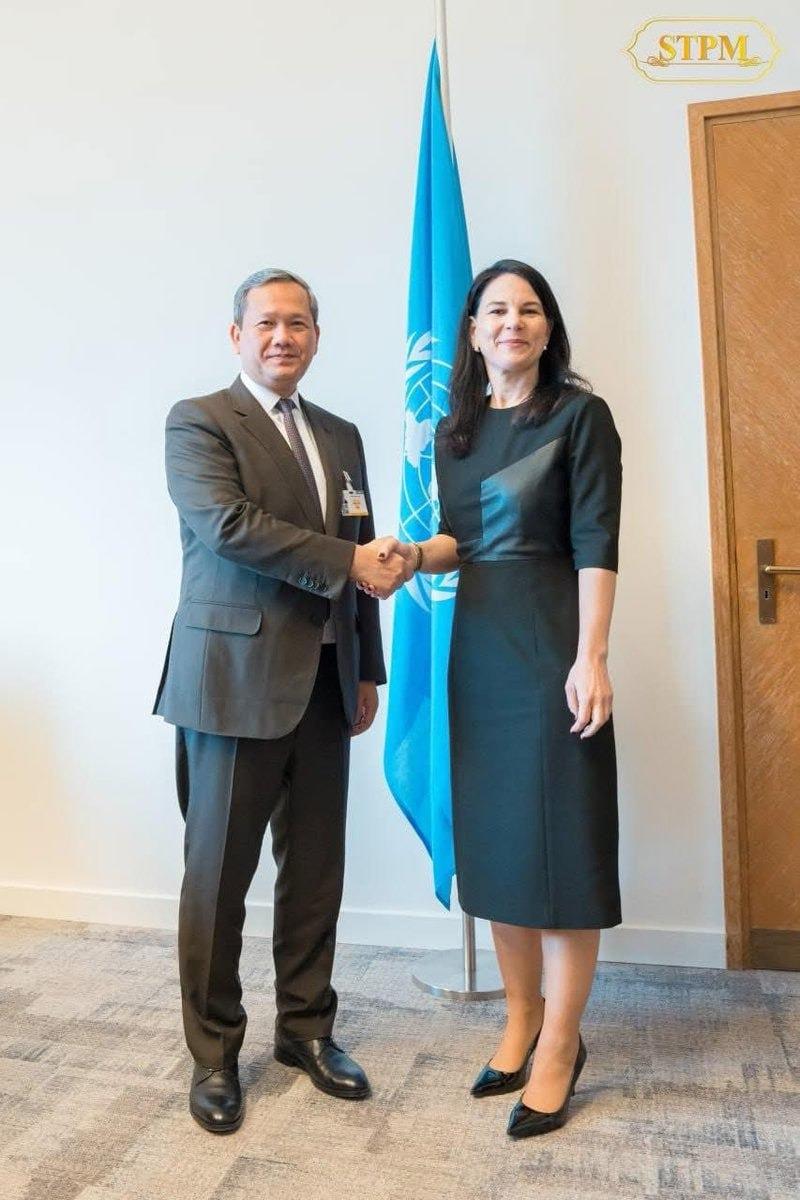
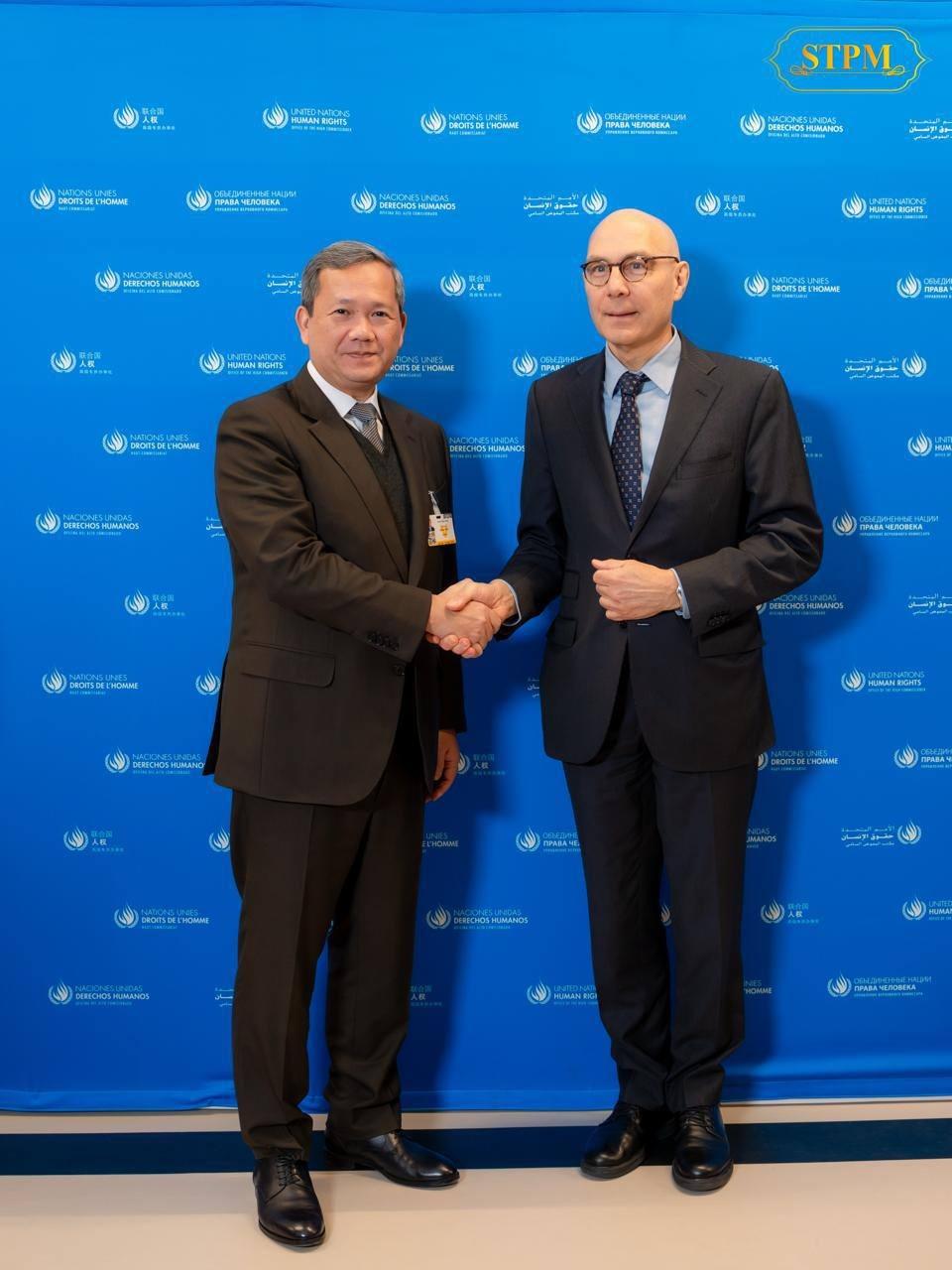
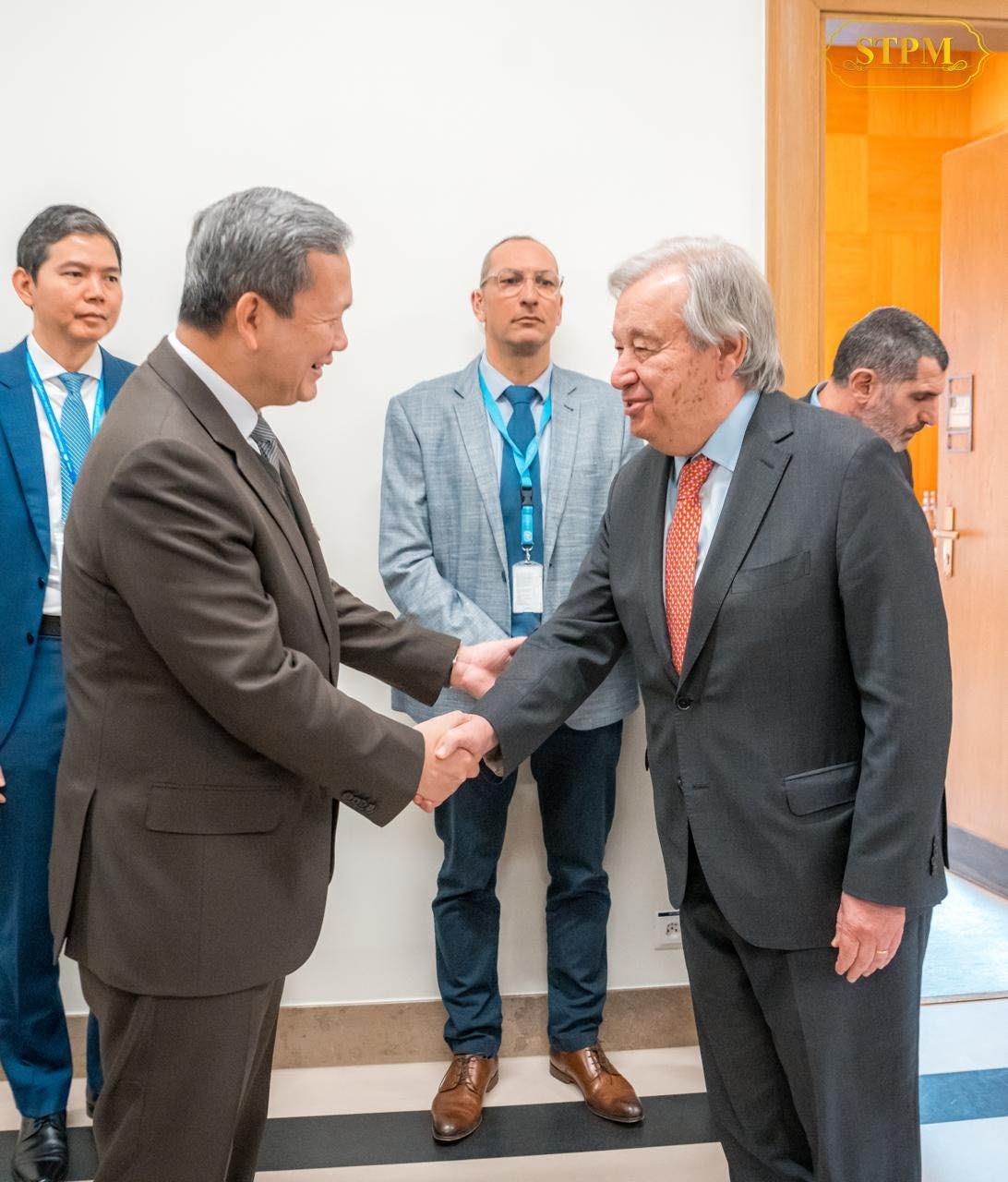
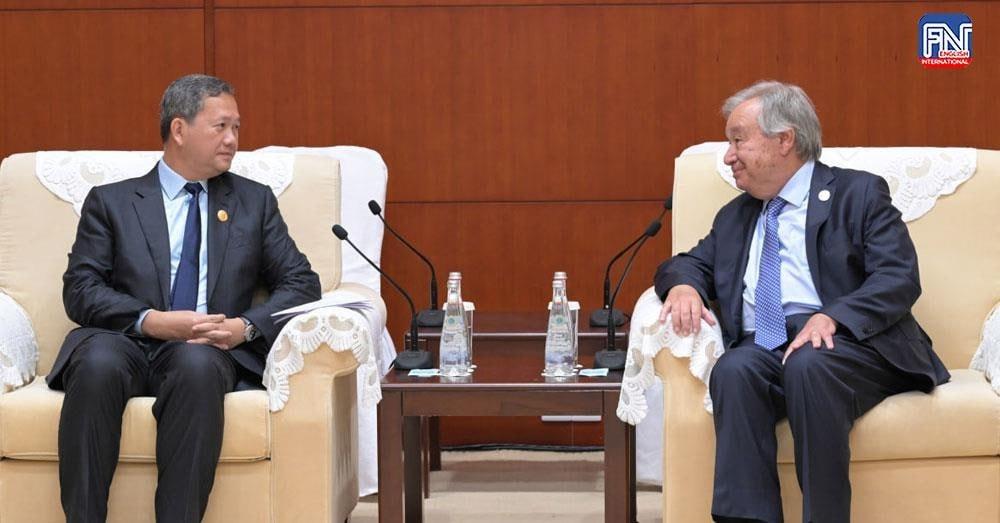
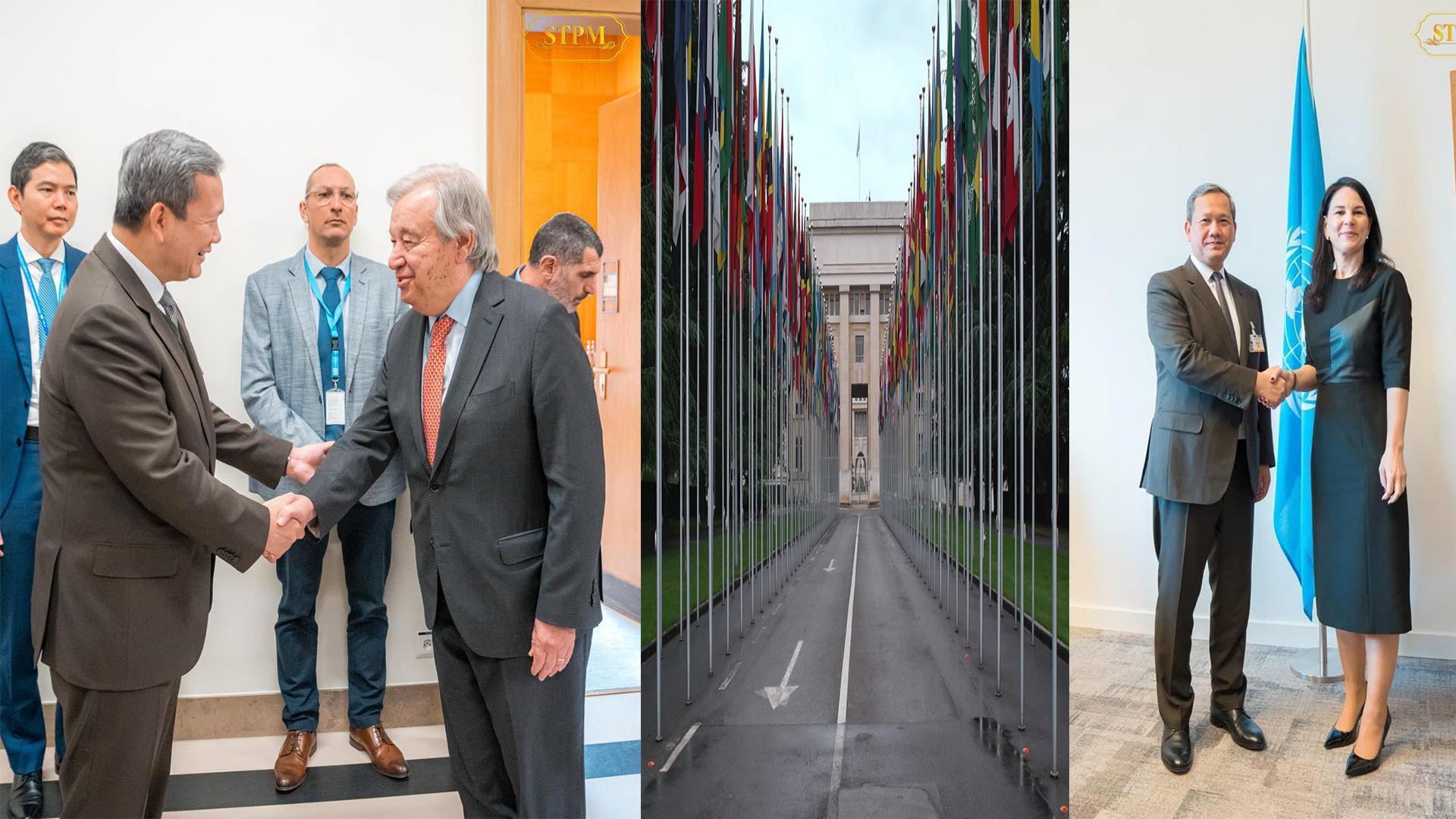
Meetings with United Nations Secretary-General António Guterres, President of the 80th Session of the UN General Assembly Annalena Baerbock, and UN High Commissioner for Human Rights Volker Türk signal that Cambodia is placing the border issue within an international legal framework rather than confining it to a purely bilateral matter.
This approach establishes a legal narrative in advance of potential formal proceedings. For smaller states, demonstrating respect for international law and seeking peaceful resolution is not merely symbolic — it is foundational to building legitimacy in the eyes of the international community.
Entering the Political Heart of Europe
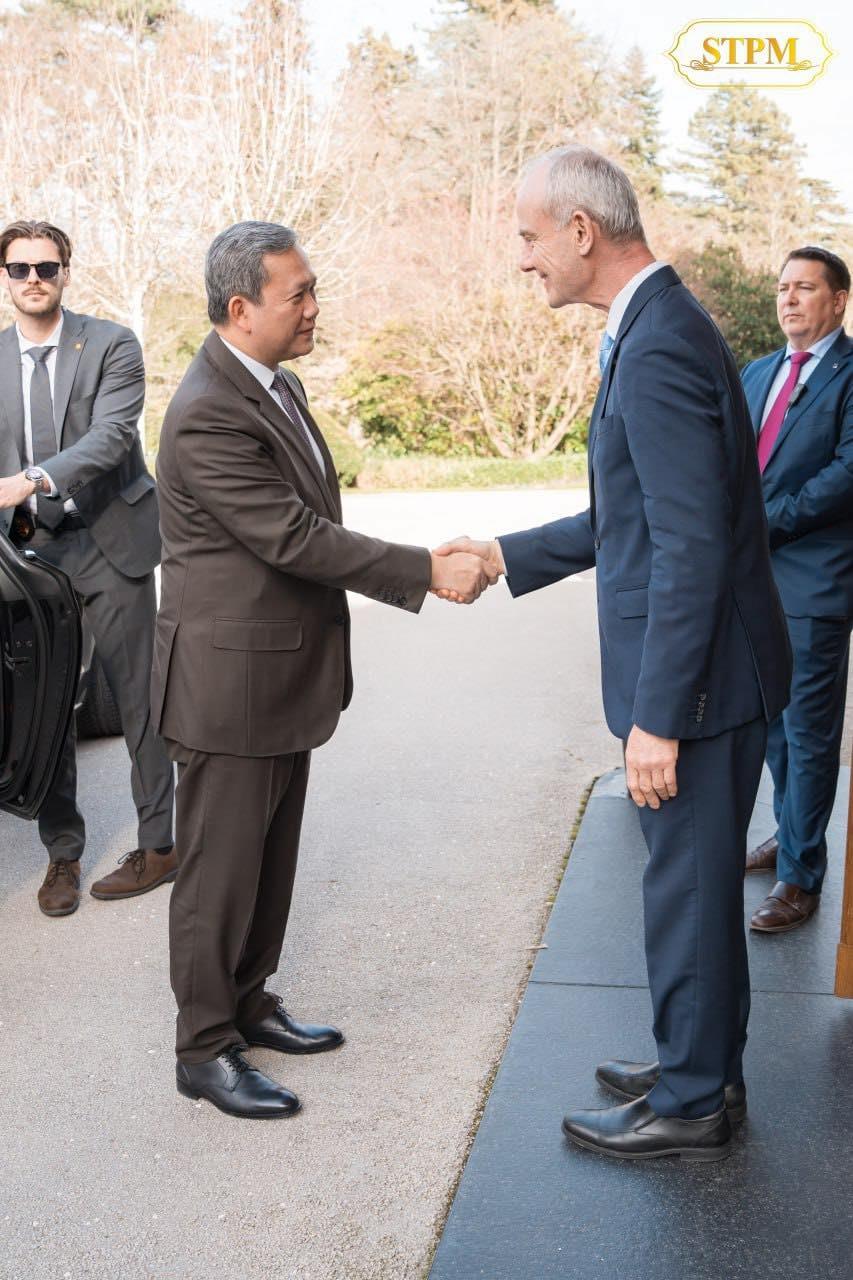
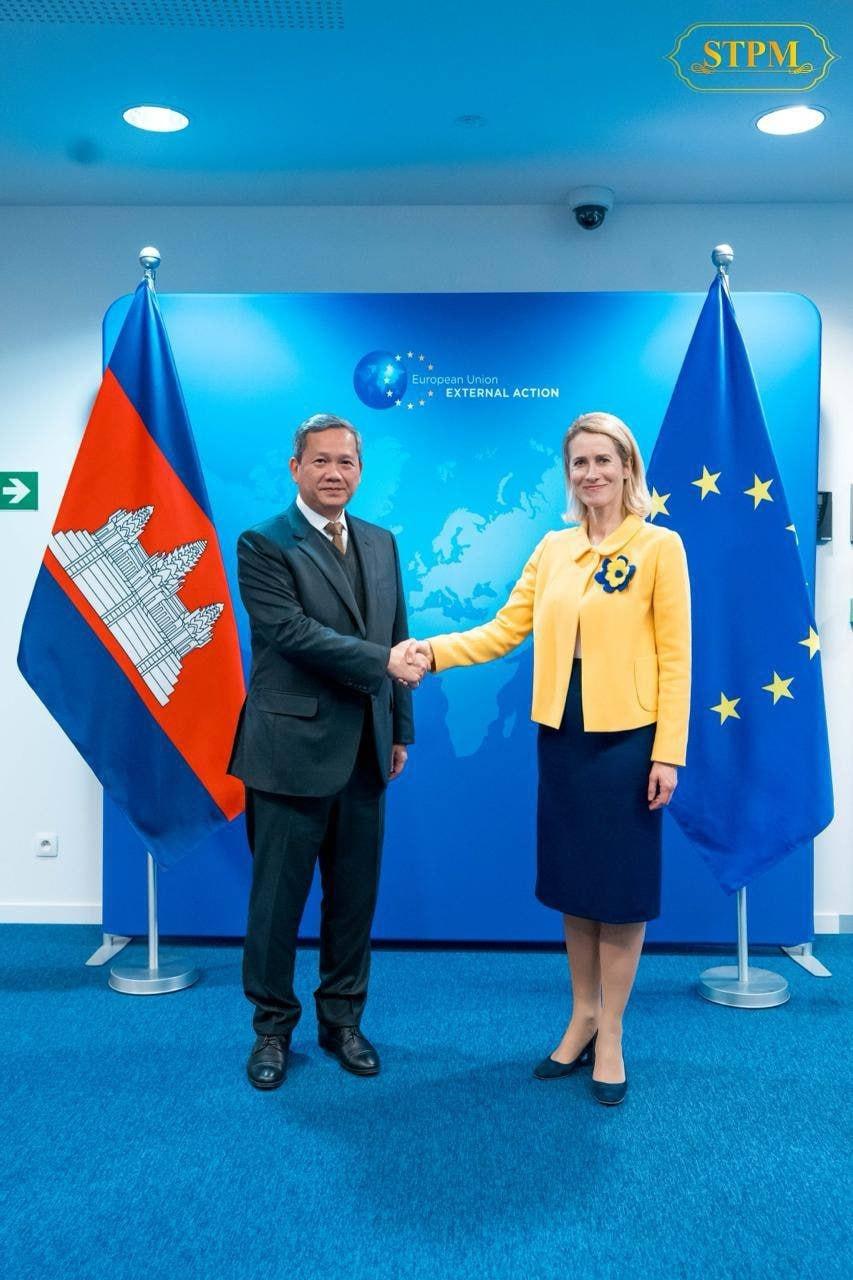
Beyond the UN system, the visit to Brussels carries substantial political weight. Meetings with European Commission Vice-President Kaja Kallas and Belgian Deputy Prime Minister and Foreign Minister Maxime Prévot indicate Cambodia’s engagement with the institutional core of the European Union.
The European Commission and EU institutions consistently emphasize rule-based international order and peaceful dispute settlement. Cambodia’s presence in Brussels sends a clear message: it seeks legal pathways, not military confrontation.
A Humanitarian Safeguard
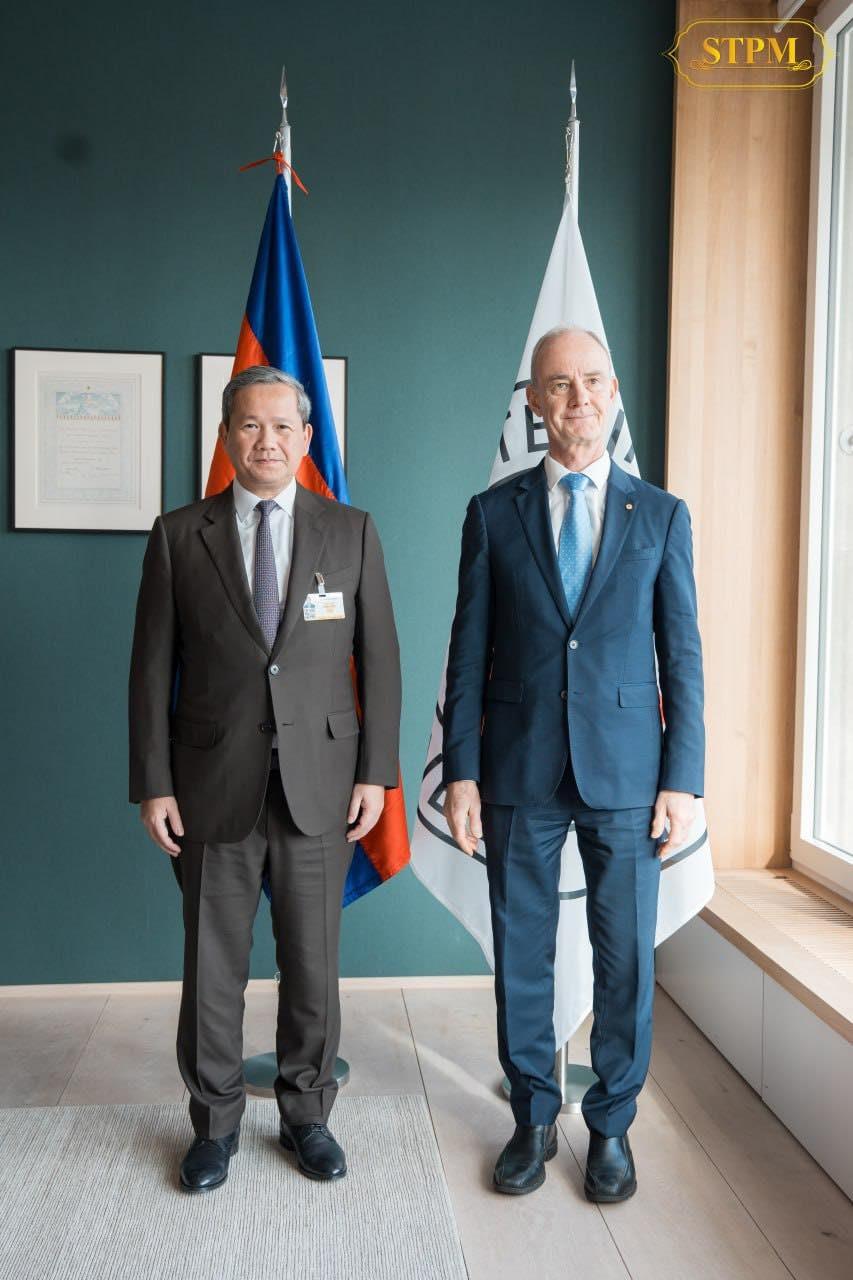
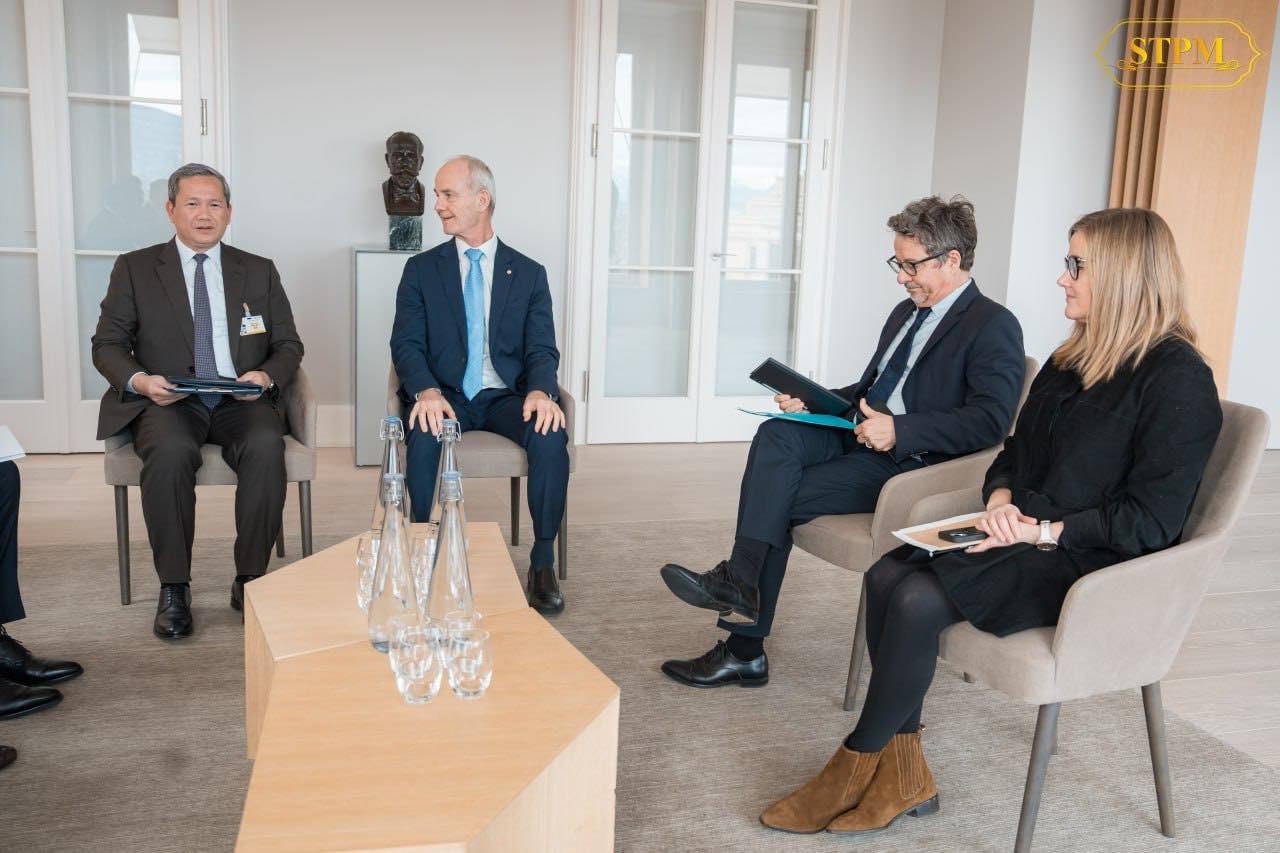
Another notable step was the meeting with the International Committee of the Red Cross (ICRC), through Vice-President Gilles Carbonnier. The ICRC is not a political body but a globally respected guardian of international humanitarian law.
Engaging the ICRC can be interpreted as building a humanitarian safeguard — a “Humanitarian Shield” — should tensions intensify. If border conditions deteriorate, Cambodia will be able to demonstrate that it engaged humanitarian institutions proactively and committed itself to international norms.
This also strengthens Cambodia’s narrative security, reducing the risk of misrepresentation in the international arena.
Building Quiet Alliances Among Smaller States
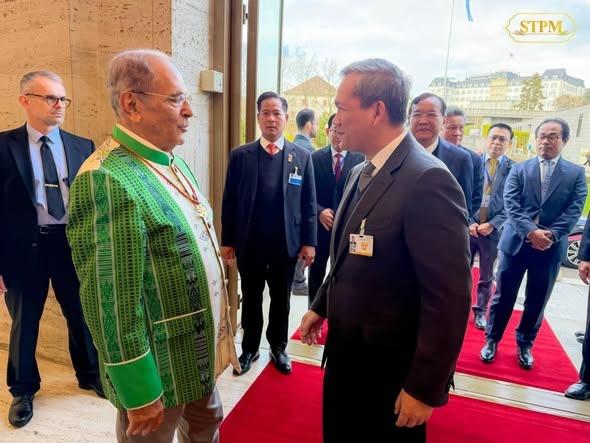
The informal discussion with Timor-Leste President José Ramos-Horta is symbolically significant. Timor-Leste, itself a small state that relied heavily on international law and UN mechanisms to secure sovereignty, represents a shared understanding among legally vulnerable states navigating geopolitical pressures.
Such interactions suggest the gradual formation of informal networks among smaller nations that view international law as a strategic equalizer.
Pre-Positioning Before Escalation
In international political theory, this approach is often described as “pre-positioning diplomacy” — defining political and legal positioning before a dispute reaches a decisive stage.
Cambodia’s European engagement can be understood as constructing political and legal platforms in advance of any international determination. In border disputes, victory does not always begin on the battlefield; it often begins with legitimacy, legal framing, and international perception. Temporary territorial shifts resulting from imbalances of force cannot constitute a lawful basis for redrawing internationally recognized boundaries. Sovereignty and lawful territory are not determined by temporary military advantage, but by legal frameworks and internationally recognized mechanisms.
A Necessary Analytical Balance
Still, a balanced analysis must ask: will these high-level meetings translate into tangible support at later stages?
The European Union and institutions within the United Nations system tend to employ cautious language, encouraging peaceful settlement and adherence to international law. There is no indication that Europe will directly intervene as a party in the Cambodia–Thailand dispute.
However, for Cambodia, securing principled endorsement — particularly support for rule of law and lawful dispute resolution mechanisms — builds durable political legitimacy.
In international politics, legitimacy is not secondary to power. History repeatedly shows that while force may produce temporary change on the ground, long-term recognition and lawful standing determine enduring outcomes.
Signaling to Domestic and Regional Audiences
The visit also sends a message to Cambodian citizens at home and abroad: the government is not reacting impulsively but acting through structured strategic planning.
In an era when information warfare can shape perceptions and fuel instability, visible engagement on international platforms reinforces public confidence and reduces fear.
For Thailand, the message is equally clear: Cambodia is prepared to pursue international mechanisms if necessary, not rely solely on bilateral negotiations. This may encourage both sides to approach peaceful settlement with greater seriousness.
Conclusion
Ultimately, this European tour may not have produced headline-grabbing declarations or immediate agreements. Yet it clearly signals Cambodia’s strategic direction: choosing the diplomatic and legal battlefield before any military one.
In a world where power is not measured solely by weaponry but by political legitimacy and international legal standing, building platforms in advance of confrontation is a strategic investment in future outcomes.
For a small state like Cambodia, victory does not begin at the border line — it begins with alliance-building, narrative framing, and adherence to international law.
This visit to Europe, though quiet, may well become the foundation for significant developments ahead — a sign that Cambodia is preparing its strategic position before the contest reaches its decisive phase.