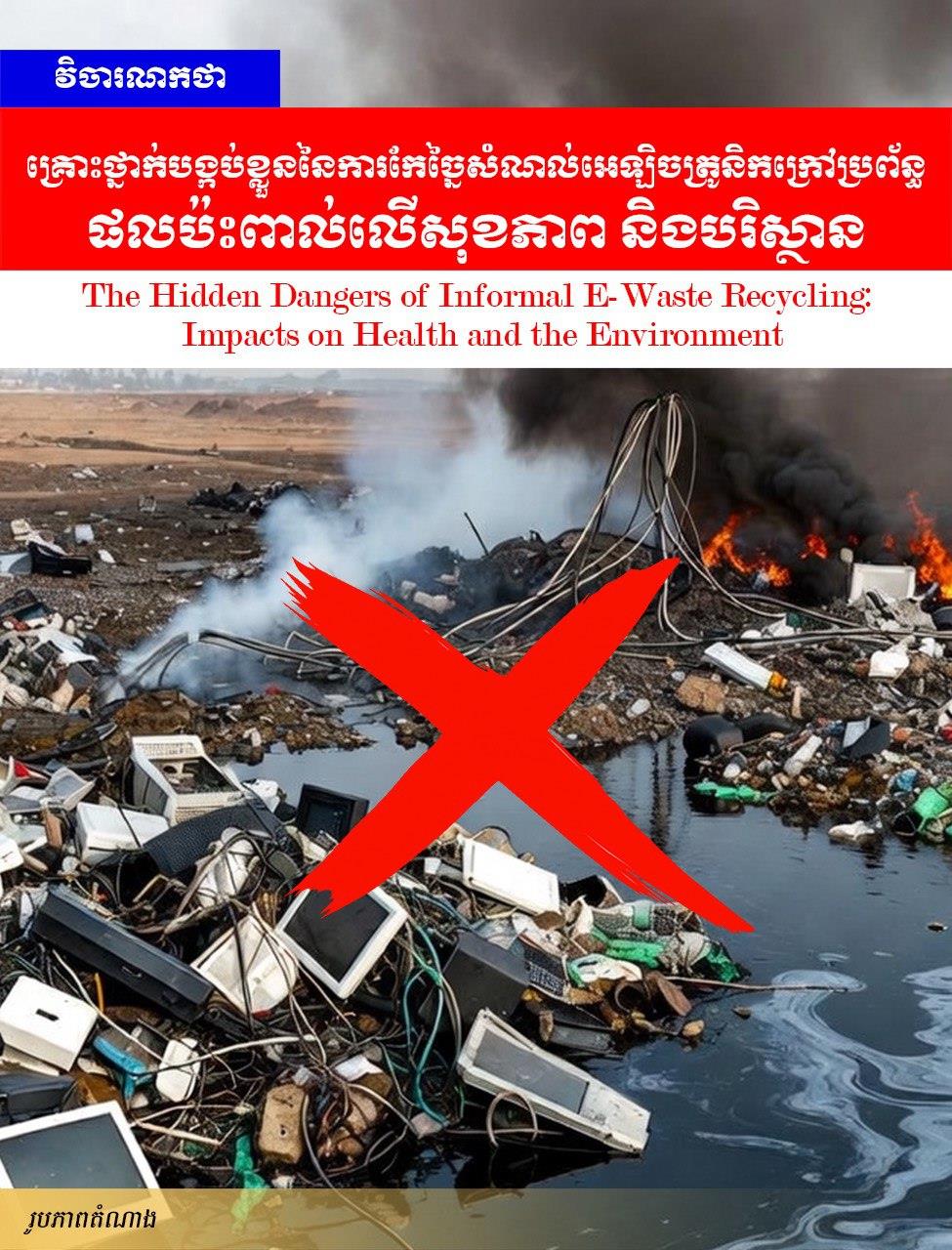
(Phnom Penh): Within the framework of a Circular Economy, electronic waste (E-waste) recycling serves as a vital driver for recovering rare resources. However, the rapid expansion of Small and Medium E-waste Recycling Workshop operating "informally"—characterized by a lack of protective technology, oversight, and regulation—is becoming a severe environmental and public health crisis, particularly in developing nations.
1. The Pollution Cycle of Technologically Deficient Value Chains
Electronic devices such as computers, mobile phones, and televisions contain hazardous substances including lead, mercury, cadmium, arsenic, and brominated flame retardants. In informal recycling zones, workers often operate without personal protective equipment (PPE), dismantling devices manually, burning cables to extract copper, and using strong acids to leach precious metals. These rudimentary methods release toxic gases and contaminate the surrounding soil, air, and water sources.
2. Implications for Human Health
The health consequences are profound. Exposure to lead and mercury can damage the nervous system, lead to brain impairment, and diminish cognitive development in children. Furthermore, these toxins are linked to kidney and cardiovascular diseases. Inhaling toxic fumes from burning plastics significantly increases the risk of respiratory illnesses and cancer. Children and pregnant women are the most vulnerable, as exposure can cause developmental delays and lifelong health complications.
3. Environmental Degradation
The environmental impact is equally devastating. Toxic residues seep into the soil and groundwater, contaminating drinking supplies and agricultural land. Water bodies near recycling sites often exhibit high concentrations of heavy metals, which decimate fish populations and aquatic biodiversity. Additionally, unregulated burning releases pollutants that can travel long distances, causing long-term damage to the wider ecosystem.
4. Challenges to Sustainable Resource Management
Informal recycling undermines the principles of sustainable resource management. While some precious metals are recovered, a significant portion of the remaining hazardous waste is disposed of improperly, creating a secondary environmental crisis. Addressing this requires the strengthening of environmental laws, the standardization of recycling systems, the enforcement of worker safety protocols, and robust international cooperation.
Conclusion
Unregulated Small and Medium-scale E-waste recycling, while offering certain economic benefits, poses severe risks to human health and the environment. A truly sustainable solution must strike a balance between economic opportunity and the rigorous enforcement of safety and environmental protections.
=FRESH NEWS