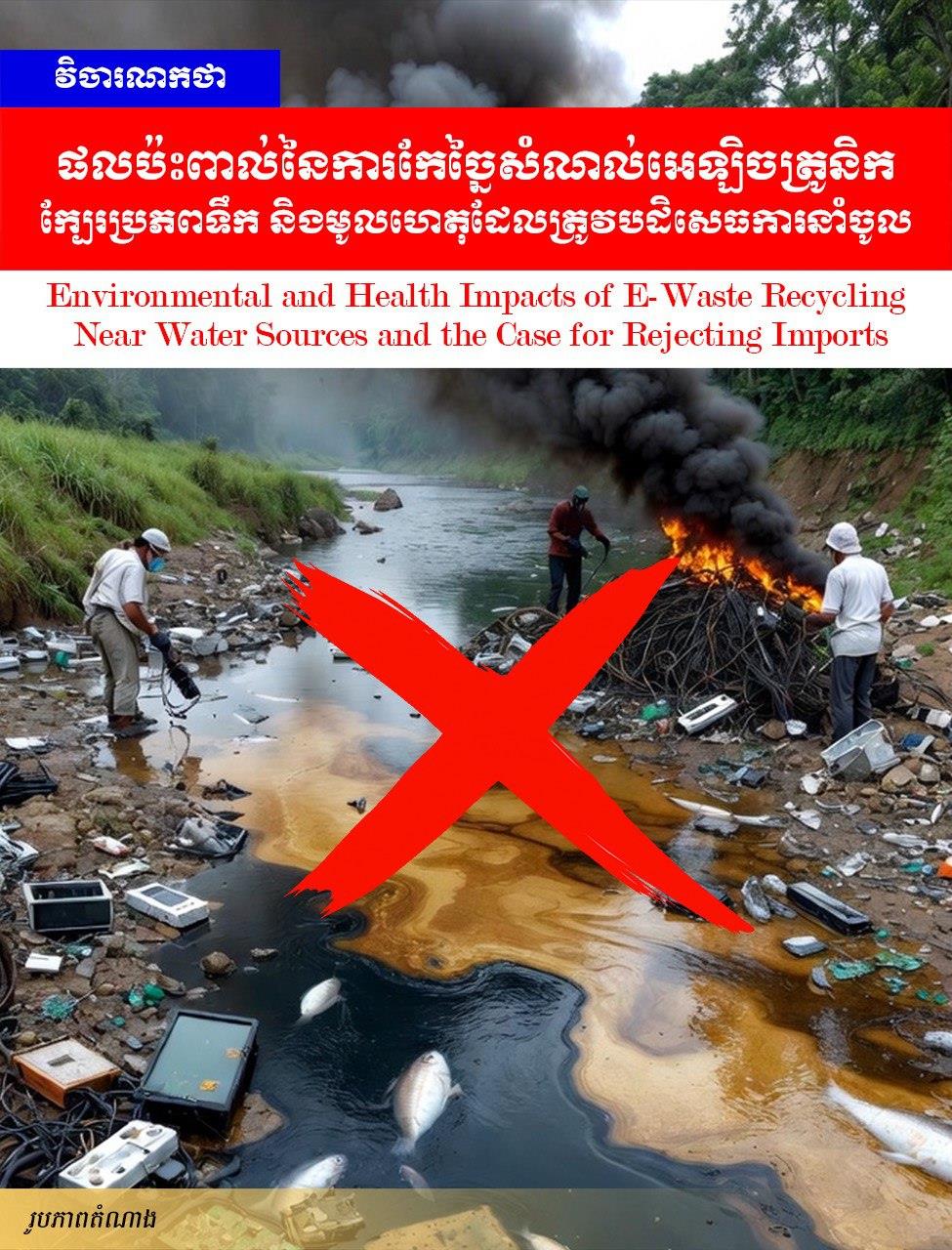
(Phnom Penh): The recycling of electronic waste (E-waste) is essential for resource recovery and reducing landfill volume. However, when these activities are unregulated or conducted near water bodies such as rivers, lakes, groundwater wells, or coastal areas, they pose severe threats to the environment and public health. Proximity to water sources significantly increases the risk of toxins leaching into the water supply used for daily consumption.
Toxic Substances and Hazardous Processing Methods
E-waste contains a complex mix of materials, including valuable metals like gold and copper, alongside highly hazardous substances such as lead, mercury, cadmium, and various toxic chemicals. In informal or technically deficient recycling operations, components are often dismantled by hand, burned in the open air to extract metals, or treated with strong acids. These processes generate contaminated ash, toxic wastewater, and chemical-laden dust.
Contamination of Water Sources and the Food Chain
When recycling occurs near water sources, heavy metals and toxins can infiltrate surface water or seep into groundwater. During the rainy season, runoff carries these pollutants into vital water bodies and reservoirs. Once in the aquatic system, these toxins accumulate in fish and other aquatic life, eventually entering the human body through the consumption of contaminated water or seafood.
Impacts on Health and Ecosystems
Water pollution does more than destroy aquatic biodiversity and ecosystems; it poses high risks to human health, including neurological disorders, kidney damage, impaired childhood development, and an increased risk of cancer. Groundwater contamination can persist for decades, and remediation is both extremely difficult and prohibitively expensive.
Reasons for Rejecting E-Waste Imports
The primary reason developing nations reject E-waste imports is to prevent these environmental and health risks. Many developing countries lack the advanced technology and rigorous monitoring systems required to manage hazardous waste safely. Accepting these imports can lead to widespread soil, water, and air pollution, creating a long-term waste burden that undermines national environmental protection policies.
Protective Measures and Sustainable Management
To safeguard public health, E-waste recycling facilities must be located far from critical water sources. They must be equipped with standard protection systems, such as impermeable flooring, wastewater collection and treatment systems, and secure storage for hazardous materials. Stricter law enforcement and the development of technical capacity are essential keys to ensuring that waste recycling does not compromise the future.
Conclusion
While waste recycling offers economic benefits, conducting these activities near water sources without adequate protection places immense pressure on the environment and human life. Therefore, rejecting the import of E-waste is a responsible decision to protect natural resources and ensure the well-being of all generations.
=FRESH NEWS