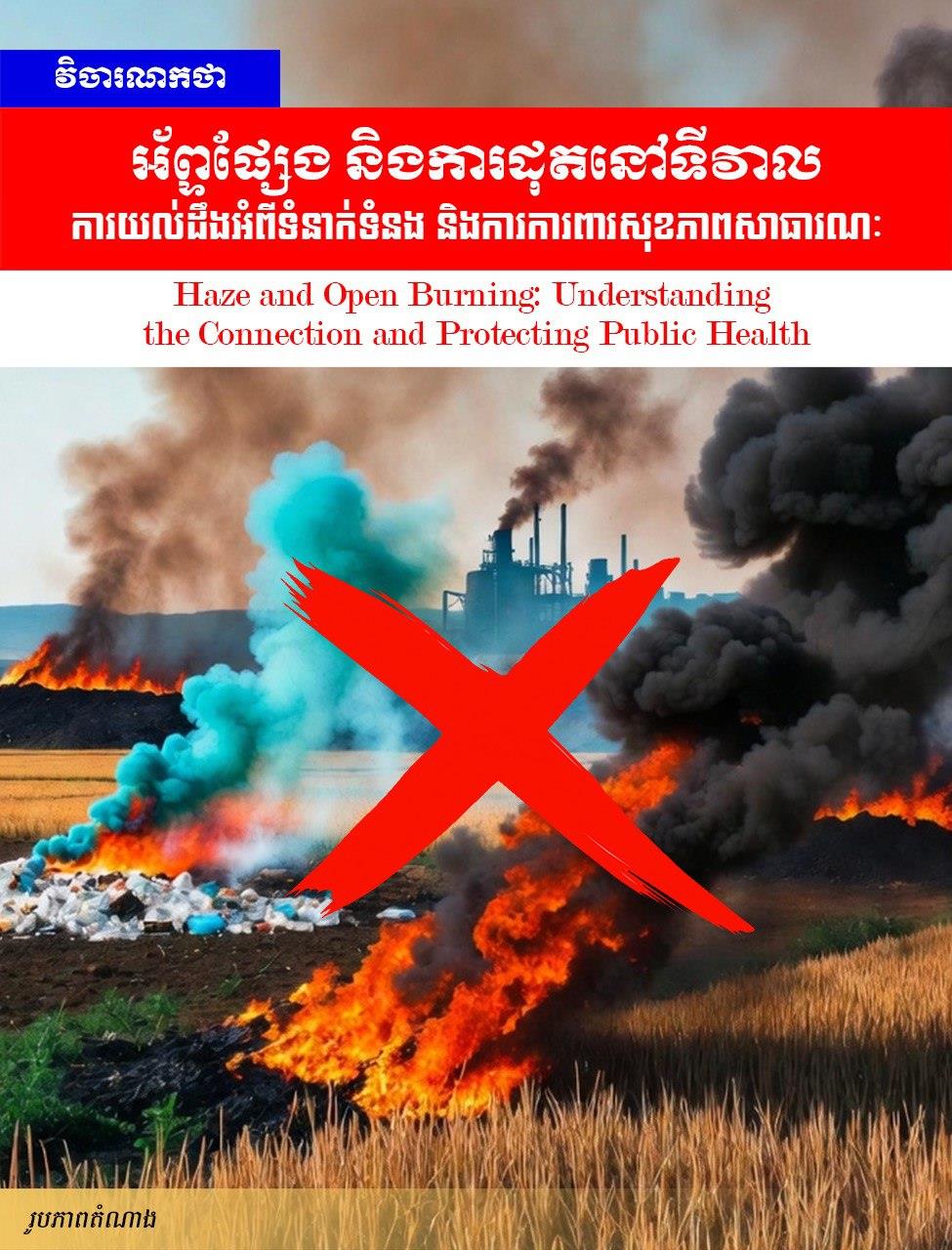
(Phnom Penh): Haze is a recurring environmental challenge in many countries, particularly during the dry season. It manifests as a dense layer of smoke and dust that reduces visibility and severely degrades air quality. A primary cause of haze is open burning—the practice of burning waste, agricultural residues, rice straw, forests, or grasslands in an open environment.
1. The Root Cause of Haze
Open burning releases massive amounts of smoke, fine particulate matter (PM2.5), carbon monoxide, and other hazardous gases into the atmosphere. Because these particles are microscopic, they can travel long distances and remain suspended in the air for days or even weeks. When multiple fires occur simultaneously—such as for land clearing or agricultural preparation—the cumulative smoke forms a thick haze that can blanket vast regions, including major cities and neighboring countries.
2. Public Health Risks
Haze poses severe threats to human health. When we breathe polluted air, PM2.5 particles penetrate deep into the lungs and can enter the bloodstream. This can lead to immediate symptoms such as coughing, throat and eye irritation, and asthma flare-ups. Long-term exposure increases the risk of heart disease, chronic lung conditions, and impaired respiratory development in children. Vulnerable groups—including the elderly, pregnant women, outdoor workers, and those with pre-existing health conditions—are at the highest risk.
3. Solutions and Cooperation
To reduce haze, controlling open burning is essential. Governments can enforce stricter regulations against illegal burning while promoting safe waste management alternatives. Farmers are encouraged to adopt sustainable practices, such as composting agricultural waste or using specialized machinery for land preparation instead of fire. Communities can also play a vital role by sorting, recycling, and properly disposing of household waste. Public education remains key to raising awareness about the inherent dangers of open burning.
Furthermore, reforestation and forest protection are vital for improving air quality, as trees absorb carbon dioxide and trap airborne dust. Because haze knows no borders, regional and international cooperation is crucial for a comprehensive solution.
Conclusion
Reducing haze offers clear health and economic benefits. Eliminating open burning not only results in cleaner air but also lowers healthcare costs and boosts labor productivity. When the air is clean, children can play safely outdoors, and communities can breathe easier. Choosing to stop open burning today is a commitment to ensuring safe, breathable air for ourselves and future generations.
=FRESH NEWS