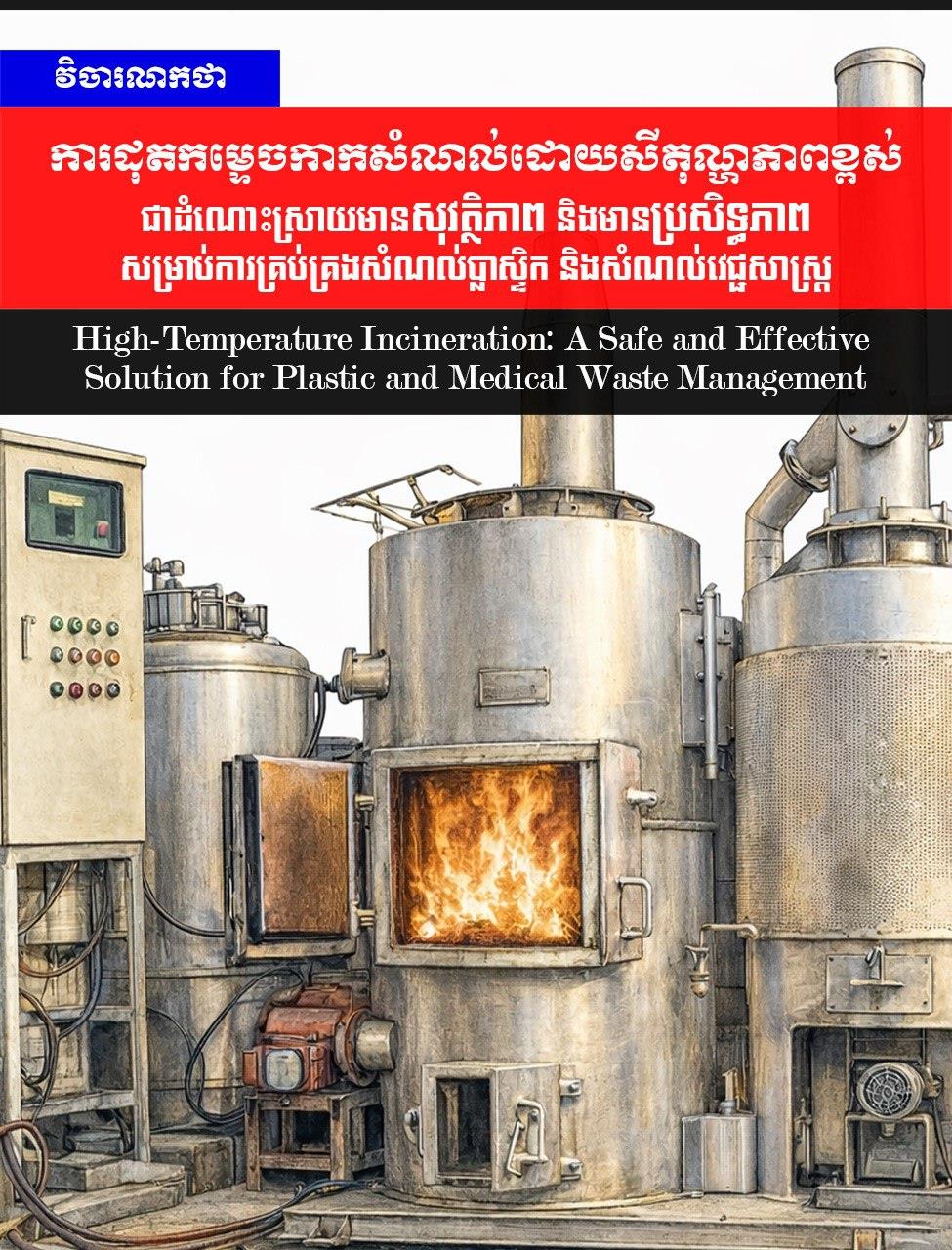
(Phnom Penh): The improper disposal of plastic and medical waste is an escalating crisis for both public health and the environment. When plastics and hazardous materials are burned in the open air, they release dense smoke and toxins that pollute the air, contaminate soil and water, and pose severe health risks. However, modern incinerators operating at temperatures exceeding 1,000°C offer a significantly safer and more controlled solution.
1. Molecular-Level Neutralization of Toxins
At temperatures above 1,000°C, toxic organic compounds are broken down at the molecular level. Unlike open-air burning—which produces carcinogens such as dioxins and furans—standardized industrial incineration ensures complete combustion. This advanced process effectively destroys hazardous organic components that would otherwise be released into the environment, preventing the formation of toxic by-products and significantly reducing environmental contamination.
2. Emission Filtration and Community Protection
Another critical advantage is the advanced management of emissions. Modern incineration systems are equipped with sophisticated air-cleaning technologies, including high-efficiency filters and scrubbers. These tools capture particulate matter, acid gases, and various toxins before they can reach the atmosphere. This filtration safeguards nearby communities from toxic fumes and significantly lowers the risk of respiratory diseases.
3. Efficiency for Medical Waste and Waste-to-Energy Recovery
High-temperature incineration is vital for medical and other hazardous waste. Materials contaminated with pathogens, chemicals, or toxins pose a severe threat if left in landfills or disposed of incorrectly. High-heat incineration not only completely destroys pathogens but also reduces waste volume by approximately 90%, making final waste management much safer and more efficient.
Furthermore, some advanced systems can harness the heat generated during the process to produce electricity or industrial thermal energy. This transforms waste into a valuable resource and helps reduce global reliance on fossil fuels.
Conclusion
In summary, while open-air burning of plastics and medical waste presents grave health and environmental threats, specialized incinerators operating above 1,000°C provide a safe and effective alternative. Supported by strict regulations, modern technology, and proper operational oversight, high-temperature incineration minimizes pollution, protects public health, and fosters cleaner, safer communities for everyone.
=FRESH NEWS