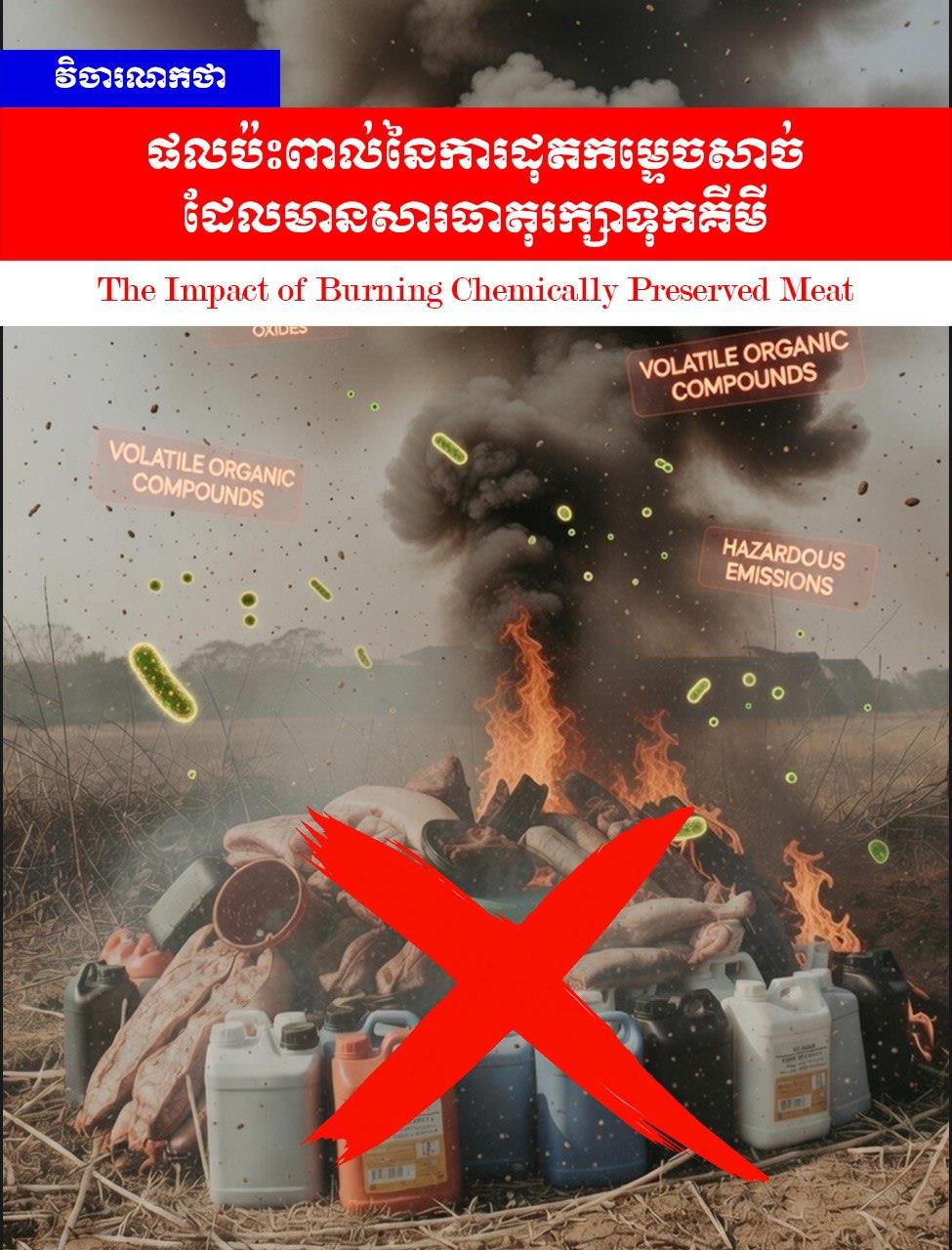
(Phnom Penh): Burning chemically preserved meat can create environmental and public health concerns beyond those associated with burning ordinary organic waste. Chemically preserved meat often contains substances such as preservatives, curing agents, or other additives intended to extend shelf life or prevent spoilage. When these substances are exposed to high heat during burning, they may break down and form new chemical compounds that can affect air quality and surrounding ecosystems.
1. Air pollution Concerns
One of the main concerns is air pollution. The combustion of preserved meat can release smoke, fine particles, and potentially toxic gases into the atmosphere. Depending on the chemicals present, burning may produce harmful by-products such as nitrogen oxides, volatile organic compounds, or other hazardous emissions. If burning takes place in open areas or without proper emission controls, these pollutants can spread into nearby communities, causing irritation to the eyes and respiratory system and reducing overall air quality.
2. Environmental impacts
Environmental impacts may also occur when pollutants settle onto soil or water surfaces. Chemical residues and ash from burning can contaminate land if not properly managed, potentially affecting plants, animals, and local food production. Over time, repeated exposure to certain pollutants may accumulate in ecosystems and disrupt environmental balance.
For nearby residents, short-term effects may include unpleasant odors, coughing, headaches, or breathing discomfort, particularly for children, older adults, and individuals with existing respiratory conditions. Long-term risks depend on the scale of burning, the types of chemicals involved, and the level of environmental control in place. Controlled incineration in licensed facilities significantly reduces these risks by ensuring complete combustion and filtering emissions.
In conclusion, while burning chemically preserved meat may sometimes be used to prevent unsafe products from entering the food chain, it requires careful management to avoid creating additional environmental and health problems. Proper disposal methods, strict regulation, and the use of modern incineration technology are essential to minimize harm and protect both people and the environment.
=FRESH NEWS