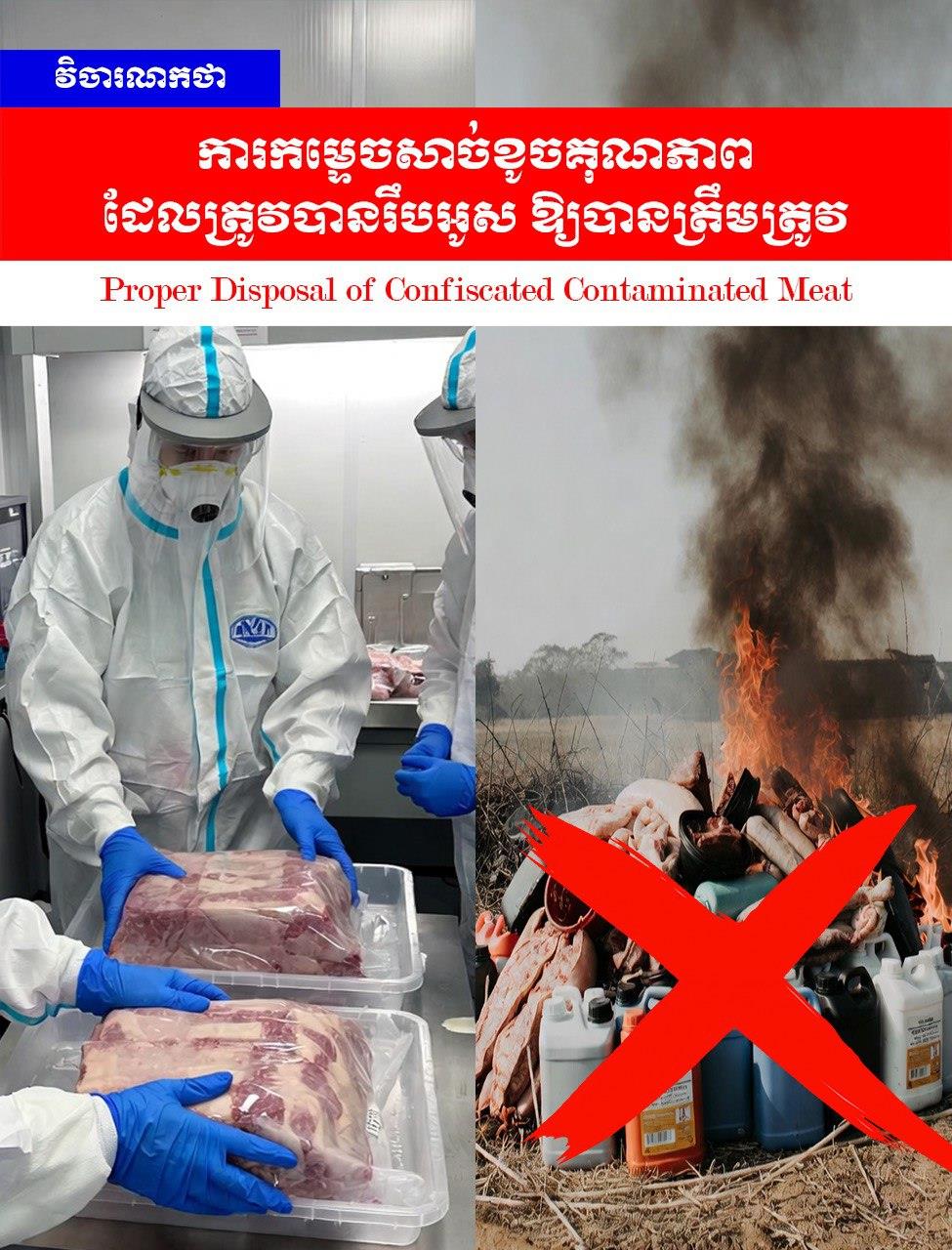
(Phnom Penh): When authorities seize meat that is contaminated or unfit for consumption, proper disposal becomes a vital public health responsibility. Unsafe meat can harbor bacteria, infectious viruses, or chemical contaminants that threaten human health, livestock, and the environment. Therefore, disposal methods must ensure that these products cannot re-enter the food chain while minimizing environmental impact.
1. Safety as the Top Priority
The foremost priority in managing contaminated meat is safety and containment. Confiscated products must be handled by trained professionals using personal protective equipment (PPE) to prevent direct exposure or cross-contamination. The meat must be transported in sealed containers to authorized disposal sites to prevent leakage, control odors, and avoid accidental access by animals or unauthorized individuals.
2. Disposal Methods and Environmental Protection
- Controlled Incineration: The most common method is high-temperature incineration at licensed facilities. This process effectively destroys pathogens and organic matter while utilizing filtration and monitoring systems to minimize toxic emissions. This is strictly superior to open-air burning, which causes severe air pollution and releases harmful substances from incomplete combustion.
- Technical Alternatives: Depending on the contaminant type and local regulations, other methods—such as industrial rendering, deep burial at designated sites, or technical composting—may be considered. These methods must adhere to strict environmental standards to prevent soil and groundwater contamination. Authorities typically assess disease risks, waste volume, and environmental impact before selecting the appropriate method.
3. Transparency and Trust
Environmental protection is a core component of responsible waste disposal. Ash, wastewater, and other residues must be managed meticulously to avoid secondary pollution. Continuous monitoring and clear communication with nearby communities help build public confidence and ensure transparency throughout the process.
Summary
The disposal of confiscated contaminated meat requires meticulous planning, stringent safety protocols, and rigorous environmental oversight. By utilizing authorized facilities and regulated methods, authorities can effectively protect public health while safeguarding nature, ensuring that emergency actions do not inadvertently create new risks for society.
=FRESH NEWS