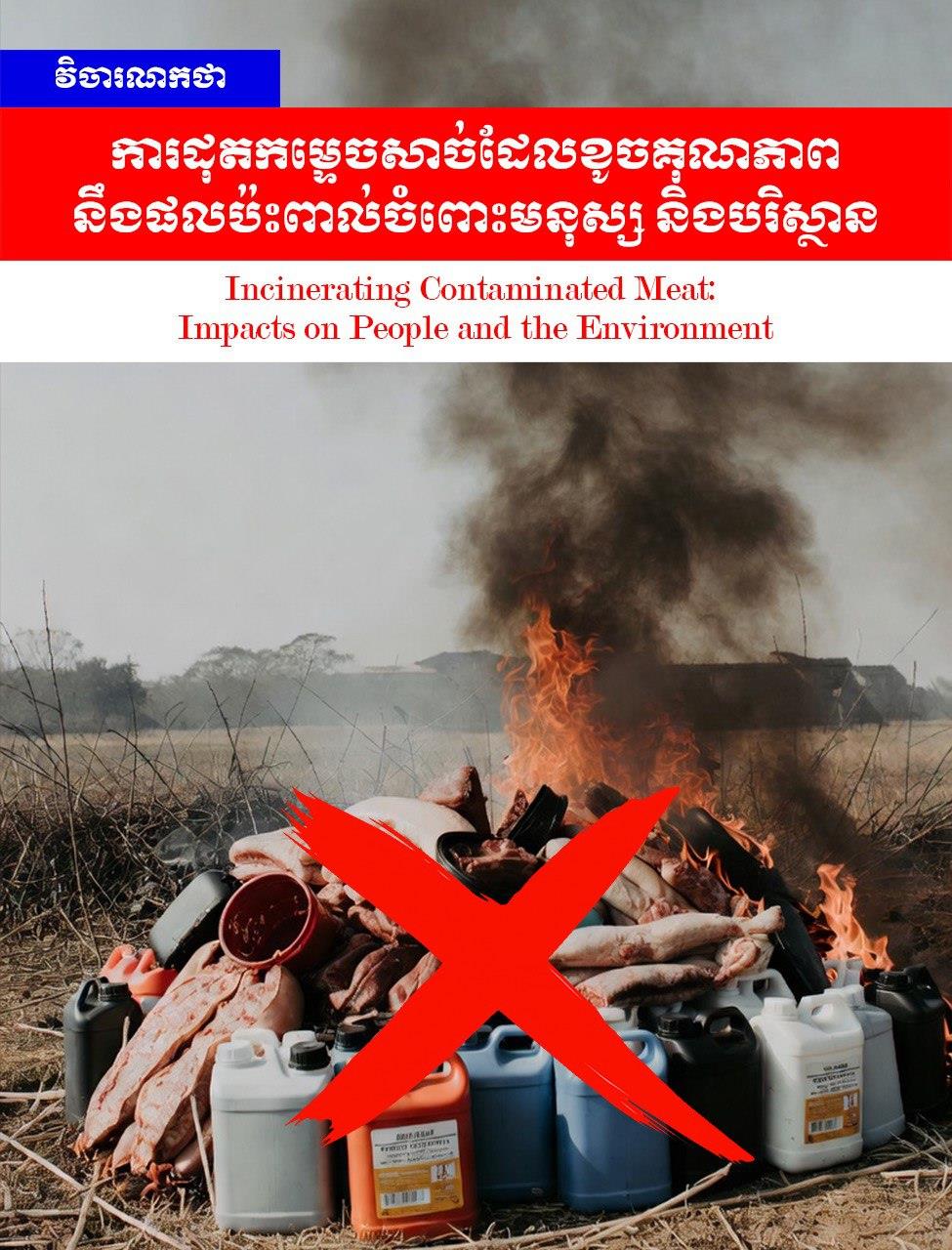
(Phnom Penh): When authorities seize contaminated meat or products containing unsafe chemicals, incineration is the most common method used to prevent them from entering the food market.
This approach effectively halts the spread of disease and protects public health in the short term. However, for communities living near disposal sites, this practice raises significant concerns regarding air quality, environmental safety, and long-term health implications.
Public Health Benefits
Incinerating meat at high temperatures effectively destroys bacteria and viruses, making it a vital tool during food safety crises or disease outbreaks.
From a public health perspective, rapid destruction mitigates the risk of human consumption and prevents pathogens from spreading to farms and markets. In emergency situations, the speed of resolution is considered paramount.
Environmental and Community Impacts
The combustion of organic matter releases smoke and pollutants into the atmosphere.
Depending on the method used, emissions may include PM2.5 particulate matter, foul odors, and toxins such as dioxins, which persist in the environment for long periods.
These substances can travel through the air and settle into soil or vegetation, potentially re-entering the food chain later. Open-air or unregulated burning causes significantly higher pollution compared to industrial facilities equipped with smoke control systems.
Solutions and Recommendations
For residents nearby, the immediate impacts are often short-term, such as eye and respiratory irritation, coughing, or the exacerbation of asthma.
Strong odors also disrupt daily life and cause community distress. Long-term health risks vary based on the volume of waste, duration of exposure, and environmental safeguards in place. Research indicates that risks are substantially lower when incineration occurs in standardized facilities with emission monitoring systems.
Environmental impact is not limited to air quality, ash and residue must be managed meticulously to avoid contaminating soil and water. Local wildlife and ecosystems also remain at risk if disposal is poorly managed.
Consequently, environmental experts advocate for strict oversight, safe ash management, and transparent communication with the community.
Conclusion
In summary, the incineration of contaminated meat represents a delicate balance between immediate public health protection and environmental mitigation. When managed correctly, it is a highly effective emergency measure.
However, without rigorous oversight, it can create new risks for both people and the planet. Achieving a balance between public health and environmental integrity helps the public understand why authorities choose this method and why environmental monitoring is so essential.
=FRESH NEWS