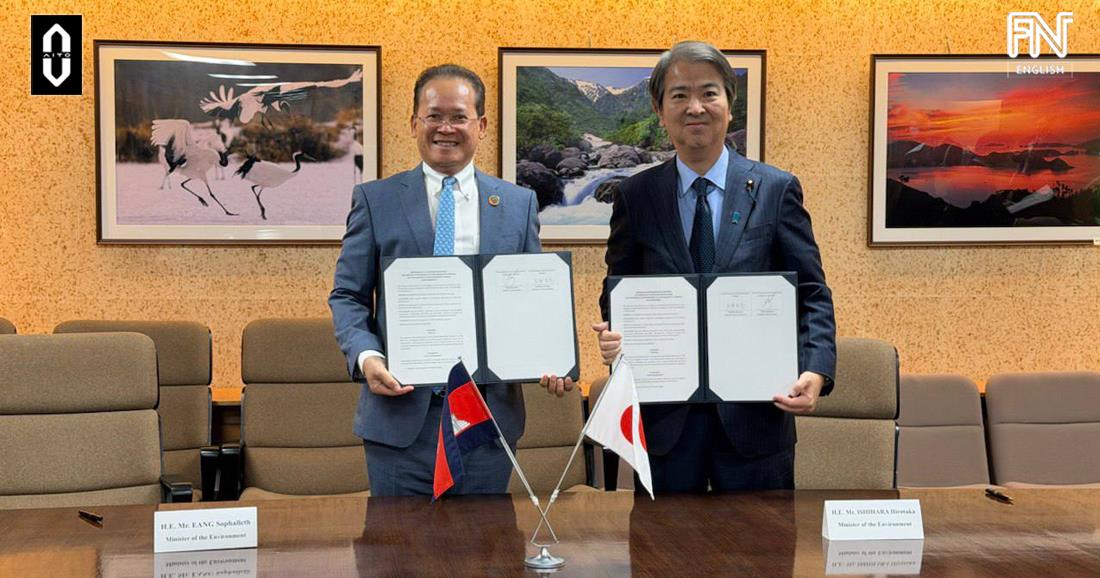
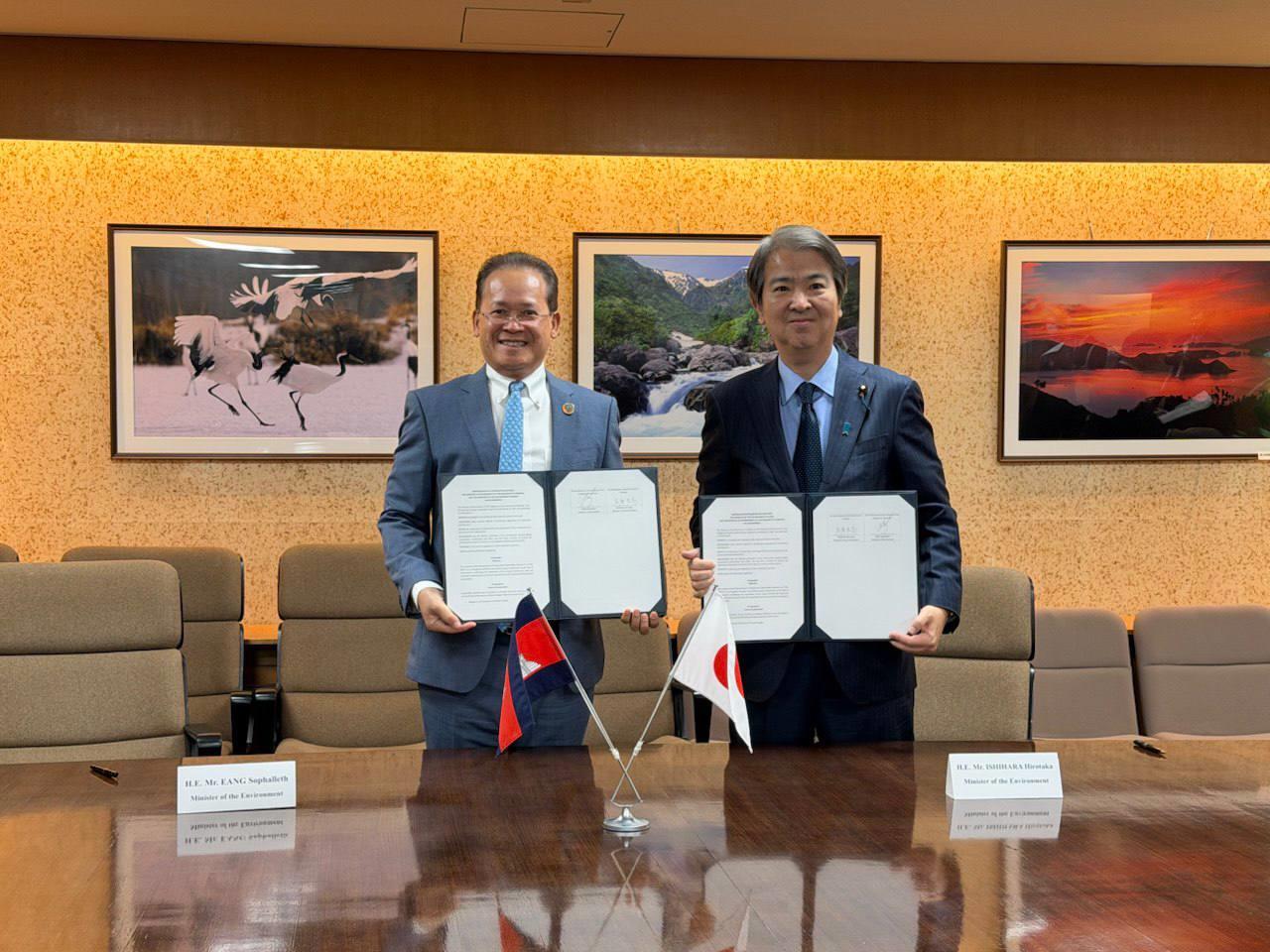
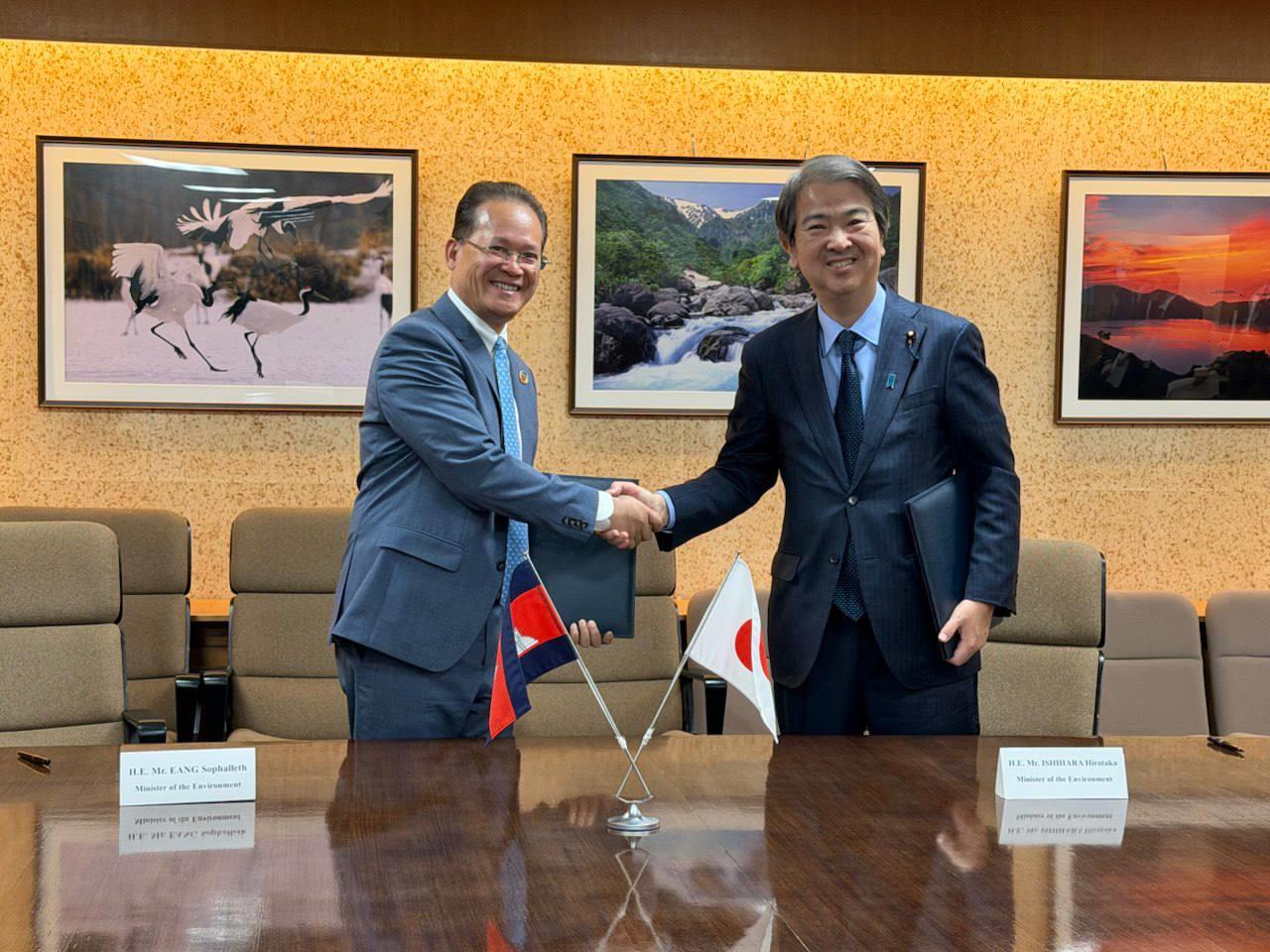
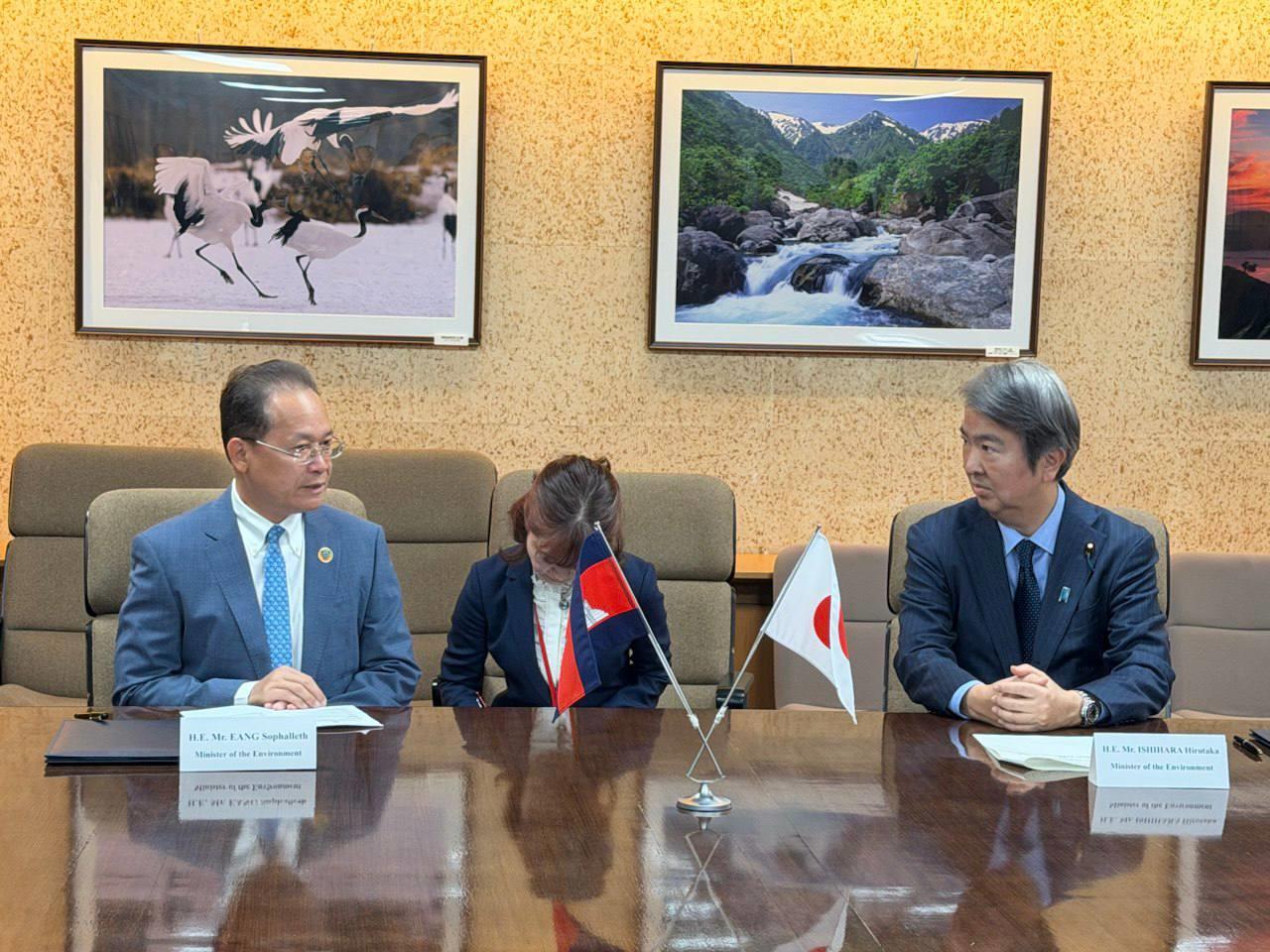
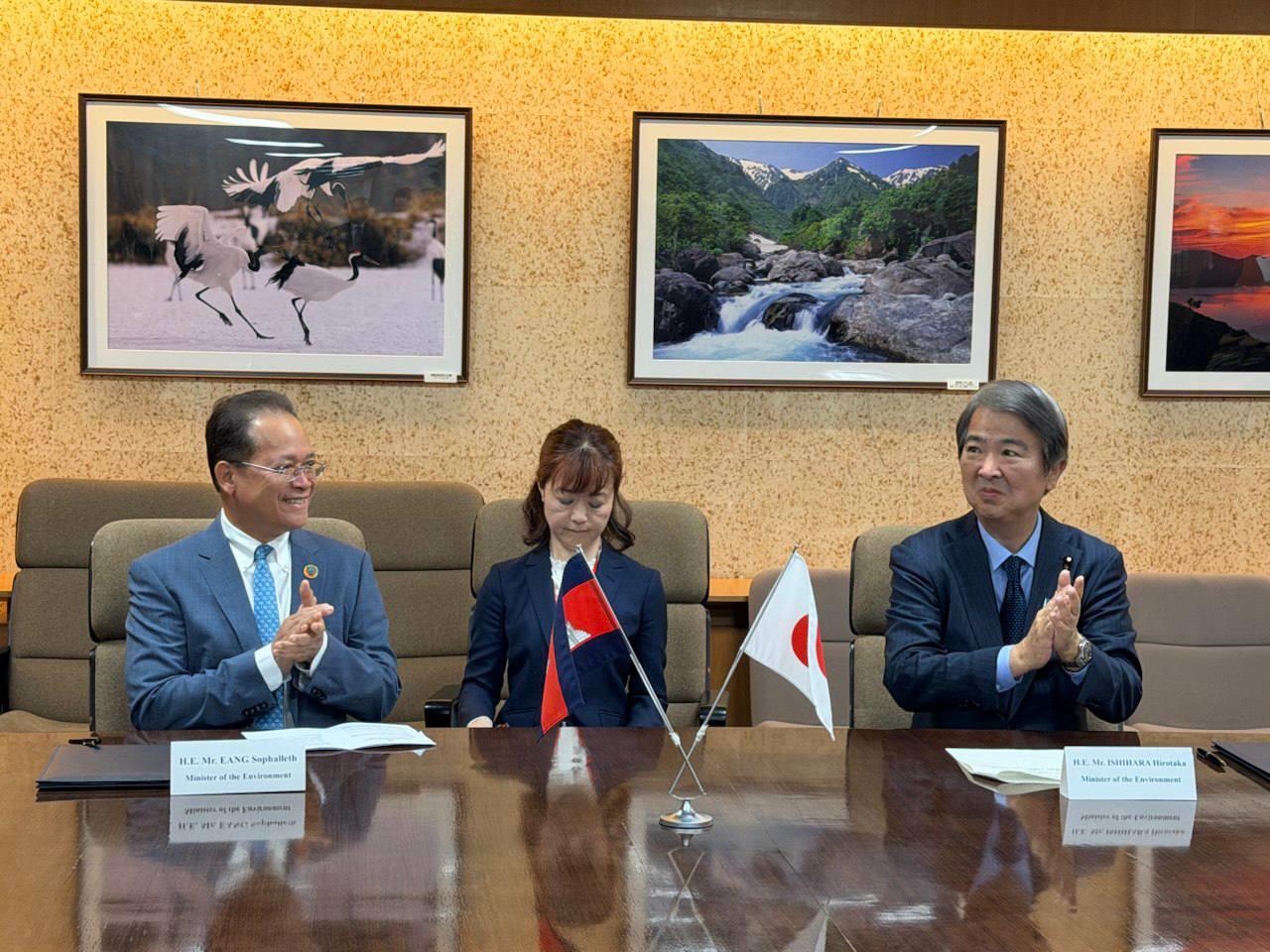
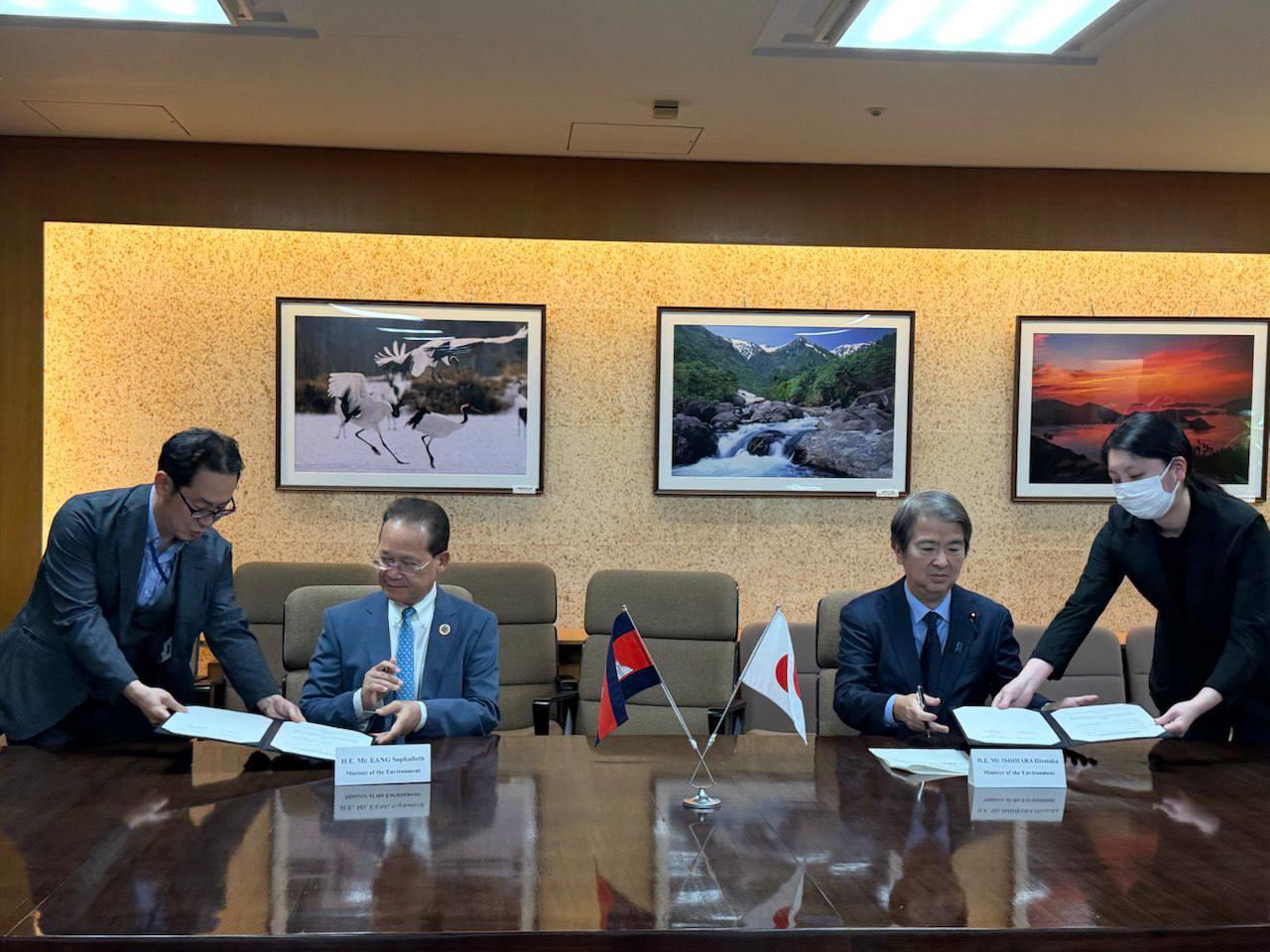
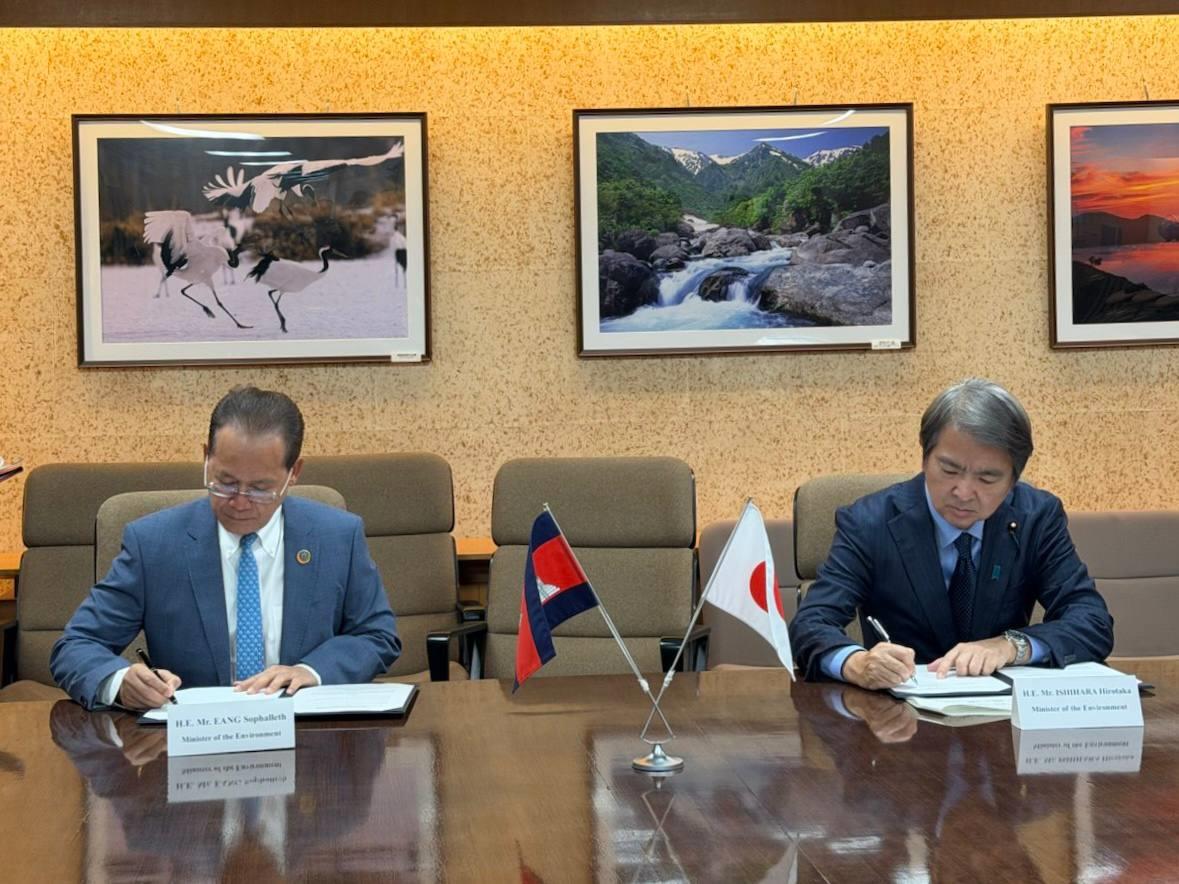
(Tokyo): On 16 February 2026, at the Office of the Minister of the Environment of Japan in Tokyo, Eang Sophalleth, Minister of Environment of the Kingdom of Cambodia, attended the signing ceremony of a Memorandum of Cooperation (MoC) with Ishihara Hirotaka, Minister of the Environment of Japan, marking a significant step forward in bilateral environmental collaboration.
Speaking at the ceremony, Minister Eang Sophalleth described the agreement as a historic milestone in strengthening the enduring strategic partnership between Cambodia and Japan.
“Today marks a historic milestone as we formalize this Memorandum of Cooperation (MoC). This agreement is not merely a document; it is a testament to the enduring strategic partnership between Cambodia and Japan in our collective pursuit of environmental protection, conservation, and sustainable development,” the minister stated.
He underlined that climate change, pollution, and biodiversity loss are borderless challenges that require coordinated action and mutual trust among nations.
“For Cambodia, these are national priorities embedded in our Circular Strategy on Environment (2023–2028) and our National Biodiversity Strategy,” he added.
Minister Eang Sophalleth highlighted that Cambodia’s environmental journey has been built upon the peace and stability fostered by Samdech Techo Hun Sen, President of the Senate, which laid the foundation for institutional continuity. He further noted that under the visionary leadership of Samdech Thipadei Hun Manet, Prime Minister of the Kingdom of Cambodia, Cambodia has elevated its global environmental commitments.
On 8 August 2025, Cambodia submitted its updated Nationally Determined Contribution (NDC 3.0), signaling readiness for transformative climate action and reinforcing its commitment under the Paris Agreement framework.
The minister also emphasized that cooperation with Japan is already producing tangible outcomes. Since 2014, the Joint Crediting Mechanism (JCM) has facilitated successful projects in renewable energy and forest conservation through REDD+ initiatives. Cambodia now seeks to further expand private sector engagement and strengthen carbon market frameworks, supported by Japan’s continued technical expertise.
The Memorandum of Cooperation focuses on four strategic pillars:
First, climate mitigation and adaptation. Cambodia aims to reduce greenhouse gas emissions by 55 percent by 2035, with targeted actions in the energy, industry, agriculture, forestry, and waste management sectors.
Second, circular economy. Priority will be given to plastic waste management and improved resource efficiency to promote a clean, green, and sustainable future.
Third, pollution prevention. Cambodia plans to modernize monitoring systems for air, land, and water quality in order to better safeguard public health.
Fourth, biodiversity conservation. Recognizing natural ecosystems as vital natural infrastructure, both sides reaffirmed that protecting and restoring biodiversity is essential to achieving Cambodia’s goal of carbon neutrality by 2050.
The signing of the MoC reflects the shared commitment of Cambodia and Japan to deepen environmental cooperation and contribute to global efforts in addressing climate change and promoting sustainable development.
=FRESH NEWS