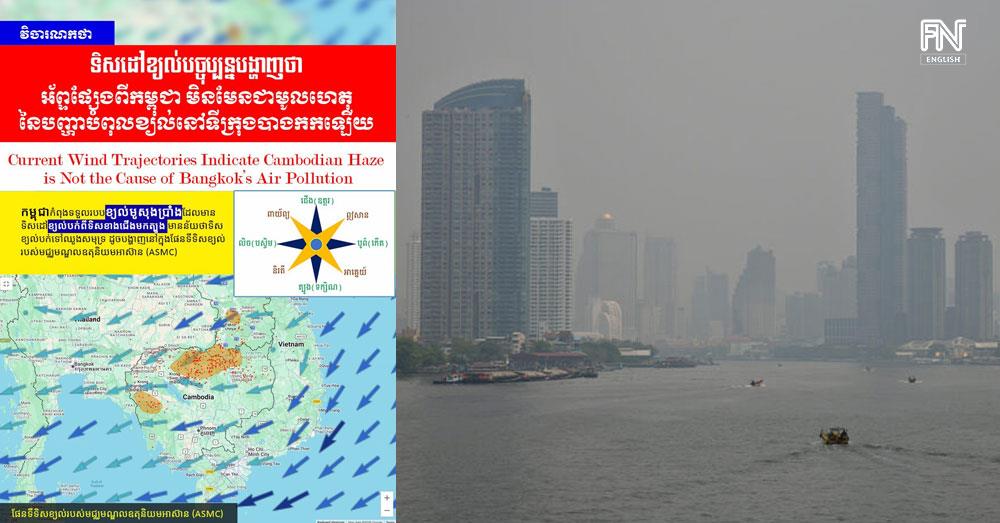
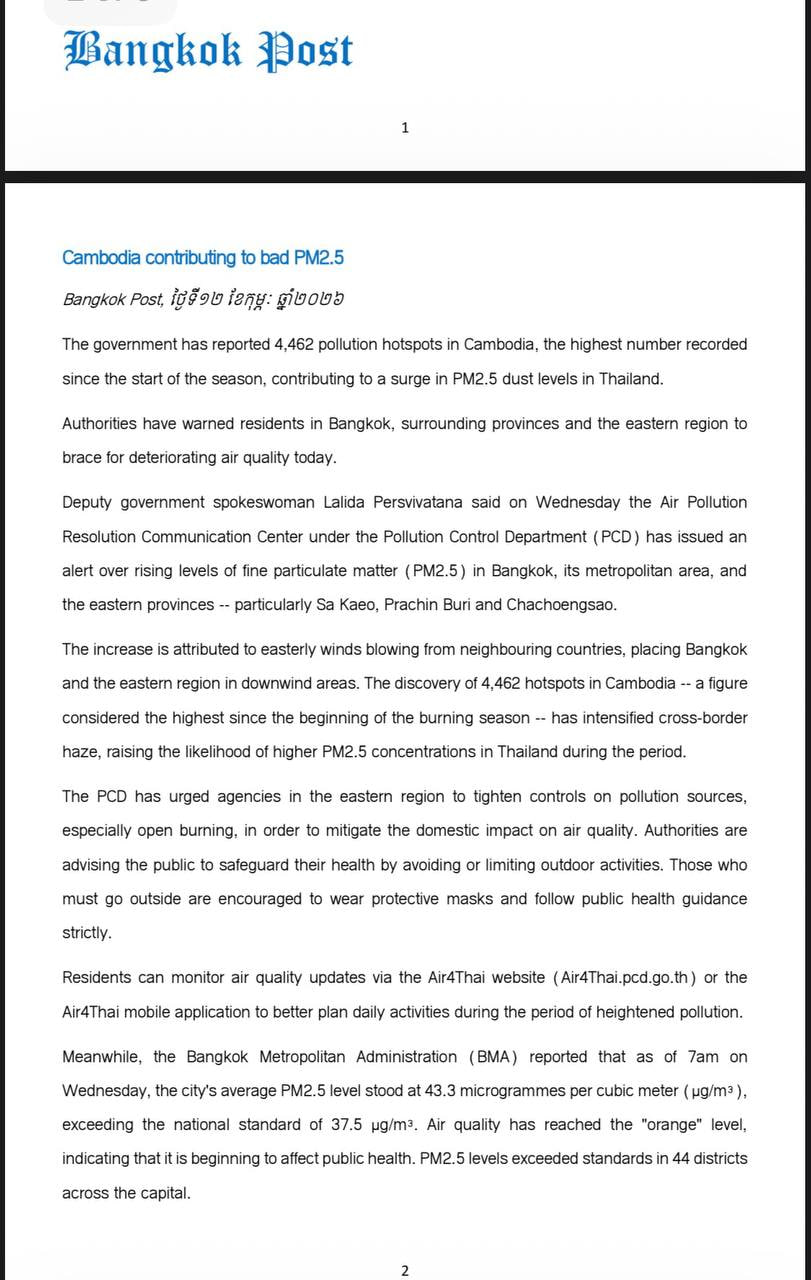
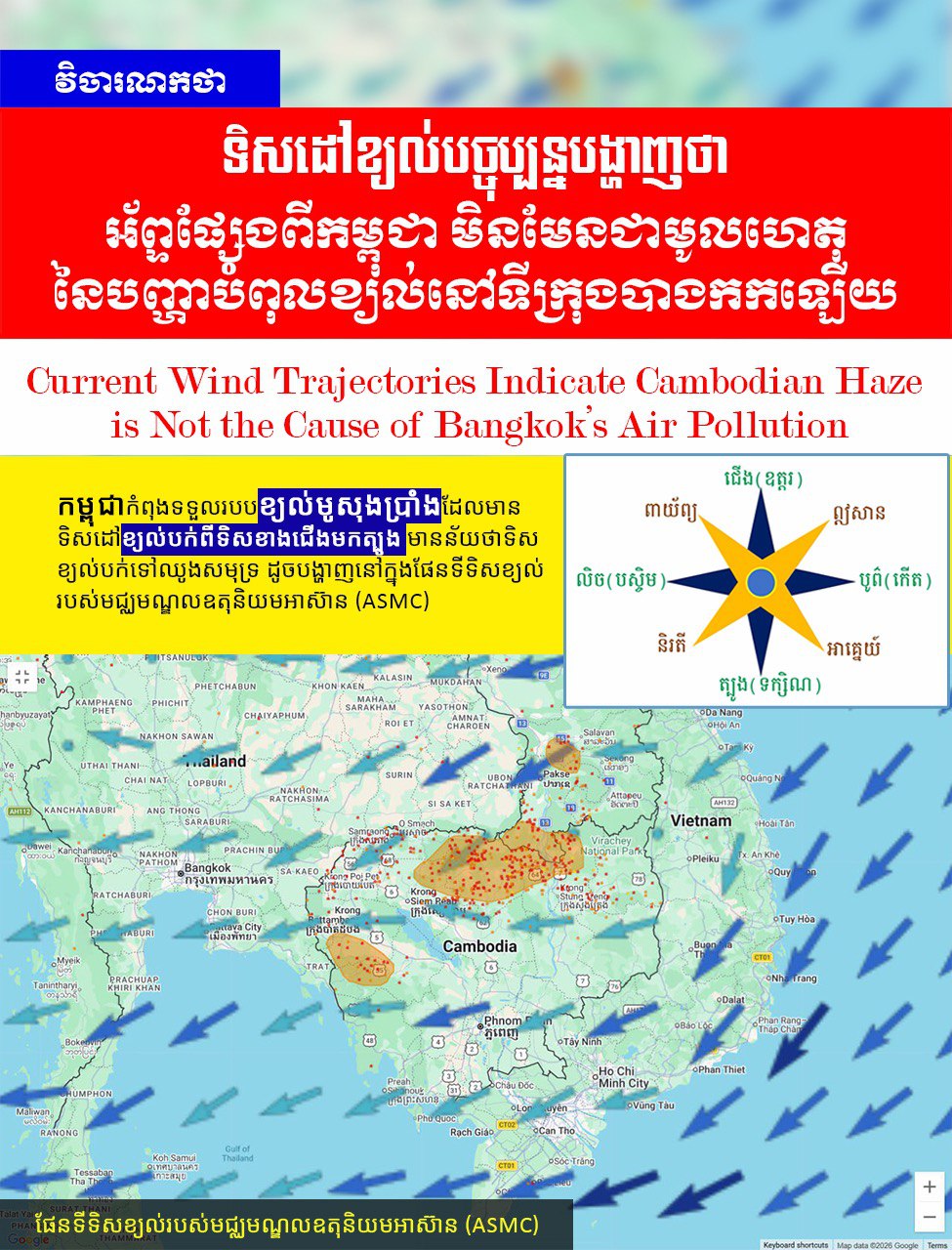
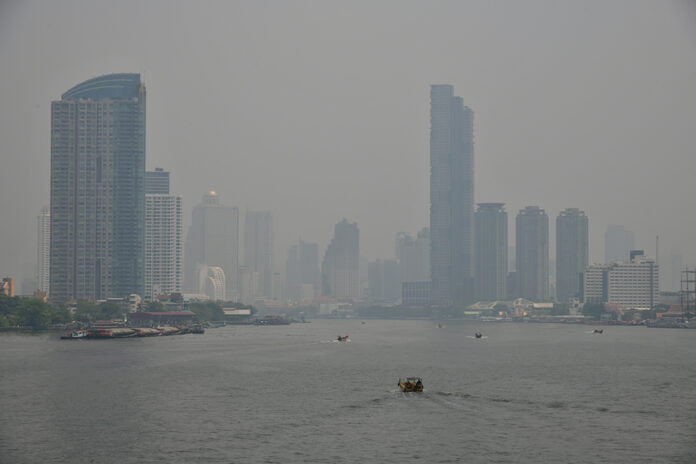
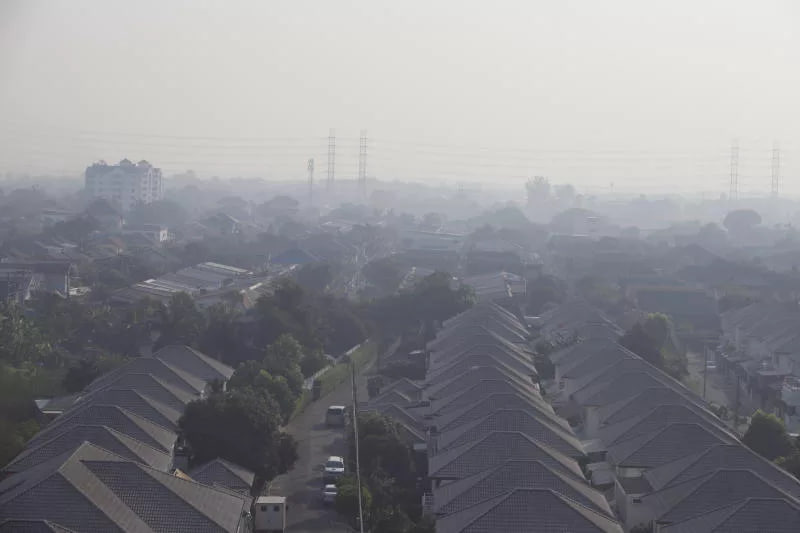
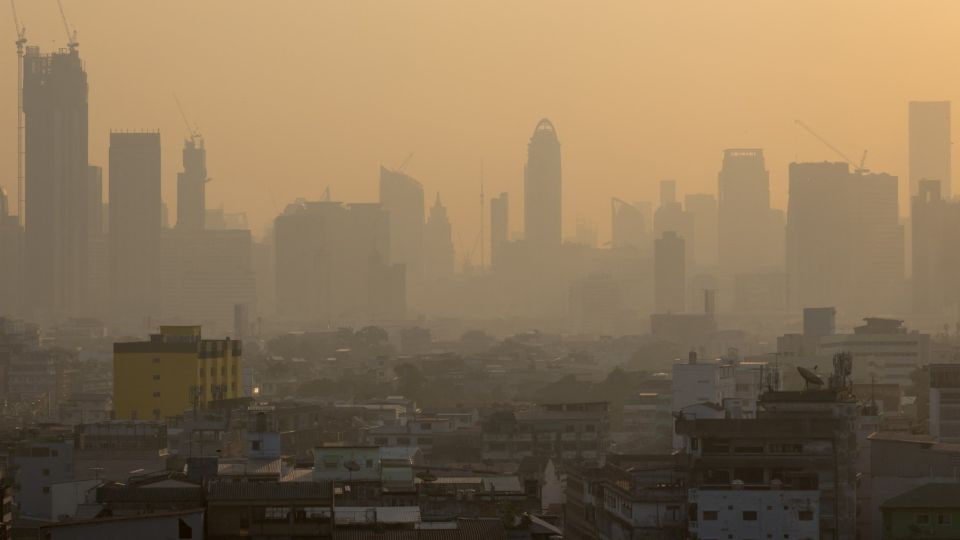
(Phnom Penh): A technical assessment of current meteorological conditions reveals that, under the influence of the dry season monsoon which directs airflow from north to south, smoke haze originating from Cambodia is unlikely to impact the air quality in Bangkok.
According to meteorological principles, Southeast Asia is influenced by the dry season monsoon (Northeast Monsoon) during this period, which typically blows from the north or northeast toward the south or southwest. Under these conditions, air masses move away from central Thailand rather than traveling northwestward from Cambodia toward Bangkok. Therefore, the claim that smoke is drifting from the southeast (Cambodia) toward Bangkok is inconsistent with current wind patterns.
Experts explain that the transboundary dispersion of PM2.5particles depends on critical factors such as wind direction and speed, atmospheric stability, and geographical features. When wind trajectories do not align, the potential for pollutants to spread from one specific region to another remains low.
Current analysis shows that haze occurring in Cambodia tends to disperse within neighboring areas or move southward, rather than blowing against the prevailing winds toward the northwest where Bangkok is situated.
Experts further clarified that while transboundary haze is a phenomenon that can occur in Southeast Asia under varying weather conditions, particularly during shifts in wind direction—continuous monitoring of wind patterns, hotspot activity, and atmospheric conditions remains essential for accurate source attribution.
In conclusion, the technical evaluation suggests that under the prevailing weather conditions, pollution sources from Cambodia are not a factor in the deterioration of air quality in Bangkok.
=FRESH NEWS