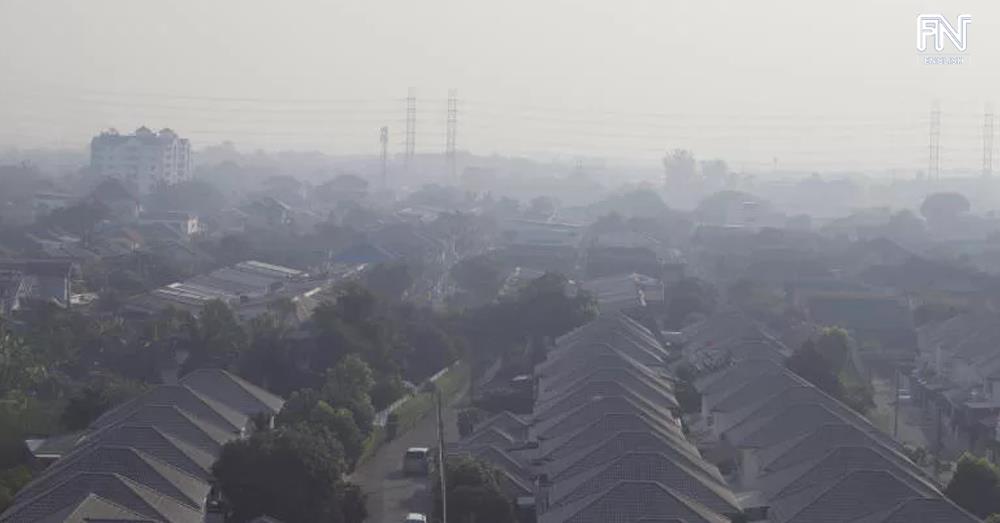
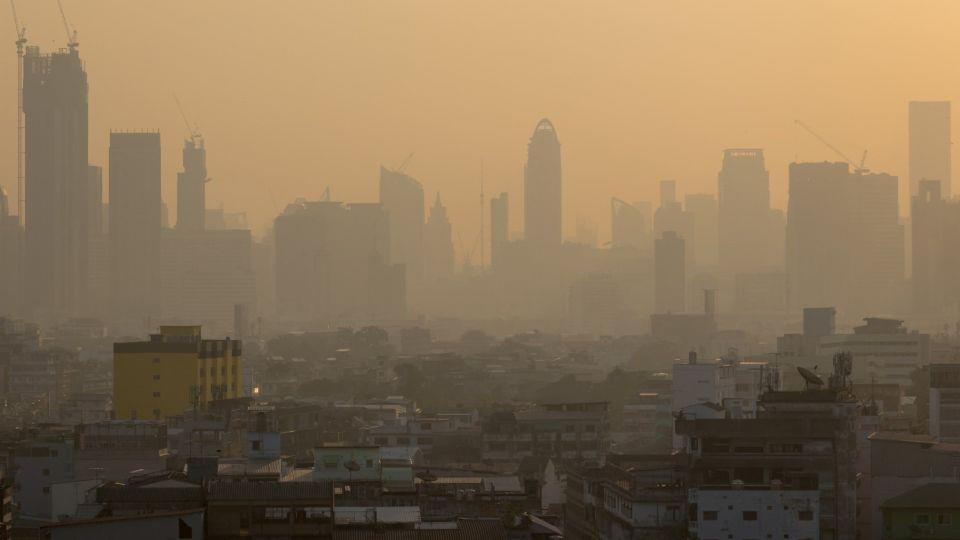
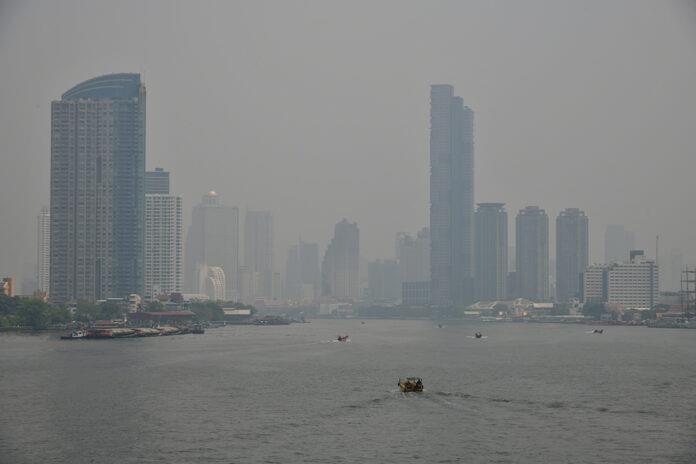
(Phnom Penh): Bangkok, Thailand, has been reported to face severe PM2.5 air pollution on an annual basis. From December 2025 through early February 2026, numerous reports have highlighted rising PM2.5 levels in the capital, alongside repeated public health advisories warning residents of the potential health impacts.
Amid the worsening pollution, Thai authorities and media outlets have frequently suggested that Bangkok’s PM2.5 originates from Cambodia. These claims have repeatedly prompted rebuttals from Cambodian officials.
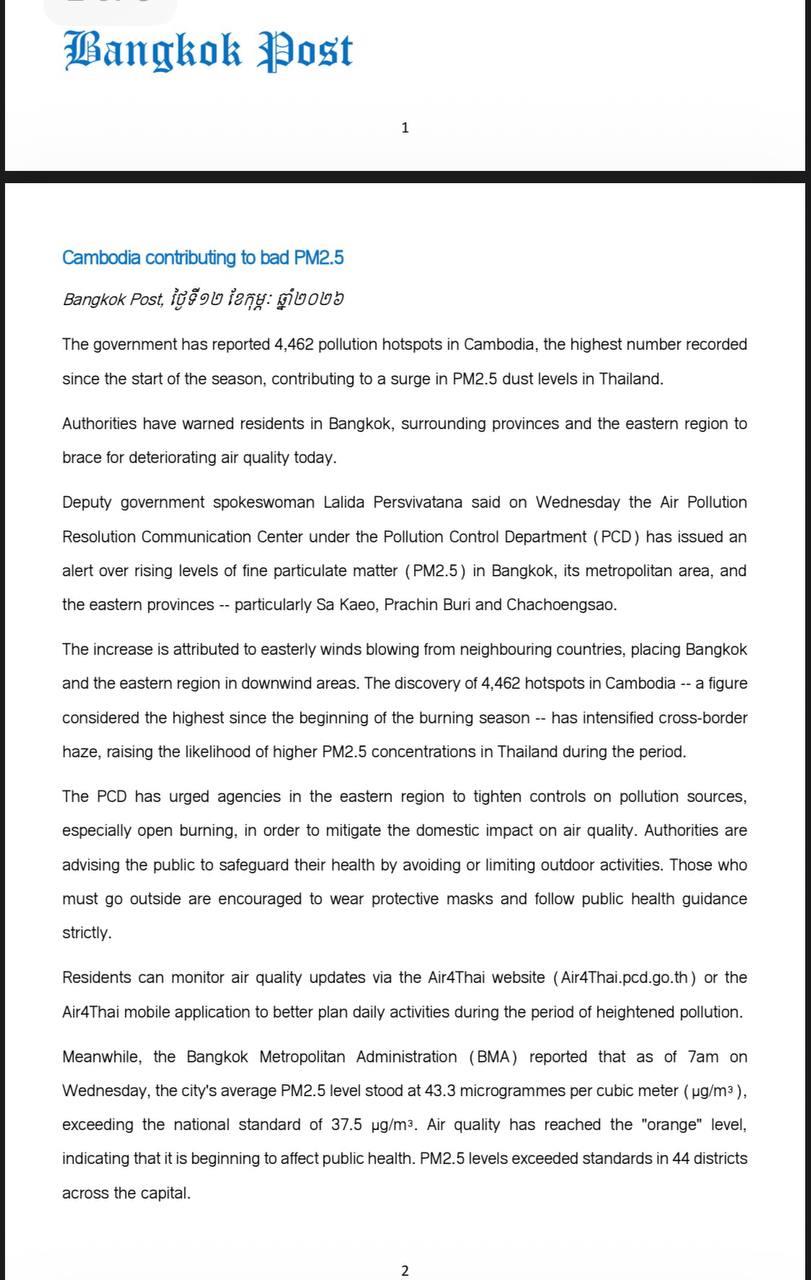
As in previous years, on February 12, 2026, the Bangkok Post, a Thai newspaper that cannot be accessed from Cambodia, again quoted senior Thai officials making unsubstantiated allegations that Cambodia is the source of elevated PM2.5 levels in Bangkok.
On the Cambodian side, the Ministry of Environment has consistently issued daily updates informing the public that air quality remains within safe levels. Although some provinces have experienced fluctuations in air quality, these have not reached levels that threaten public health.
If Cambodia’s air quality remains generally good, how could it pose a threat to Bangkok, located several hundred kilometers away? Is Thailand deliberately deflecting responsibility by blaming Cambodia for its air pollution?
To address these questions, it is important to consider several technical factors, particularly for Thai officials and journalists at the Bangkok Post.
PM2.5 refers to fine particulate matter with a diameter of 2.5 micrometers or smaller, about 30 times smaller than a human hair. Due to their extremely small size, these particles can penetrate deep into the lungs and may enter the bloodstream, posing serious health risks.
Studies consistently identify several major sources of PM2.5, including transportation, industrial activity, open burning of waste and residues, household energy use, and related emission sources.
In the transportation sector, 2023 data indicate that Thailand has a substantial number of registered vehicles under its Motor Vehicle Act, including 22.5 million motorcycles, 11.8 million private cars, 7.1 million private trucks, more than 640,000 tractors, and nearly 450,000 other private vehicles.
Regarding industrial activity, on February 2, 2026, the Bangkok Post reported on new measures by Thailand’s Pollution Control Department (PCD) to strengthen law enforcement nationwide in order to curb industrial pollution and reduce PM2.5 emissions.
Quoting Mr. Surin Worakijthamrong, Director-General of the PCD, the report stated that the Thai government had instructed authorities to enhance preventive, control, and inspection measures for PM2.5 emissions from major sources, including agriculture, transportation, and industry. Many types of factories release particulate matter into the atmosphere, contributing significantly to PM2.5 air pollution.
Based on Thailand’s own vehicle data and official statements, it is clear that Bangkok’s severe PM2.5 problem is largely driven by domestic activities. Responsibility should not be shifted onto Cambodia.
If Thai officials and Bangkok Post journalists insist that Bangkok’s PM2.5 is caused by fires in Cambodia, the claim must be supported by wind conditions. Without winds blowing from Cambodia toward Bangkok, particulate matter cannot realistically be transported to the Thai capital, which is itself a major pollution hub.
Current Climate Context
Seasonal weather patterns in mainland Southeast Asia are strongly influenced by the northeast monsoon during the dry season. Regional assessments show that prevailing winds during this period generally flow from the northeast or north toward the south or southwest across the Mekong region.
Under these conditions, air masses typically move southward or away from central Thailand rather than toward Bangkok from areas located to the southeast. When winds predominantly flow north-to-south, a transport pathway for pollution from Cambodia to Bangkok becomes highly unlikely.
Principles of Atmospheric Transport
Airborne particles such as PM2.5 and haze are primarily transported through the movement of air masses. Scientific studies indicate that transboundary haze can occur when pollution sources emit continuously and align with favorable wind directions and meteorological conditions.
However, long-range transport depends heavily on several factors: prevailing wind direction and speed, atmospheric stability and mixing conditions, regional topography, and the alignment between pollution sources and downwind receptor areas.
When wind direction does not align with the pathway between the alleged source and the affected area, the likelihood of long-distance pollutant transport decreases significantly.
Assessment Under Current Wind Conditions
Given the prevailing north-to-south airflow currently affecting the region, most air masses would move away from Bangkok rather than from Cambodian territory toward the Thai capital. Smoke or haze originating in Cambodia would be more likely to disperse within nearby areas or move southward, rather than travel northwest toward Bangkok.
Furthermore, the geographical distance between major hotspot areas and Bangkok further reduces the likelihood of direct impact under such wind conditions.
From a meteorological perspective, it can therefore be concluded that under the current wind patterns, air pollution in Bangkok is unlikely to originate from hotspots in Cambodia.
Based on the above technical and climatological considerations, even if Cambodia were experiencing haze or air pollution, it would be unlikely to contribute meaningfully to PM2.5 levels in Bangkok. Senior Thai officials quoted by the Bangkok Post, along with the newspaper’s journalists, should re-examine the issue carefully rather than perpetuating the practice of attributing Thailand’s domestic environmental challenges to a neighboring country such as Cambodia.
=FRESH NEWS