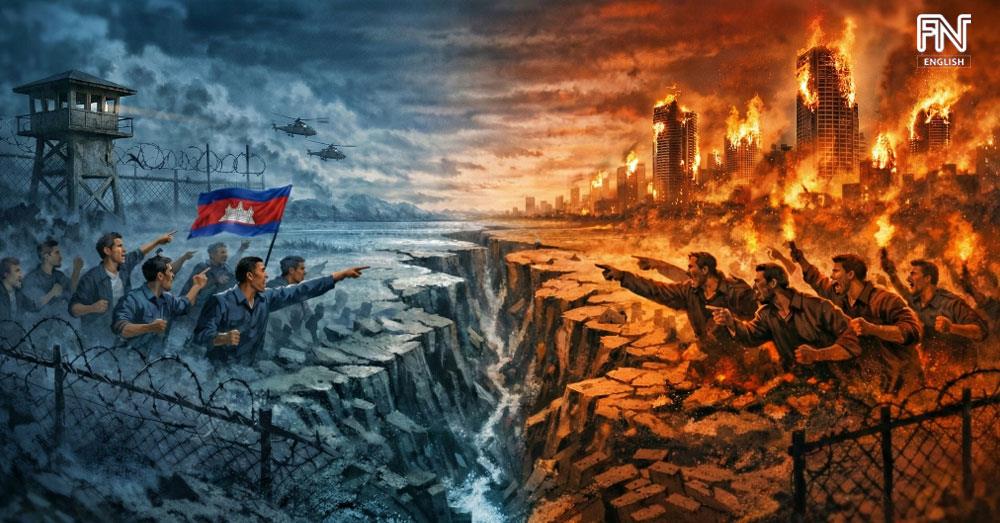
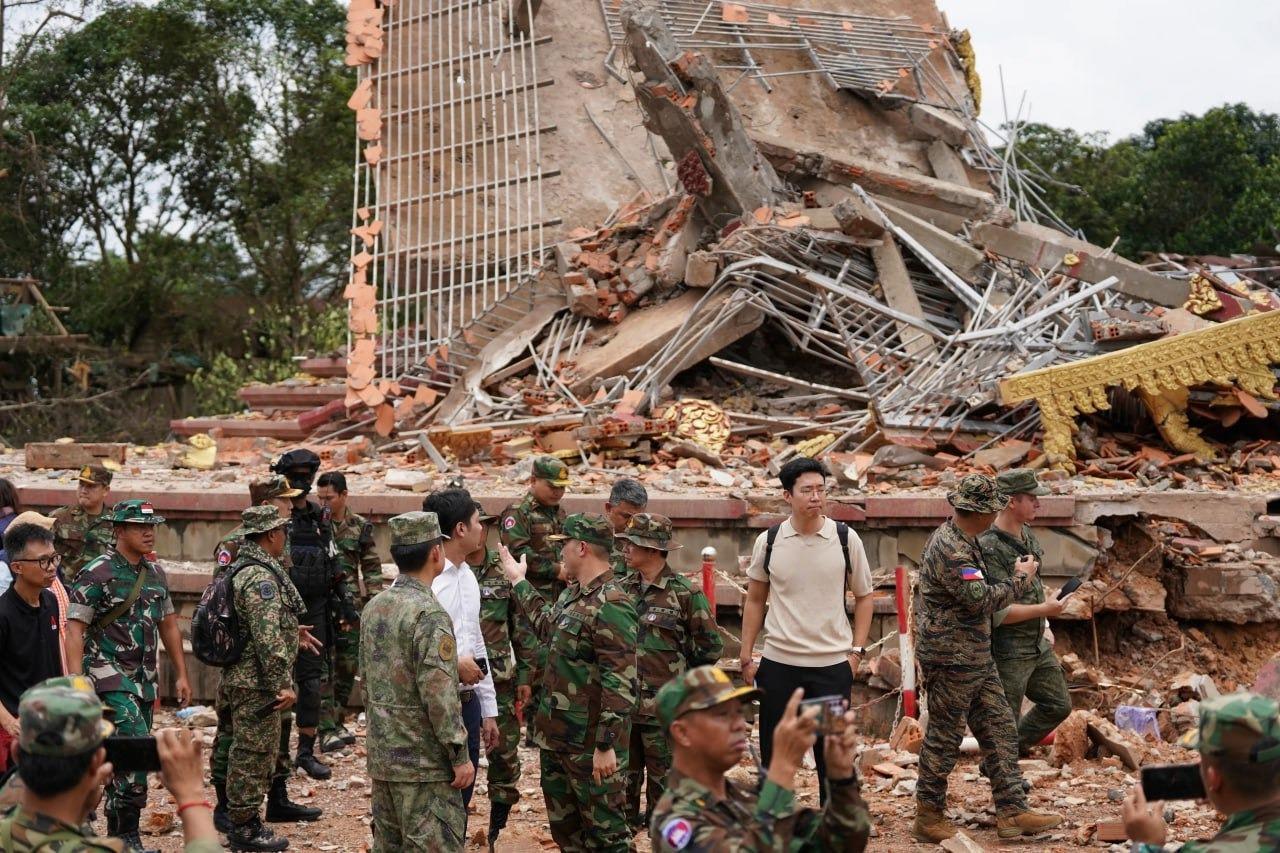
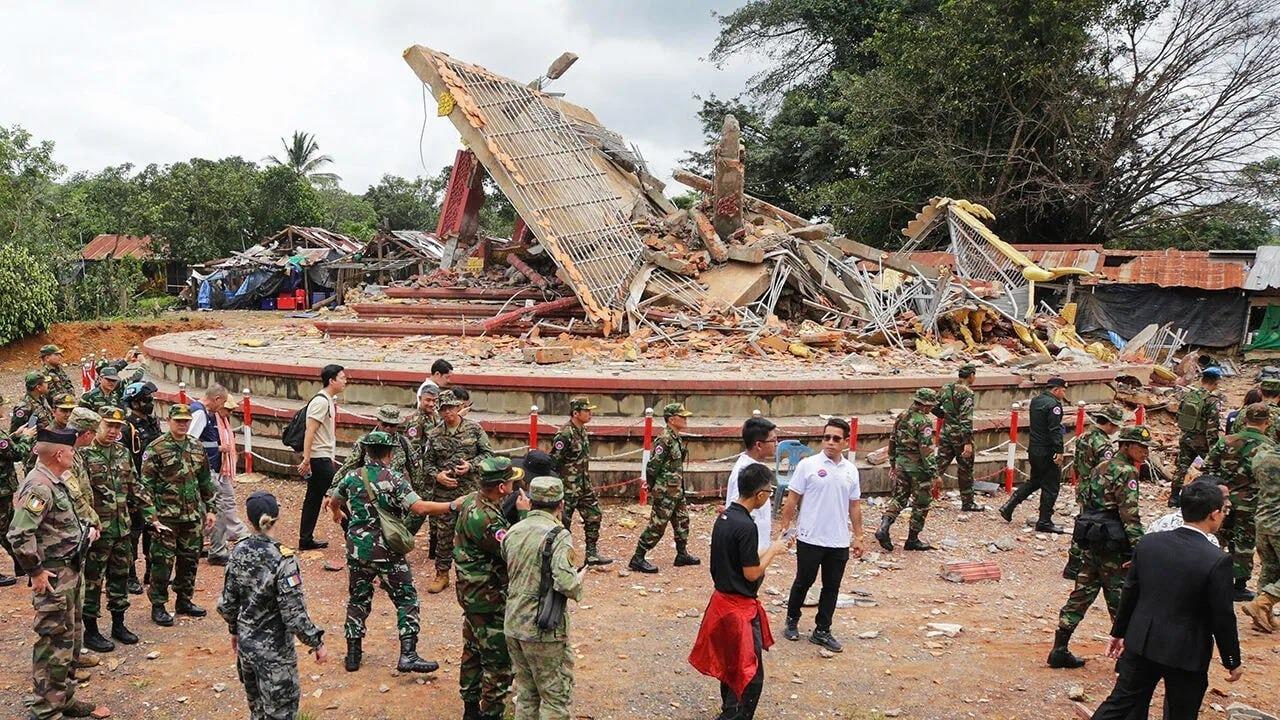
(Phnom Penh): When border tensions are turned into political instruments and disinformation is deployed to fracture public trust, national unity is no longer an emotional slogan; it becomes a fundamental principle of national security. A country does not lose its borders simply because another state possesses stronger military power. It loses when its own society loses trust and fractures from within.
Even when gunfire falls silent along the frontier, competition does not end. It merely shifts battlegrounds — from physical territory to the arena of information and public consciousness. The spread of inflammatory rhetoric, false narratives, and deliberate disinformation is not accidental. It is a method designed to inflame anger, erode patience, and weaken confidence in state institutions.
History has repeatedly shown that nations rarely collapse solely because of external enemies. They collapse when trust within society deteriorates. In this context, the critical question is not “Who is right?” but rather: Can we preserve unity in times of crisis?
Borders Are Legal Matters, Not Emotional Ones
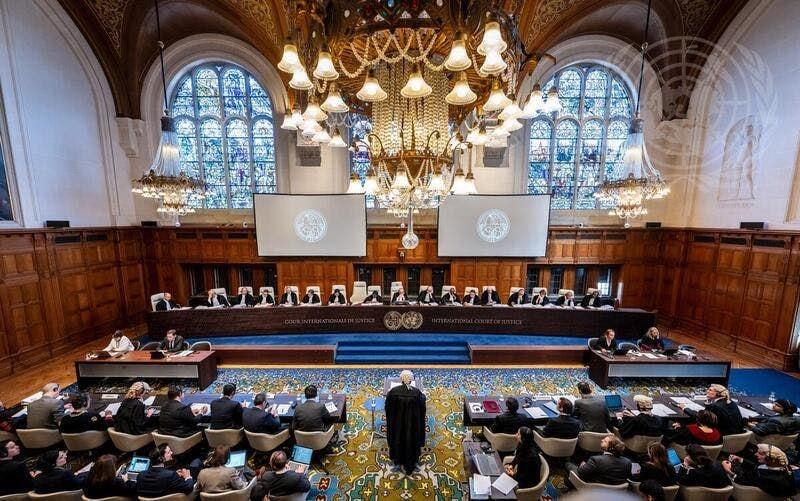
Border disputes are resolved through law and diplomacy — not through anger or rhetorical escalation. Borders are defined by treaties, maps, and principles of international law, not by emotional outrage or incitement.
Amplifying anger or encouraging internal confrontation does not recover lost territory. On the contrary, it risks further damage — undermining a country’s legal standing internationally and weakening long-term national stability. In territorial disputes, the side that prevails is the one that demonstrates evidence, legal consistency, and respect for international norms — not the one that shouts the loudest.
Managing public emotion, therefore, is not separate from national defense strategy; it is part of it.
Modern Conflict Does Not Begin with Gunfire
Modern conflict rarely begins with bullets. It begins with the erosion of trust. When citizens begin to doubt state institutions, distrust one another, and reject official information, society slides into instability that is often harder to contain than conventional warfare.
This phenomenon — often described as hybrid destabilization — has no visible frontlines. It does not resemble traditional warfare. Instead, it weaponizes disinformation, manipulation of facts, and emotional incitement to divide societies from within.
The greatest danger of such destabilization is that it weakens a nation before any physical confrontation occurs. Once trust collapses, governance becomes more difficult, cooperation deteriorates, and national stability can be disrupted without clear warning signs.
National security today must therefore extend beyond geographic borders. It must also protect the borders of trust and public understanding.
Nationalism Requires Discipline
Nationalism is powerful. It can unify a country and strengthen its resolve to defend sovereignty. Yet without discipline, wisdom, and responsible leadership, the same force can turn inward and damage the very society it seeks to protect.
Nationalism driven by anger can devolve into internal accusations, division, and the creation of domestic enemies. When border tensions are exploited to provoke internal conflict, society weakens long before any external force intervenes.
True nationalism is not measured by the loudest voice. It is measured by the ability to defend national interests through law, strategy, and long-term vision. It requires emotional restraint — ensuring that patriotism does not become self-destructive.
Disciplined nationalism strengthens stability. Undirected nationalism can become a nation’s greatest vulnerability.
Unity Does Not Mean Silencing Debate
Unity does not mean suppressing criticism or enforcing uniformity of opinion. Genuine unity allows open discussion grounded in respect, responsibility, and facts.
Criticism itself is not the problem. The problem lies in intent and method. Constructive criticism, based on evidence and aimed at solutions, strengthens institutions. Incitement that erodes trust and fuels hostility weakens society during moments when resilience is most needed.
A strong society is not one without disagreement; it is one capable of managing disagreement without allowing it to fracture its foundations.
The Nation’s Choice
In times of crisis, every nation faces two defining paths.
First: Unity in pursuit of solutions.
This path reflects political maturity and strategic thinking. It acknowledges differing opinions while placing national interest above personal emotion or factional competition. It builds internal strength — the foundation for long-term stability and peaceful resolution.
Second: Division driven by emotion.
When anger and provocation guide public decision-making, reactions become immediate rather than strategic. This path leads to weakened trust, institutional fragility, and increased risk of instability.
History shows that nations survive crises not because they avoid difficulty, but because they maintain unity and emotional discipline under pressure.
The real question, therefore, is not “Who wins the argument?” but rather:
Will we choose a resilient future — or internal division that jeopardizes everything?
This choice does not rest with one individual or one group. It rests with society as a whole.
Conclusion
When border issues are politicized and disinformation fuels internal pressure, national unity is not merely one option among many — it is the core pillar of national security.
Defending a nation is not solely the responsibility of the military. It is the collective responsibility of society — to safeguard trust, truth, and public reason.
Borders can be negotiated through law and diplomacy. But if society fractures, the borders of trust collapse first. In times of tension, the essential question is not how strong the external adversary may be — but how strong we are within.
Peace may begin at the physical frontier. But lasting stability begins at the frontier of trust.