(Phnom Penh): On February 10, the Russian Federation marks the Diplomats’ Day, a professional holiday honoring those who serve the country in the field of foreign relations. Though national in character, this date reflects the universal mission of diplomacy: fostering dialogue, protecting peace, and building cooperation among nations.
Origins of the holiday are deeply rooted in Russian history. It goes back to the earliest documented mention (February 10, 1549) of the Ambassadorial Prikaz, the first state body that oversaw foreign affairs. Over the centuries, Russia’s diplomatic service developed alongside the country itself, evolving into a modern professional institution with the formation of the Ministry of Foreign Affairs in 1802. This long tradition symbolizes continuity, responsibility, and dedication to international engagement – values that remain relevant today.
In the contemporary world, diplomacy plays an increasingly vital role. The global landscape is marked by rapid political transformation, economic uncertainty, technological change, and growing security risks. Conflicts are becoming more complex, while global challenges transcend national borders. In such an environment, dialogue and cooperation are not optional – they are essential instruments for stability and development.
One of the most serious international challenges today is the crisis around Ukraine and the broader deterioration of the security architecture. The Russian leadership has consistently emphasized that durable peace can only be achieved through political and diplomatic means, repeatedly stressed Russia’s openness to dialogue aimed at addressing the root causes of the conflict, ensuring security guarantees, and establishing a fair and sustainable framework for peace in Europe.
Russia has always maintained that confrontation, sanctions pressure, and military escalation cannot replace negotiations. Only through respectful dialogue that takes into account the legitimate interests of all parties can a long-term stability be achieved. This principle remains a cornerstone of Russia’s foreign policy approach.
Equally pressing are issues related to the global strategic stability and arms control, taking into account the expiration of the New START Treaty on February 5, 2026. The gradual erosion of long-established mechanisms has significantly increased uncertainty in the international security sphere. These developments carry risks of a new arms race and weakened predictability among major powers.
Russia has consistently called for the restoration of meaningful dialogue on strategic security, emphasizing that such discussions must be based on equality, mutual respect, and recognition of the indivisible nature of security. No country can strengthen its own safety at the expense of others. Preserving global stability requires collective responsibility and renewed diplomatic engagement.
Throughout modern history, Russia has sought to promote a multipolar world order based on international law and the central role of the United Nations. Our country advocates for peaceful resolution of disputes, respect for sovereignty, and non-interference in internal affairs. These principles are regularly reaffirmed in statements by the Ministry of Foreign Affairs and remain the foundation of Russia’s diplomatic efforts across regions.
This year carries particular significance for Russia and Cambodia as we celebrate the 70th anniversary of the establishment of diplomatic relations between our two countries. Over seven decades, our partnership has grown steadily, grounded in mutual respect, friendship, and constructive cooperation. Political dialogue has strengthened, economic and humanitarian ties have expanded, and cultural and educational exchanges have brought our peoples closer together.
Russia highly values its relations with the Kingdom of Cambodia and appreciates Phnom Penh’s balanced foreign policy. As we mark this important anniversary, diplomats from both countries face the shared task of elevating our dialogue to a new level, exploring new areas of cooperation, deepening mutual understanding, and responding jointly to regional and global challenges.
The Diplomats’ Day offers an opportunity not only to honor the dedication of Russian diplomats, but also to reflect on the broader role of diplomacy in today’s world. In times of uncertainty and tension, diplomacy remains the most reliable path toward conflict prevention, crisis management, and sustainable peace.
By promoting dialogue instead of division, cooperation instead of confrontation, and respect instead of pressure, diplomacy helps shape a more stable and just international system. Russia remains committed to these principles and to working with partners, including Cambodia, to strengthen peace, security, and development for the benefit of all.
In a rapidly changing world, the mission of diplomacy is more important than ever, to build bridges, preserve stability, and ensure that dialogue prevails over discord.
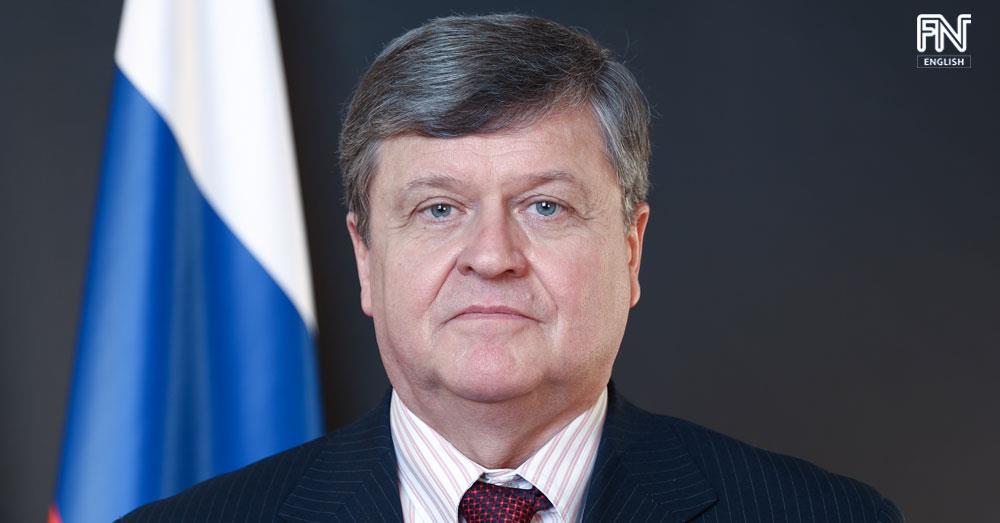
Anatoly Borovik, Ambassador of the Russian Federation to the Kingdom of Cambodia. All views in this article are his own.
=FRESH NEWS