(Phnom Penh): PM2.5 refers to fine particulate matter with a diameter of 2.5 micrometers or less (up to 30 times smaller than a human hair). It is considered one of the most dangerous air pollutants to human health. Due to their microscopic size, these particles can penetrate deep into the lungs and enter the bloodstream, increasing the risk of respiratory diseases, heart disease, and premature death.
Major sources of PM2.5 include vehicle emissions, industrial activities, the combustion of fossil fuels, biofuels, and waste, as well as chemical reactions in the atmosphere.
While large-scale solutions require intervention from the government and industrial sectors, individuals and communities can take practical measures to reduce exposure and health risks. For the sake of public health, the Ministry of Environment recommends the following key measures:
(1) Monitor Air Quality Regularly
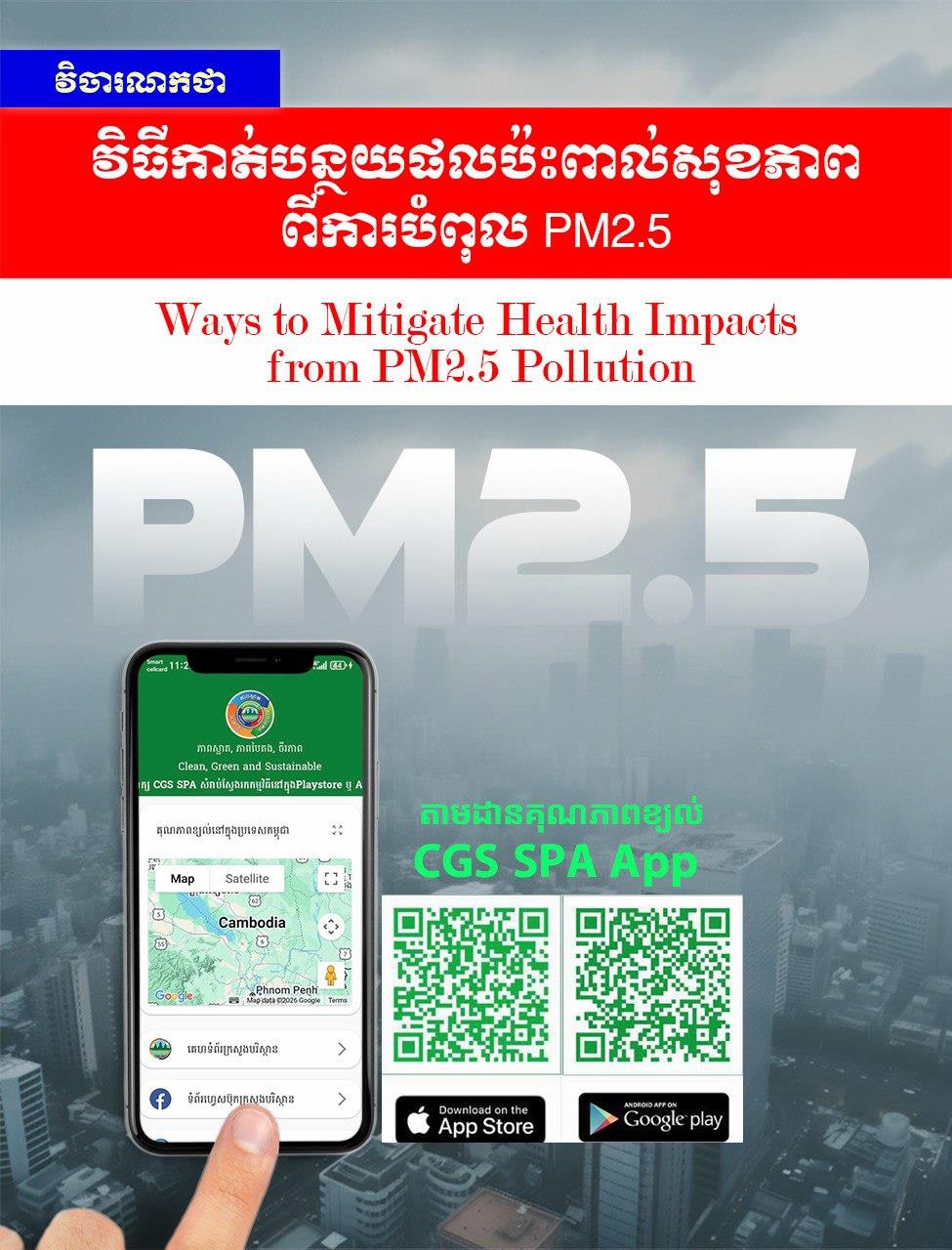
Staying informed about air quality is the first step toward protection. The Ministry of Environment encourages all citizens to monitor daily air quality via the Ministry’s official Facebook page, the website www.airquality.moe.gov.kh, or the mobile application "CGS SPA," which provides hourly updates. When pollution levels are high, especially during haze or forest fires, outdoor activities should be reduced or postponed. Vulnerable groups, including children, the elderly, pregnant women, and those with asthma or heart disease, should exercise extreme caution.
(2) Improve Indoor Air Quality
Many believe staying indoors is entirely safe, but PM2.5 can easily seep into buildings. Using air purifiers equipped with HEPA (High-Efficiency Particulate Air) filters can effectively reduce indoor PM2.5 levels. Doors and windows should be kept closed during high pollution periods, and air conditioning systems should use high-quality filters. Internal sources of fine dust, such as smoking or burning incense, candles, and solid fuels, should be minimized or avoided entirely.
(3) Use Protective Masks When Necessary
When going outside during heavy pollution is unavoidable, wearing a properly fitted N95 or KN95 mask can help filter out fine particles before they enter the lungs. Standard cloth or medical masks provide only low-level protection against PM2.5. The effectiveness of a mask depends on a tight seal and consistent use.
(4) Personal Contributions to Reducing Air Pollution
Individual behavior plays a vital role in lowering PM2.5 emissions. Choosing public transportation, cycling, or walking instead of driving helps reduce vehicle exhaust. Using energy-efficient appliances, saving electricity, and avoiding the burning of trash, leaves, or agricultural waste (such as rice straw) also helps reduce particulate emissions. In the long term, collective household actions contribute to cleaner air for everyone.
(5) Support Green Urban Environments
Urban design significantly impacts air quality. Trees and green spaces act as natural filters for airborne dust and help lower urban temperatures, which reduces the formation of pollutants. Supporting local tree-planting projects and advocating for clean energy, stricter emission laws, and better public transit systems will lead to a long-term reduction in PM2.5 levels.
(6) Strengthening Health Through Diet
Maintaining good overall health can reduce susceptibility to the effects of air pollution. A diet high in antioxidants, such as fruits and vegetables, can help mitigate inflammation caused by PM2.5 exposure. Regular health check-ups, especially for those with chronic conditions, can help detect pollution-related health issues early.
Conclusion
Protecting health from air pollution is a shared responsibility. As the environmental authority, the Ministry of Environment is committed to strengthening emission regulations and expanding tree planting. However, staying informed through Ministry updates and adjusting personal lifestyle habits remain the strongest shields for the health of yourself and your family.
The views expressed in this article are those of the author.
=FRESH NEWS