(Phnom Penh): In a world where power is increasingly measured by the speed of missiles, the pace of artificial intelligence, and the scale of military spending, there is one clock that makes no sound—yet it can foreshadow a silence that lasts forever. That clock is the Doomsday Clock, a symbol of how humanity itself is pushing the planet closer to an “all-out catastrophe.”
The Origin of the Doomsday Clock: A Warning Device, Not a Fortune Teller
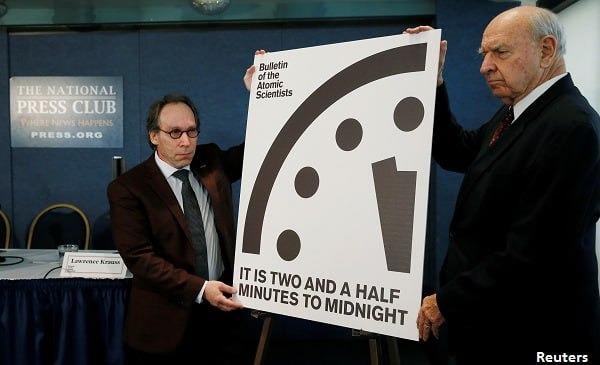
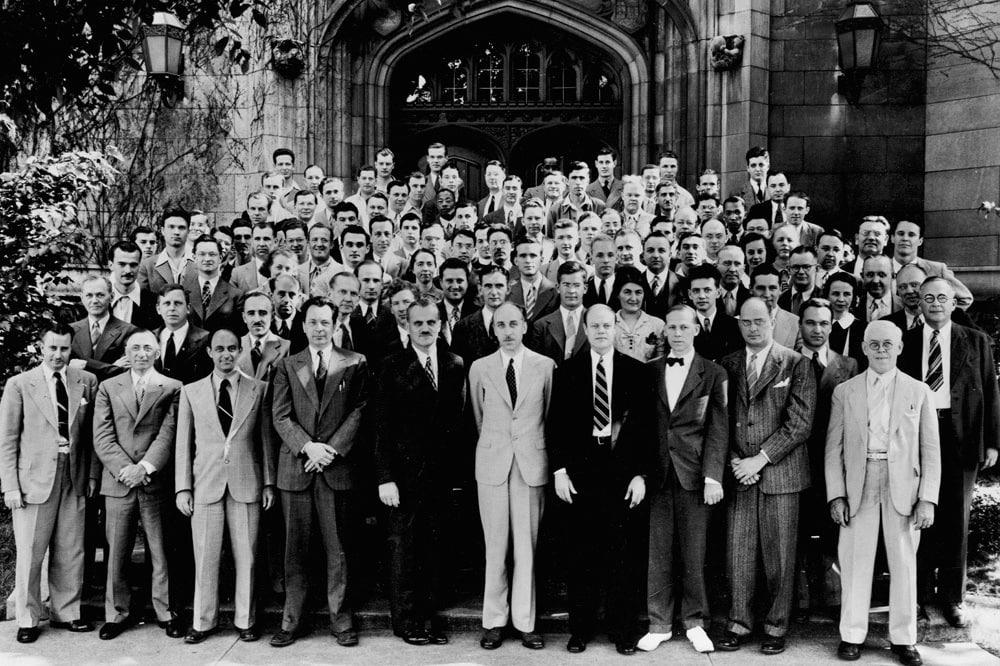
The Doomsday Clock was created in 1947 by the Bulletin of the Atomic Scientists, headquartered in Chicago, Illinois. Its intellectual roots trace back to scientists connected to the Manhattan Project, including Albert Einstein, J. Robert Oppenheimer, and other leading figures who understood—earlier than most—the civilizational danger of humanity’s own inventions.
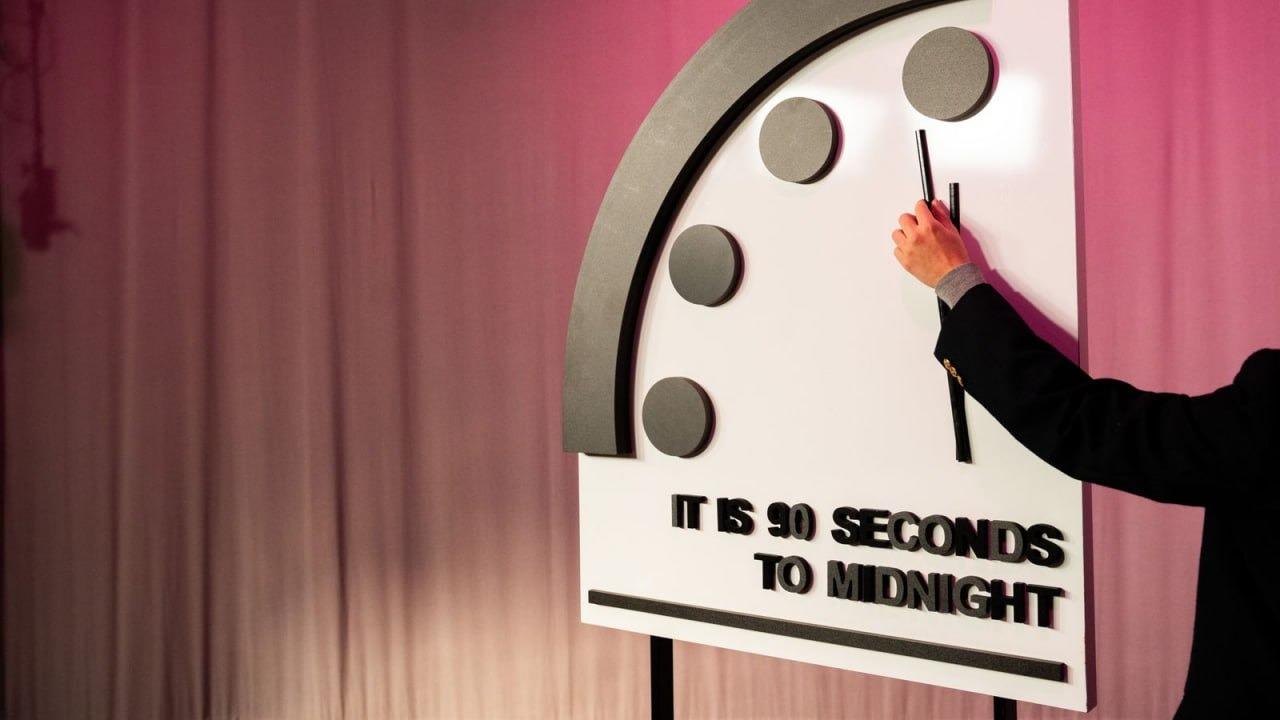
When it was first introduced in 1947, the Clock was set at seven minutes to midnight. It was never meant to be a mystical prediction. It was designed as a warning: nuclear weapons and human decisions can end modern civilization.
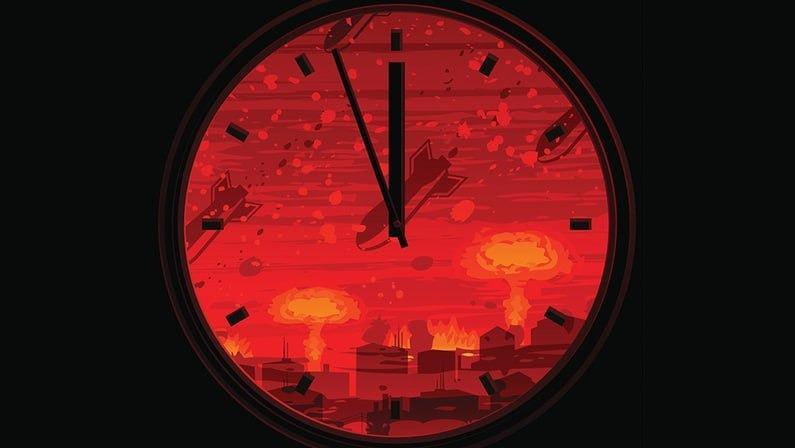
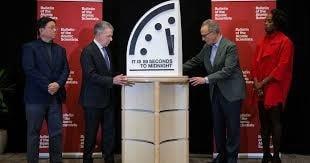
Since then, the Clock’s hands have been moved—forward or backward—almost every year, reflecting the world’s drift either away from, or toward, systemic catastrophe. If the Clock were ever to reach midnight, it would symbolize the full eruption of a global disaster—one capable of ending humanity’s ability to live safely on Earth and bringing civilization to a decisive end. Each year in late January, the Bulletin’s Science and Security Board, together with leading experts and Nobel laureates among its advisers, assesses global conditions and determines whether the Clock should move closer to midnight—or pull back.
From “100 Seconds” to “85 Seconds”: A Record of a World Sliding Toward the Brink
Almost every year, the Doomsday Clock is adjusted based on a rigorous assessment of real global developments. In 2020, 2021, and 2022, the Clock was set at 100 seconds to midnight. In 2023 and 2024, it moved to 90 seconds, as international anxiety rose sharply over nuclear risk and the breakdown of strategic cooperation among major powers.
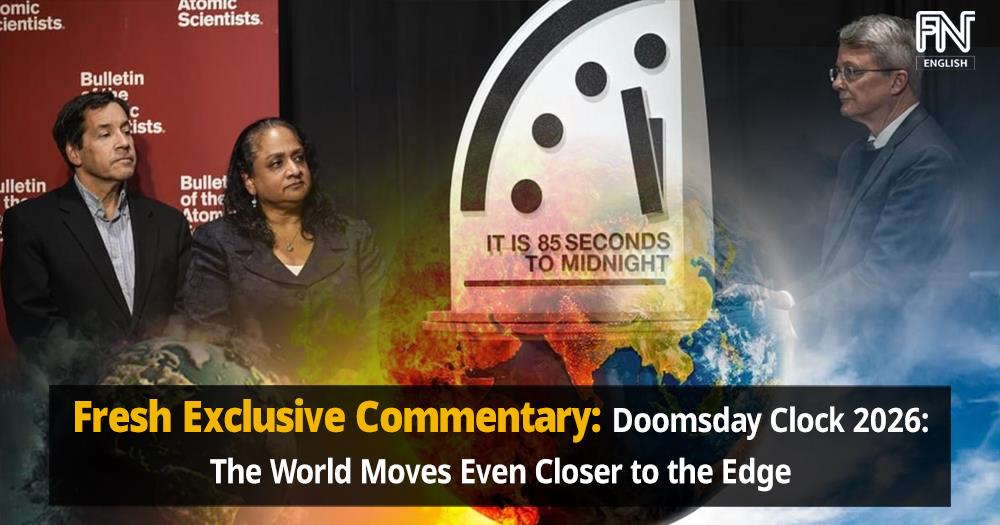
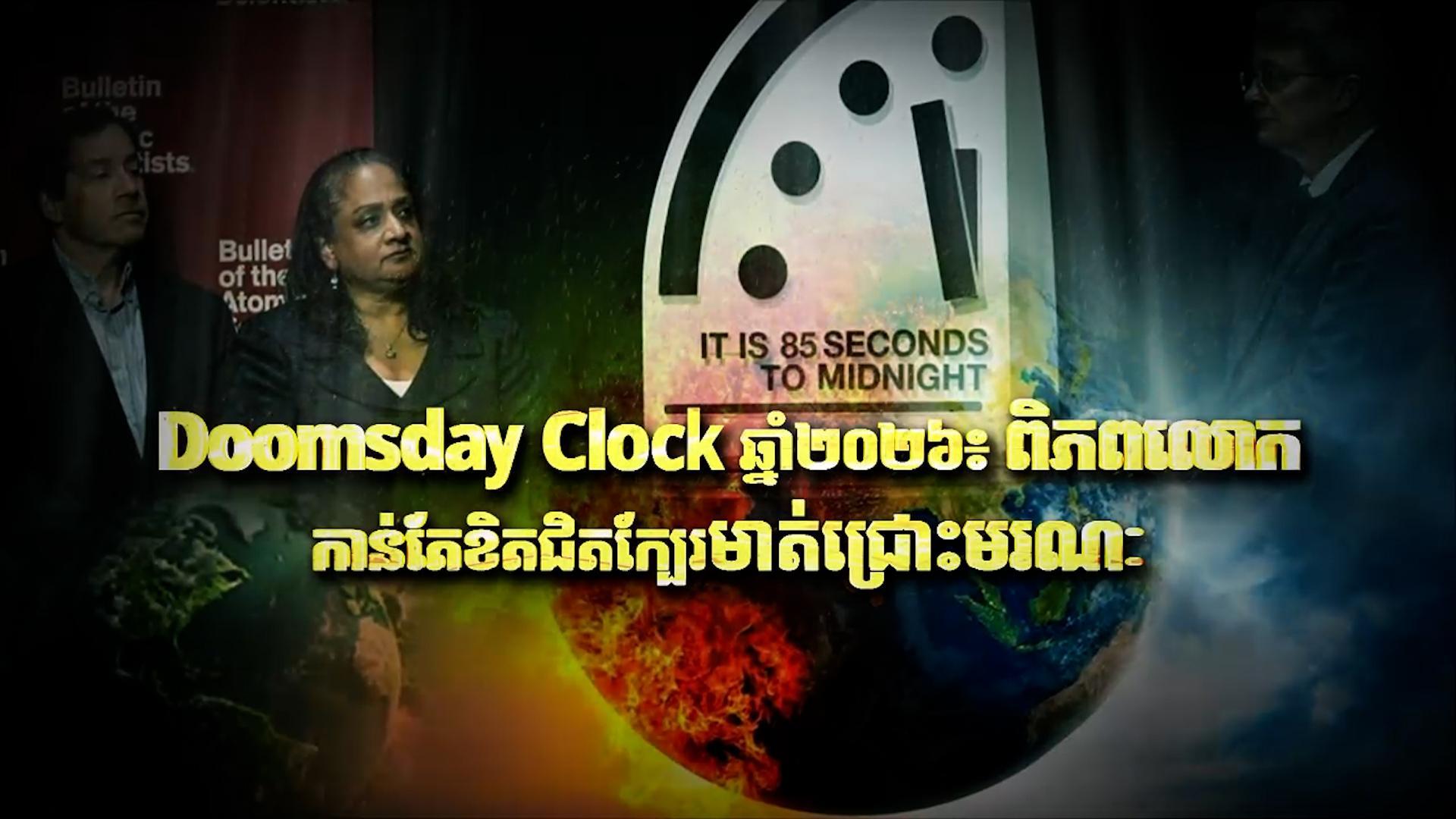
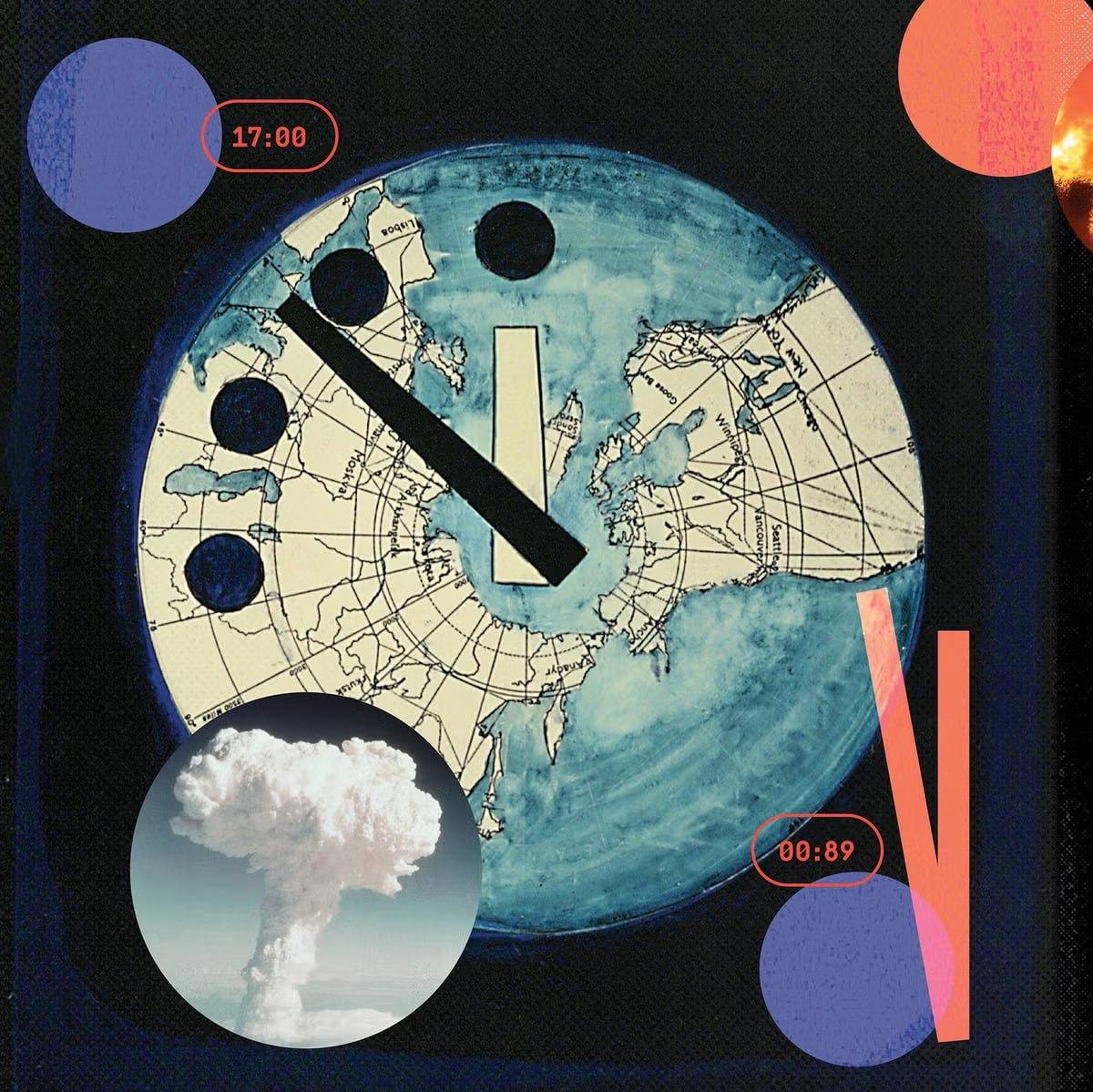
In 2025, the Clock inched closer again to 89 seconds, signaling that global conditions were not improving but growing more dangerous. And in 2026, the Bulletin’s decision became even more severe: the Clock moved to 85 seconds to midnight—the closest setting in the Clock’s history.
A shift of “just a few seconds” is not trivial. It is a clear conclusion that global risks are accelerating and converging, not declining—and that the time available to correct political judgment and moral responsibility is narrowing at an alarming rate.
What Are the Major Threats in 2026?
1) Nuclear Risk — The Most Immediate and Most Devastating Threat
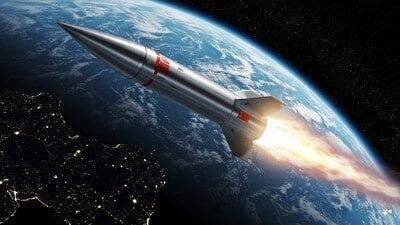
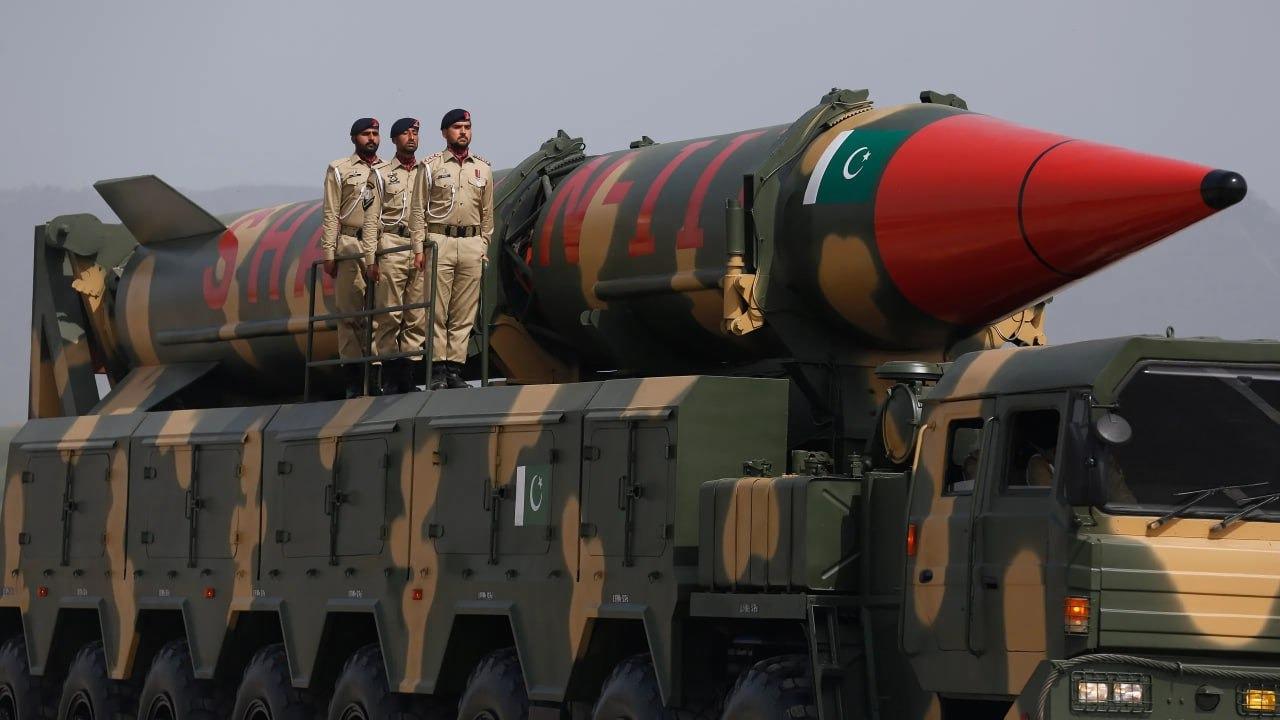
Entering 2026, concern about the outbreak of nuclear war has become a concrete global fear—not a theoretical scenario on paper. The world is facing a dangerous reality in which at least three flashpoints involve nuclear-armed states at the same time:
- The Russia–Ukraine war, still unresolved, accompanied by recurring signals and rhetoric that raise nuclear risk.
- India–Pakistan tensions, which have previously escalated into cross-border drone and missile exchanges.
- Israeli and U.S. strikes on Iranian nuclear-related facilities, raising fears that such actions could push Iran’s nuclear ambitions into deeper secrecy rather than restraint.
In addition, North Korea continues to project strength by advancing its nuclear capabilities. Together, these dynamics feed a full-scale arms race, especially as the New START framework between the United States and Russia approaches expiration and anxiety grows that the United States could consider resuming nuclear testing.
Most alarming is the risk of losing the world’s “nuclear safety brakes”—meaning sustained dialogue, verification mechanisms, and enforceable limits. In such an environment, a single miscalculation, misunderstanding, or split-second wrong decision could trigger an irreversible crisis. Nuclear weapons remain the one threat capable of ending human civilization within hours.
2) Artificial Intelligence — A Threat Multiplier
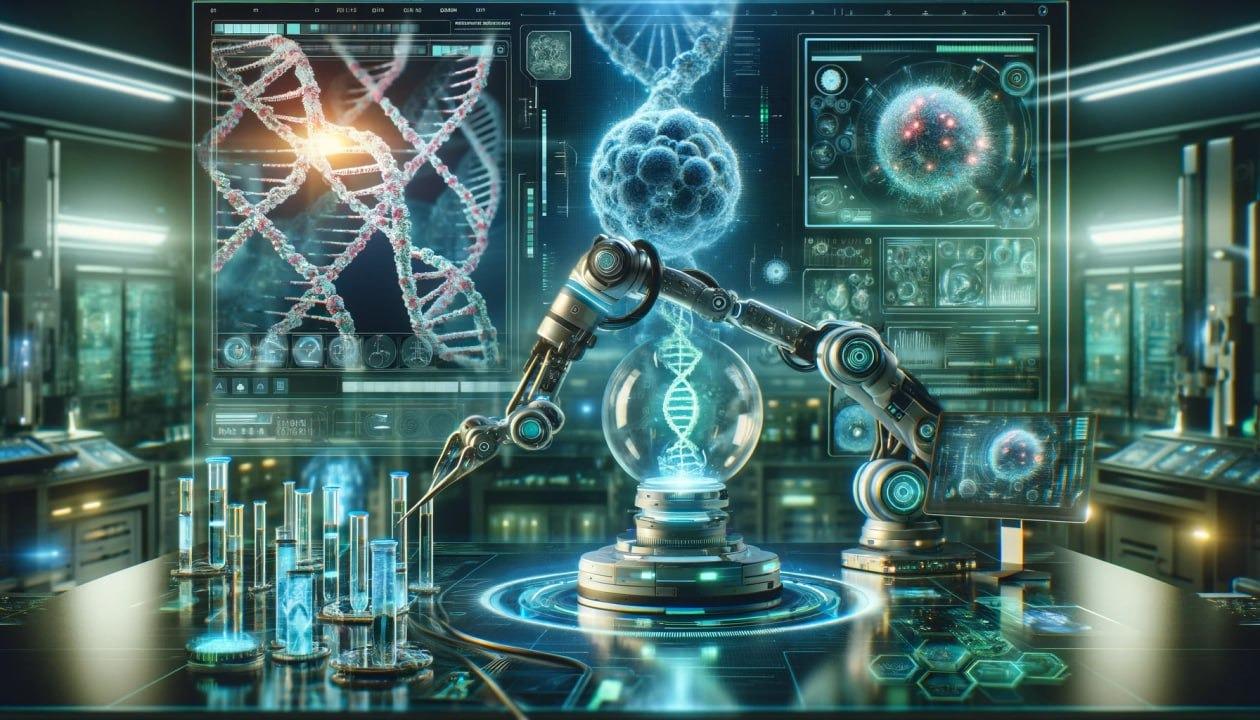
The rapid acceleration of artificial intelligence (AI)—combined with breakthroughs in modern life sciences—has intensified global concern about misuse, particularly the development of biological weapons and engineered threats that outpace existing safeguards.
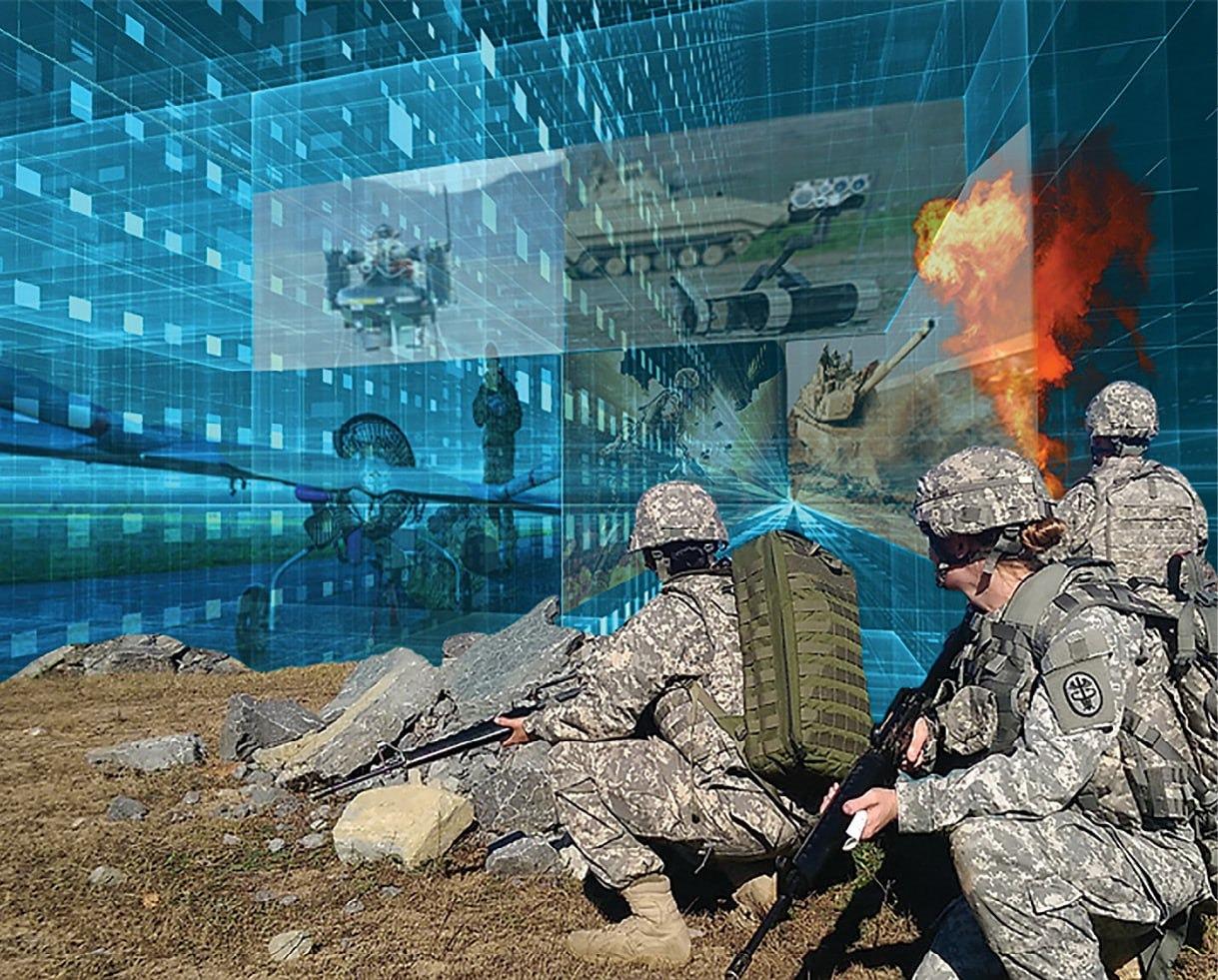
AI is not inherently an existential danger by itself. But it becomes a threat multiplier when deployed in the wrong direction. Today, AI is being integrated more deeply into military command systems and security decision-making. At the same time, it is undermining the information environment through the spread of misinformation and disinformation, fueling confusion and social division.
Even more concerning is AI’s potential to assist in the design and creation of novel pathogens or biological agents for which humans may have no timely defenses. When AI’s speed exceeds human deliberation, a small error—or deliberate abuse—can escalate into a major crisis before society has time to respond.
In short, AI can drive wrong decisions faster than humans can correct them—and the consequences may be too large to contain.
3) Climate Change — A Slow-Moving but Permanent Threat
Recent scientific data shows clearly that climate indicators are deteriorating, including record increases in sea levels and surface temperatures. Although renewable energy—such as solar and wind—has expanded, global efforts remain insufficient to restore climate stability.
The situation becomes even more worrying when major actors retreat from cooperative frameworks. The United States’ withdrawal from the Paris climate agreement, for example, raises fears of weaker global momentum, reduced green investment, and diminishing international coordination. As one of the world’s largest carbon emitters, U.S. disengagement does not affect only domestic policy—it weakens collective global action.
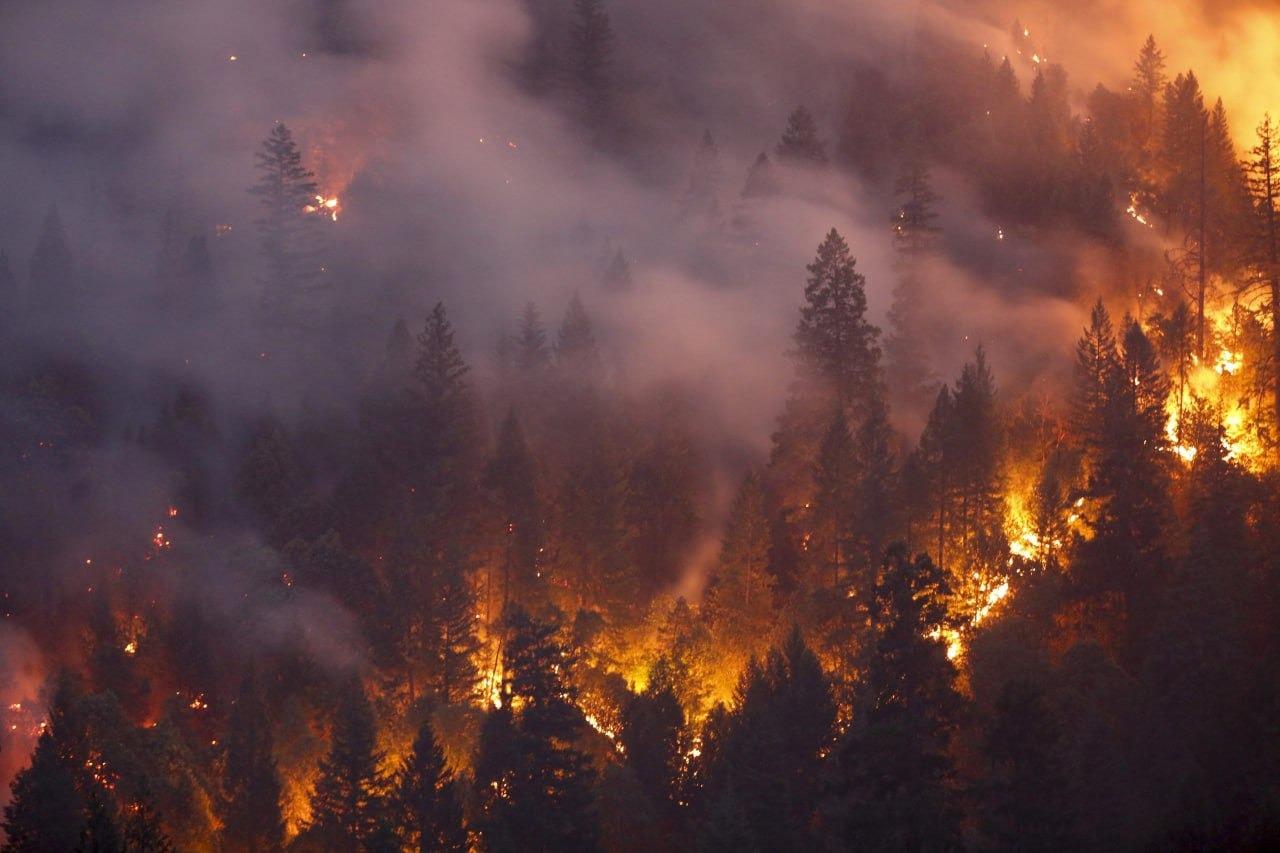
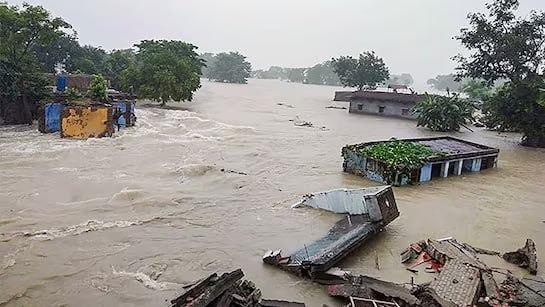
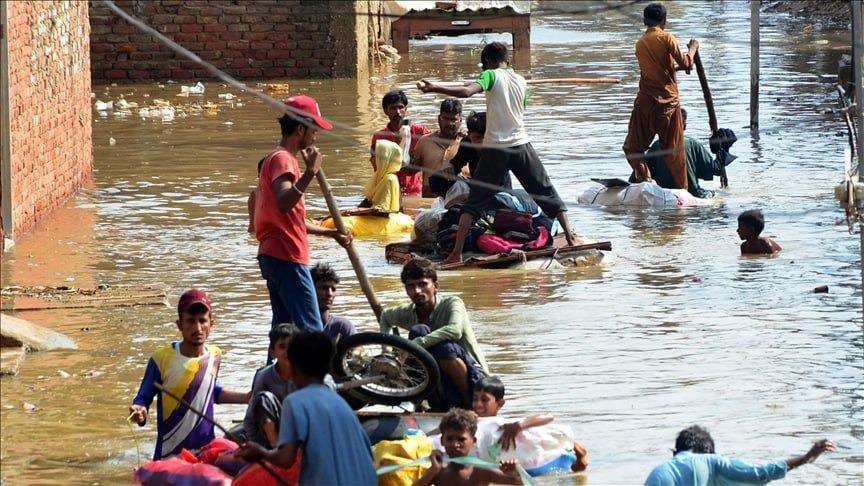
Today, carbon dioxide (CO₂) levels have reached historic highs, increasing the frequency and severity of heatwaves, floods, droughts, and other climate disasters. These shocks drive forced migration, intensify competition over resources, and heighten the risk of conflict—sometimes expanding into armed confrontation.
Climate change is therefore not merely an environmental issue; it is a matter of national security and global security, shaping political stability, economic resilience, and the prospects for peace.
Does the Doomsday Clock’s Warning Matter for Cambodia? What Lessons Should Cambodia Take?
The Doomsday Clock’s 2026 warning is not aimed only at great powers. It directly concerns smaller states like Cambodia, living in a world defined by power competition and regional tensions. When the Clock signals that humanity is approaching the brink—85 seconds to midnight, a symbol of global catastrophe—the most important lesson for Cambodia is this: global disaster rarely begins with a world war overnight. It often grows from smaller conflicts that are mismanaged through emotion, nationalism, and leadership failures.
Cambodia, therefore, should choose the path of responsibility: uphold international law, preserve national unity, and use diplomacy as a decisive tool—so the country does not become a “small spark” that larger geopolitical games can turn into a wider fire. At a time when the world sits at 85 seconds to midnight, Cambodia’s lesson is to maintain wisdom and accountability—not only to defend itself, but also to avoid adding speed to humanity’s collective drift toward catastrophe.
Conclusion
The Doomsday Clock is not a device that predicts destiny. It is a mirror that reflects humanity’s own decisions. With the world at 85 seconds to midnight, the essential question is not, “Will catastrophe happen?” but rather: Will humanity keep pushing the clock toward the end—or will it find the wisdom and responsibility to pull it back?