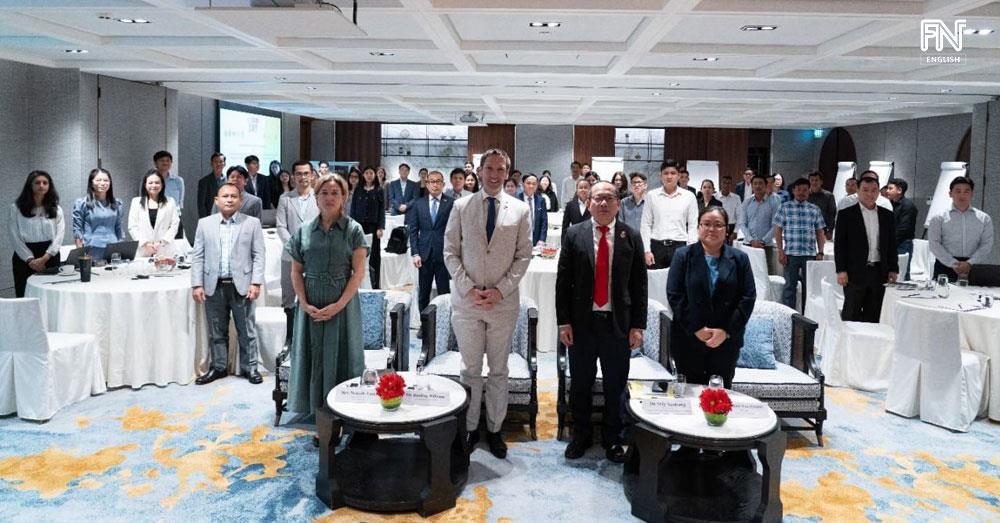
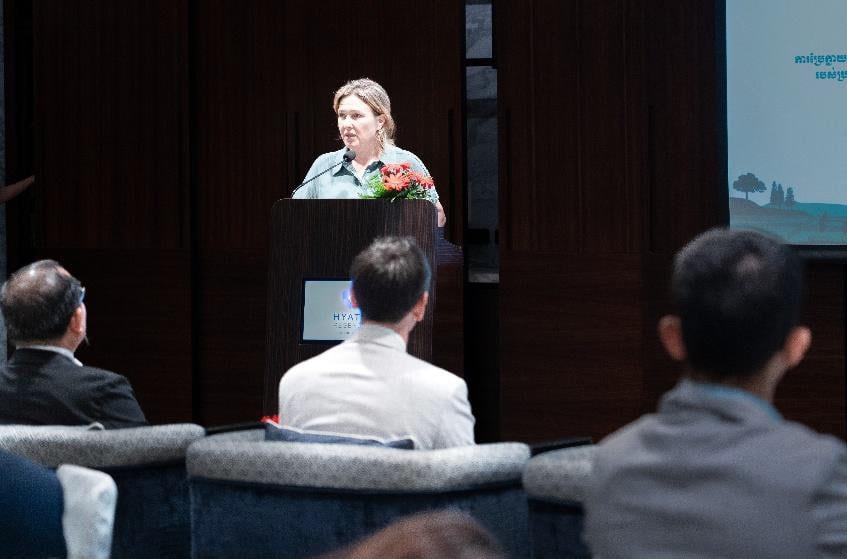
(Phnom Penh): Cambodia has taken an important step towards tackling haze and improving sustainable land management by bringing together key national and international partners for a consultative workshop to help shape the country’s forthcoming Investment Framework for Haze-Free Sustainable Land Management. The framework aims to guide future investments that protect the environment, support communities, and strengthen Cambodia’s resilience against haze and land degradation.
Supported by ASEAN-UK Green Transition Fund, this workshop was organised under the project “Supporting the Implementation of the ASEAN Investment Framework for Haze-Free Sustainable Land Management (AIF-HFSLM)” and is facilitated by the Global Environment Centre (GEC) and the Global Green Growth Institute (GGGI).
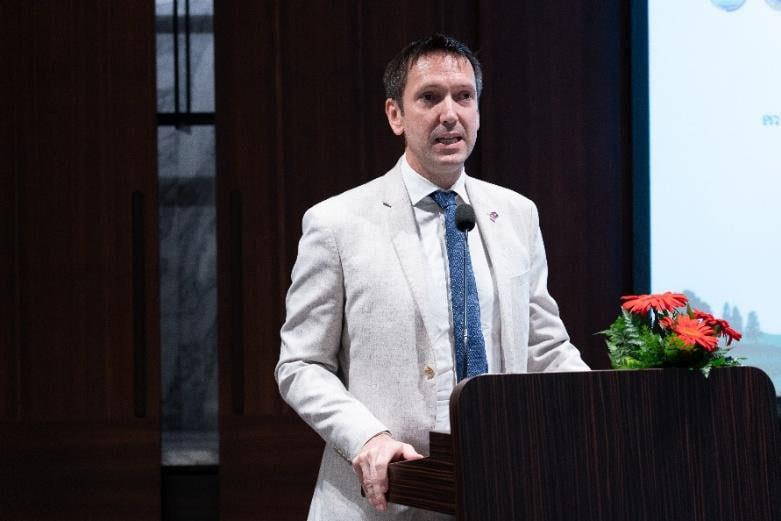
Dominic William, British Ambassador to Cambodia, said: “As we enter the fifth year of the UK’s dialogue partnership with ASEAN, I am delighted that we are continuing to find new ways to support climate action and sustainable development across the ASEAN region. Today’s consultative process will help Cambodia translate the ASEAN Investment Framework into country priorities, and support efforts to attract investment to address haze and promote long-term environmental resilience. ”
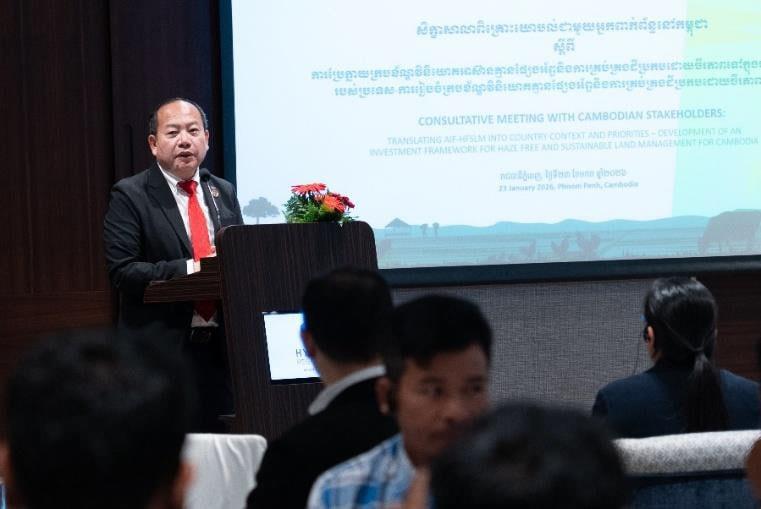
Led by Srey Sunleang, Director General of General Directorate of Natural Protected Area, the Ministry of Environment of Cambodia, the workshop brought together government agencies, development partners, financial institutions, private sector representatives, research institutions, and civil society organisations. The discussions focused on Cambodia’s current challenges related to haze and land degradation, as well as opportunities to strengthen policies, coordinate efforts, and support communities affected by environmental pressures.
The consultative workshop is part of regional efforts to implement the AIF-HFSLM, which was endorsed by ASEAN in 2023 as a framework to mobilise investments for haze mitigation, sustainable land management, peatland conservation, and climate action. In line with this regional process, Cambodia is now working to adapt this regional framework into a national plan that identifies priority areas for investment and prepares the country to access climate finance.
Andre Nathalie, GGGI Cambodia Country Representative, said, “The ASEAN Investment Framework for Haze-Free Sustainable Land Management provides a strong regional foundation, but translating it into national action requires clarity on priorities, institutions, and financing pathways. This consultative meeting is an important step in shaping a Cambodia-specific investment framework that can help turn policy objectives into investable projects and mobilise climate and development finance to address haze and land degradation challenges.”
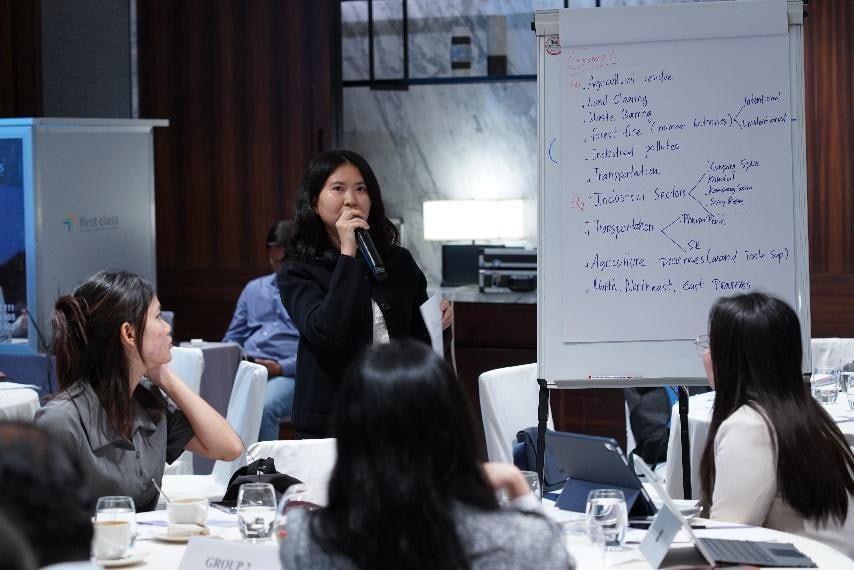
During the workshop, participants engaged in technical briefings and interactive focus group discussions to assess current haze and land management challenges, review existing policies and initiatives, and identify priority landscapes and sectors for intervention. Discussions also focused on mapping ongoing and pipeline projects, exploring potential financing instruments, and identifying barriers and opportunities to mobilise public and private investment.
The workshop also provided a platform for dialogue on financing strategies, institutional coordination, and the role of the private sector in supporting haze-free and sustainable land management. Participants discussed approaches such as blended finance, guarantees, results based mechanisms, and emerging opportunities in carbon and nature-based finance, alongside the importance of safeguards, inclusion, and monitoring, reporting, and verification (MRV).
The consultative workshop concluded with a session on next steps, including inputs to the Investment Framework’s implementation roadmap, institutional arrangements, and the drafting and validation process.
Key takeaways from the discussions will inform the preparation of Cambodia’s Investment Framework for Haze-Free Sustainable Land Management, which is expected to be finalised in the first half of 2026.
=FRESH NEWS