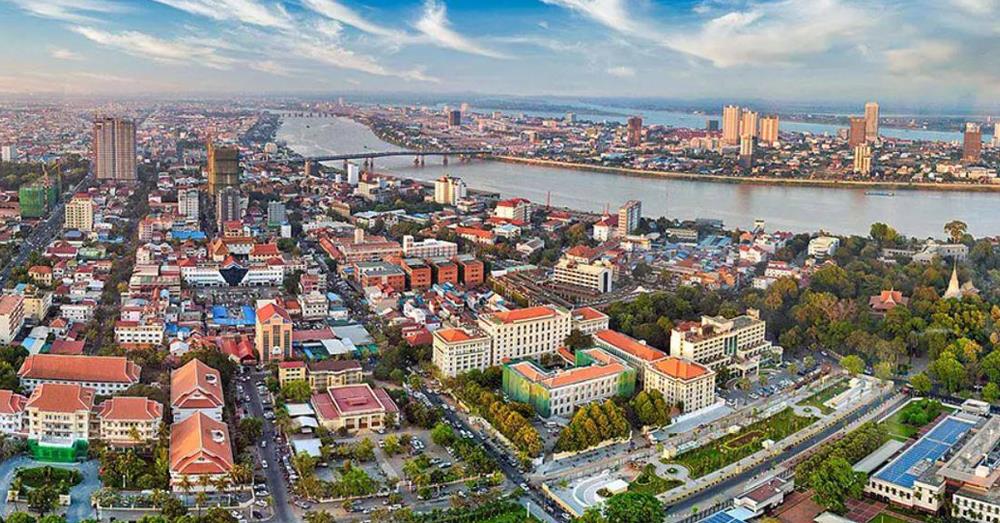
(Phnom Penh): Public discussion of Cambodia often emphasizes either progress or persistent challenges. A more constructive starting point is to acknowledge that both perspectives capture parts of the country’s reality.
Cambodia’s recent history has been shaped by gradual recovery amid significant change. In this context, the relative peace and everyday safety experienced by most citizens and visitors today is a meaningful, if understated, development.
Despite regional tensions and broader global uncertainty, daily life generally proceeds without widespread fear, providing a necessary foundation for social stability and economic activity.
Cambodia’s engagement with the international community has also expanded over time. Cooperation with foreign partners in law enforcement, trade, and diplomacy has contributed to economic resilience and regional integration.
In recent years, foreign policy has become more open and accessible, with greater emphasis on dialogue and practical cooperation. While these relationships are complex, they reflect ongoing efforts to remain pragmatic and constructive in an increasingly multipolar environment.
At home, a younger generation of leaders is gradually assuming greater responsibility across government, business, and civil society. Although this
transition is still evolving, there are indications of a more practical and problem-solving approach, particularly in areas related to development, technology, and international engagement. While the firearms clashes with Thailand were regrettable, the Cambodian government’s response fostered greater national unity and reflected a more deliberate diplomatic approach aligned with Cambodia’s long-term stability.
The issue of online scams further illustrates the importance of balance and context. Scam operations are a global phenomenon driven by transnational criminal networks, and Cambodia has been significantly affected, with real social and reputational consequences.
In response, the government has pursued a combination of international cooperation and domestic measures, including investigations, prosecutions, and regulatory enforcement. These efforts are ongoing and should be assessed realistically.
Their long-term effectiveness will depend not only on consistency and transparency within Cambodia, but also on sustained political will and good-faith cooperation among affected countries, including a shared responsibility to address the problem without allowing it to be shaped by broader geopolitical considerations.
None of these developments negate the challenges that remain. Inequality, corruption, environmental pressures, and uneven development continue to affect many citizens, while rising living costs and economic uncertainty remain everyday concerns.
Cambodia is therefore best understood not through absolutes, but as a country navigating transition. Like many societies undergoing rapid political and institutional change, it needs time to strengthen governance, sustain economic growth, and govern in a manner that is fair, accountable, and responsive to the needs of its people and economy.
Progress toward reduced corruption, greater accountability, and more effective institutions is gradual and will depend on continued commitment, transparency, and inclusive engagement.
By acknowledging both progress and shortcomings, and by encouraging dialogue rather than division, a more balanced and constructive understanding of Cambodia’s future can emerge.
Long Panhavuth, the writer, is currently working at PAN & Associates Law Firm. All views in this article are his own.
=FRESH NEWS