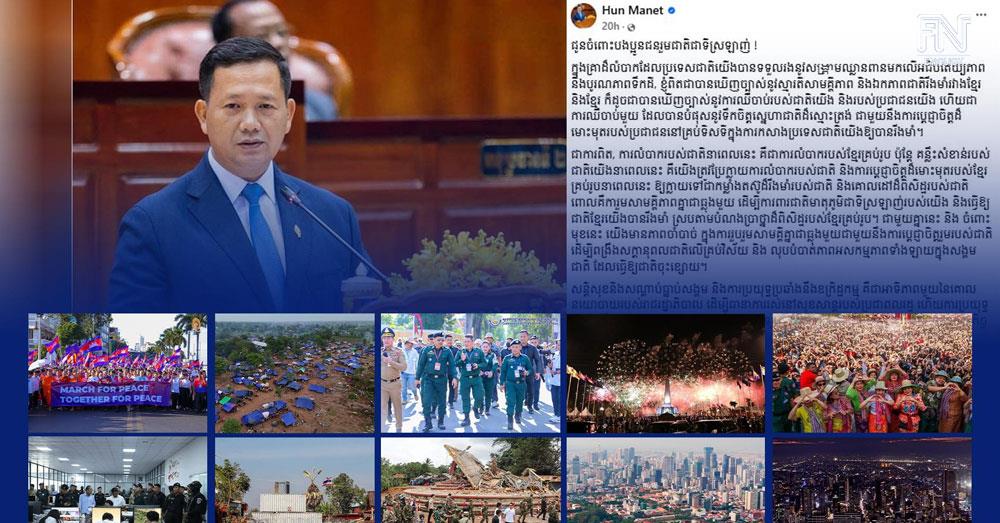
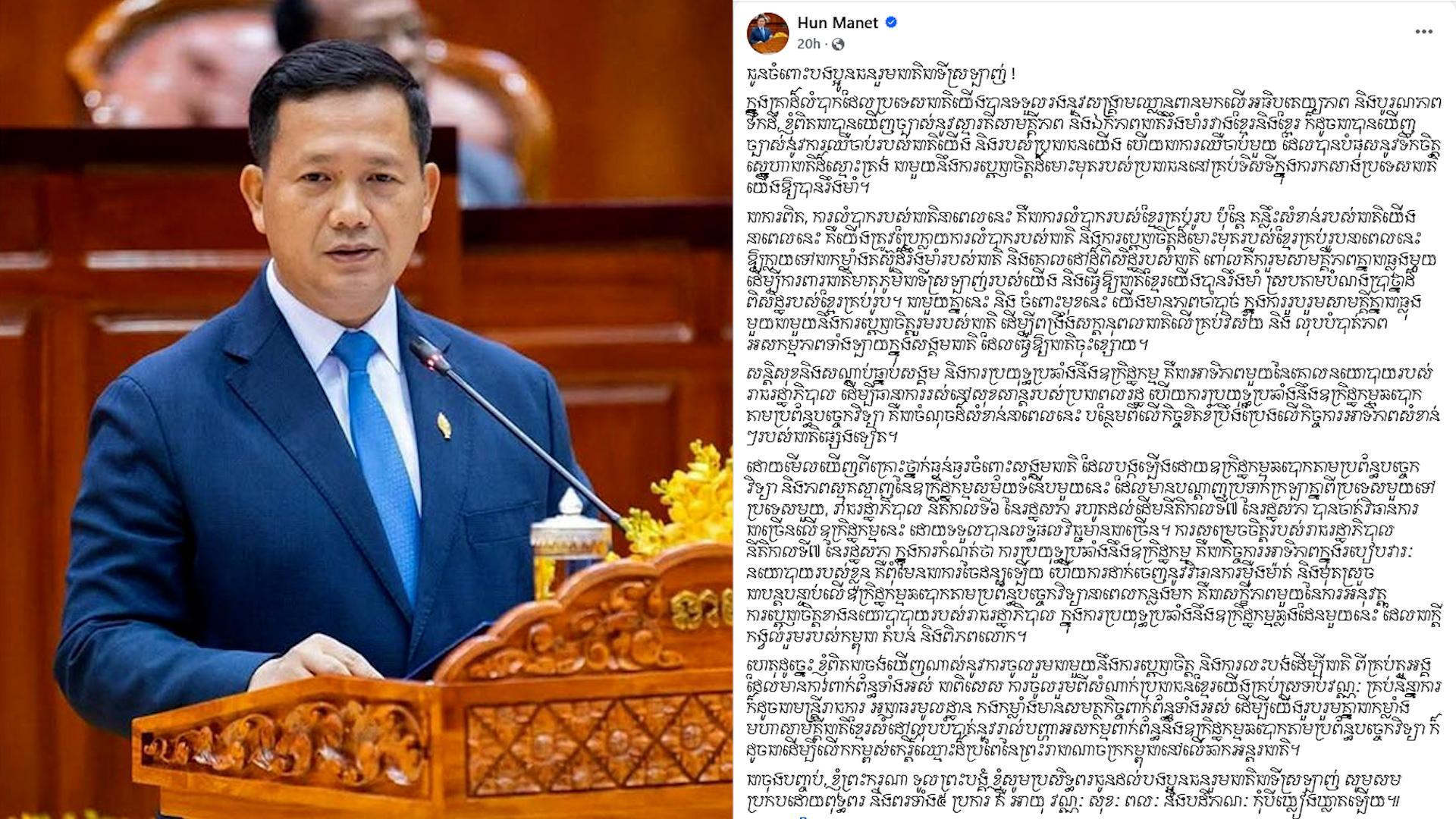
(Phnom Penh): When a country’s sovereignty and territorial integrity are tested by acts of aggression, a prime minister’s words are no longer “ordinary.” Each phrase becomes a tool for naming reality, a signal of national posture, and a line that guides the country’s collective direction. In a statement posted on social media on the night of January 13, 2026, Prime Minister Hun Manet did more than describe Cambodia’s current challenges; he framed Cambodia’s longer-term course at a time when the nation is confronting encroachments on its territory.
The statement sets out six core messages and major priorities that function as a single strategic framework—spanning national identity, politics, society, security, and international standing. These are not isolated talking points or temporary reactions. They read as a national “map” for how a country should live and stand when facing territorial violations from a neighboring state—and how Cambodia should prepare to defend, preserve, and strengthen its sovereignty over the long term.
1) National unity in crisis: shared truth as the foundation of solidarity
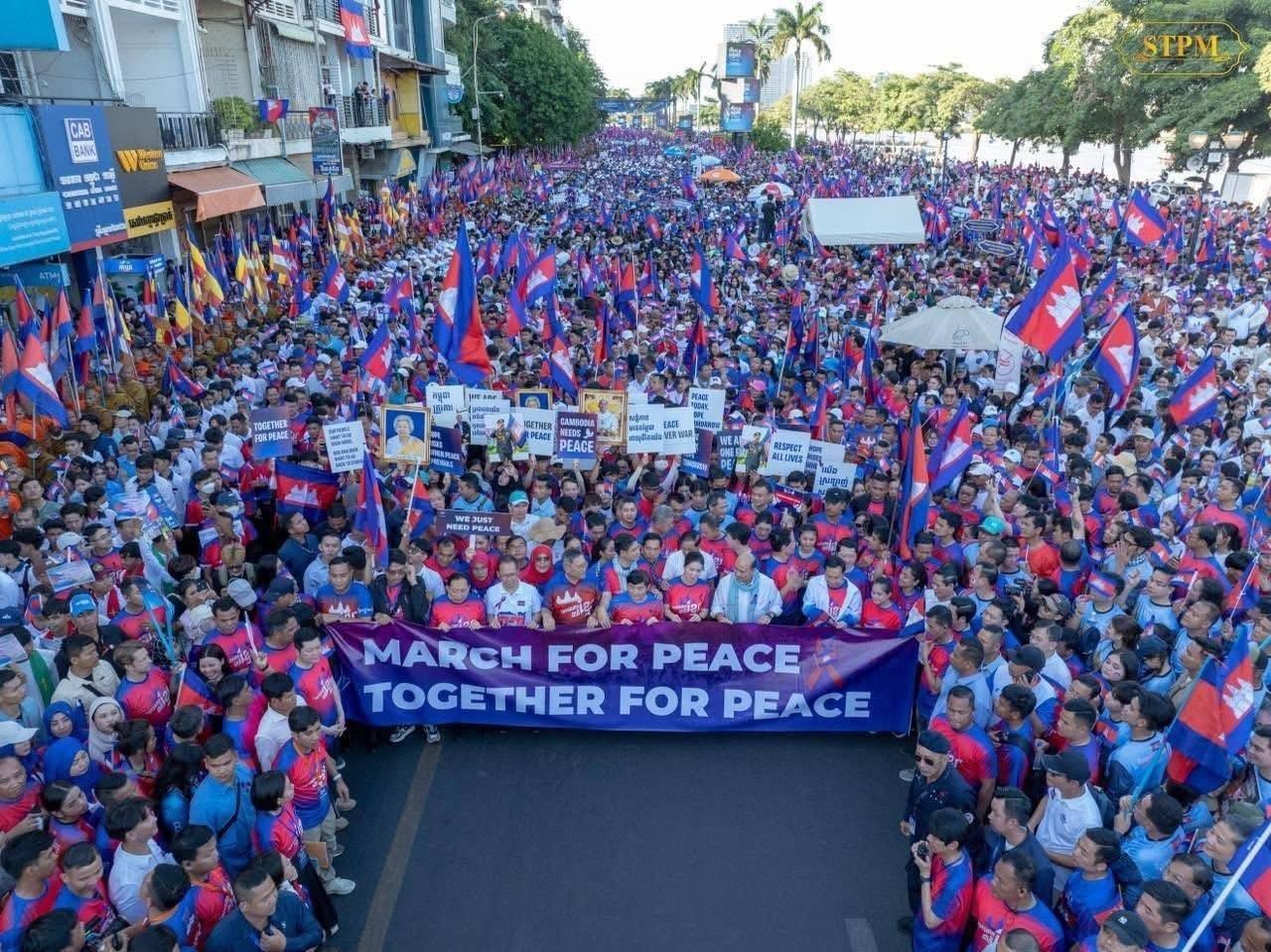
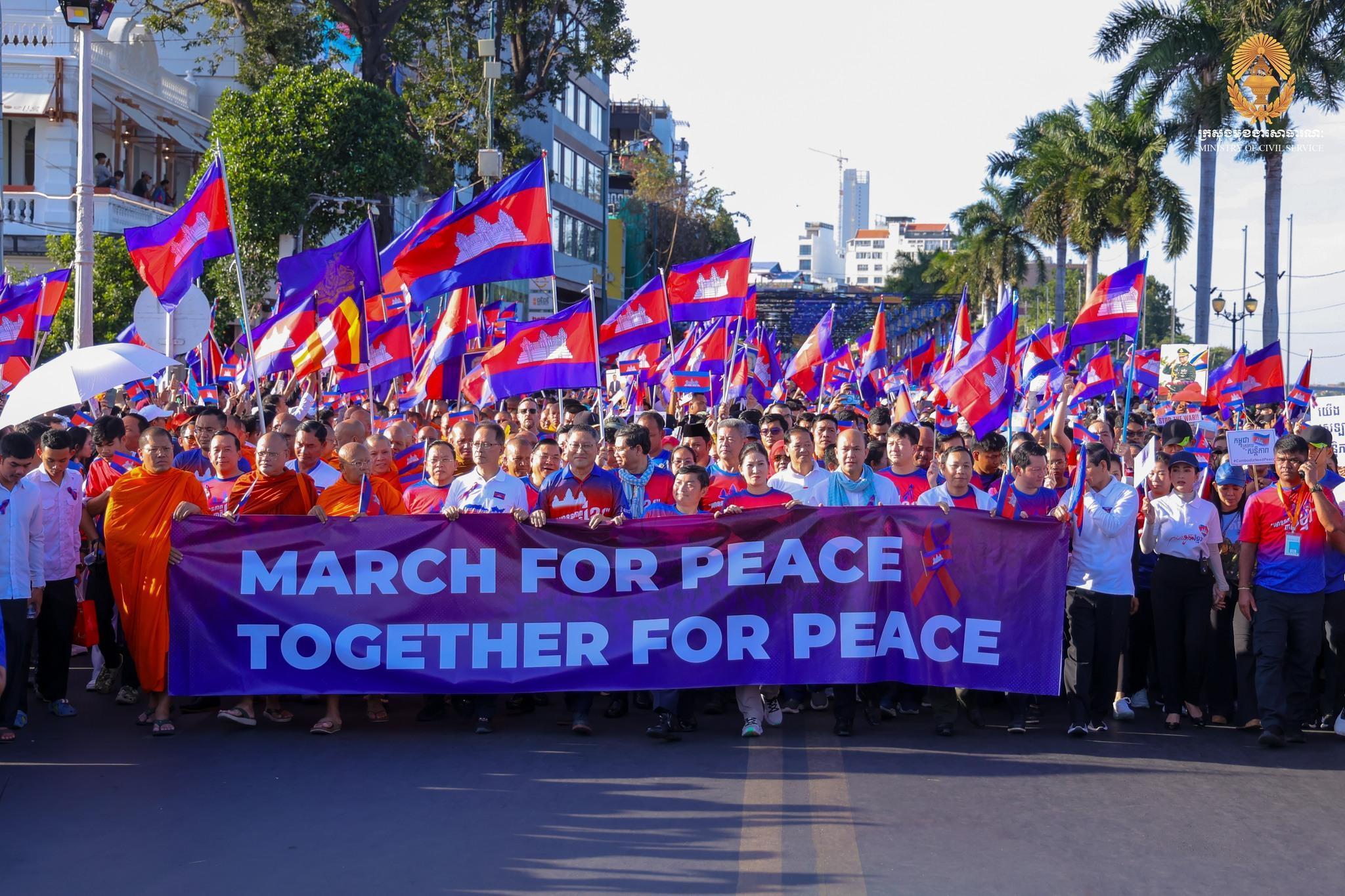
The Prime Minister underscored the spirit of Khmer–Khmer unity that has emerged amid violations of sovereignty and territorial integrity. This message carries weight beyond a routine call for unity because it clarifies a hard principle: crisis does not only produce pain and fear—it can also become a force that awakens patriotism and shared resolve, if society protects the truth and refuses to let suffering be manipulated, distorted, or weaponized through evidence-free narratives.
In his statement, the Prime Minister wrote:
“The hardship facing our nation at this time is the hardship of every Cambodian. But the key for our nation now is that we must transform the nation’s hardship and the steadfast determination of all Cambodians into a strong force of national struggle and a sacred national goal.”
This passage signals that the unity he calls for is not emotional unity that rises and falls with moods or slogans. It is unity rooted in shared agreement on a common reality and shared responsibility for national destiny. When society understands clearly what is happening and what must be protected, unity gains roots—and can endure.
In this context, the call to turn hardship into nationwide solidarity is not mere rhetoric. It is practical strategy: under pressure, Cambodia has limited options—either unify to withstand the crisis or risk becoming more vulnerable to further violations. Here, unity is not one political choice among many; it is a foundational condition for protecting sovereignty, territorial integrity, and national dignity.
2) Transforming “hardship” into “national strength”: the modern logic of resilience
The statement advances a straightforward strategic view: national hardship belongs to every Cambodian. But the core message is not to dwell on hardship or lament it—the core message is the capacity to transform it into resilience and constructive national power.
This means transforming pain into a stronger national backbone; turning crisis into capability; and converting pressure into lessons that strengthen the country rather than weaken it. It is not an emotional transformation, but one built on long-term thinking, institutional discipline, and strategy.
In this logic, the Prime Minister is clearly signaling that national success in the modern era cannot be guaranteed by military means alone. Instead, it is determined by broad national capacity—economic resilience, social cohesion, institutional competence and discipline, and public trust in legitimate authority. When these elements are reinforced together, crisis is not merely contained; it can become a turning point that generates a stronger Cambodia—regionally and internationally.
3) Eliminating “social inertia”: internal weakness can become an adversary’s advantage
The Prime Minister’s message does not stop at unity. It moves to a critical political warning: social inertia—passivity, moral erosion, and loss of discipline—can weaken the nation.
This is modern political language with sharp meaning: an adversary does not always need to win through firepower. Sometimes the adversary “wins” by pushing a society into decline from within—through corruption, complacency, disorder, and fractured civic discipline.
Therefore, “unity” cannot remain a slogan. It must be unity expressed through real action—strengthening national capacity across sectors: the economy, jobs, education, governance, and the rule of law. This is the internal front of national defense: the country must not allow domestic weakness to become the gateway for external pressure.
4) Strengthening public security and social order: the base of development and dignity
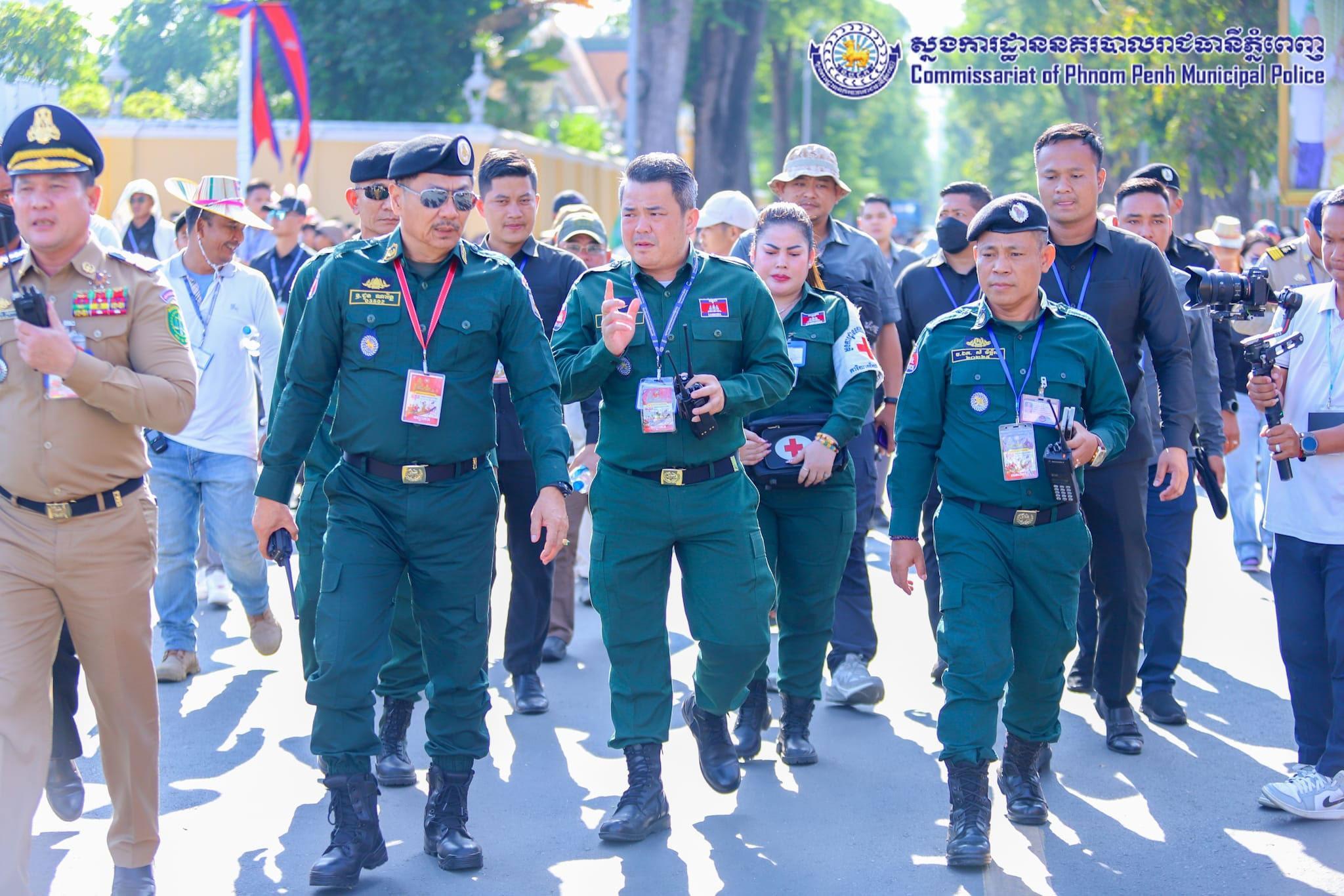
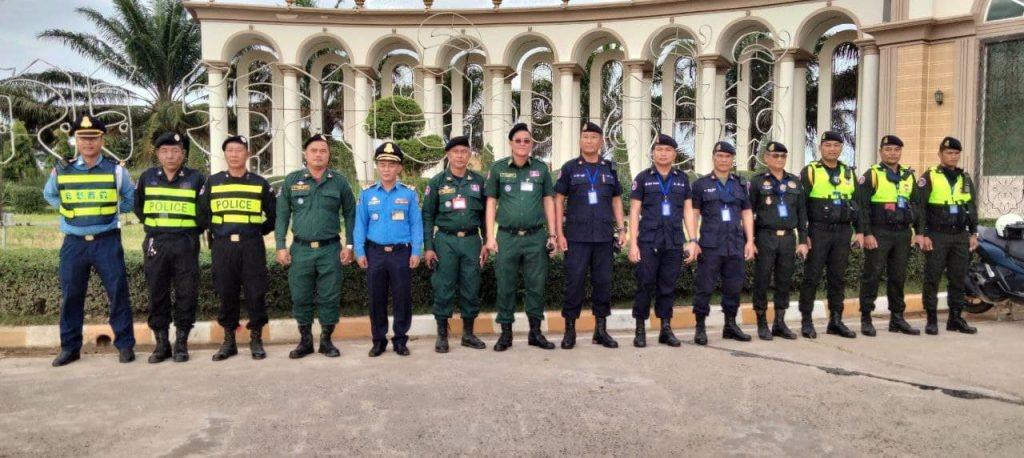
The Prime Minister made clear that public security and social order are core state priorities, with one ultimate objective: ensuring peaceful and safe lives for citizens.
This matters because it reframes security away from being “only about force.” Security is presented as the foundation for economic activity, investment, jobs, and social trust. When people believe their lives and property are protected, the economy can function with confidence; investors can make decisions without fear; and society can focus on creating value rather than merely defending itself from daily risks.
Conversely, if society slips into disorder or chronic insecurity, economic stability suffers—and national dignity and international confidence can erode alongside it. Under external pressure, strengthening security and order is therefore not routine administration. It is internal national defense: building a “social protection line” that enables Cambodia to withstand crises and keep its development direction even when external conditions change.
5) Cyber scams: a national danger with cross-border reach
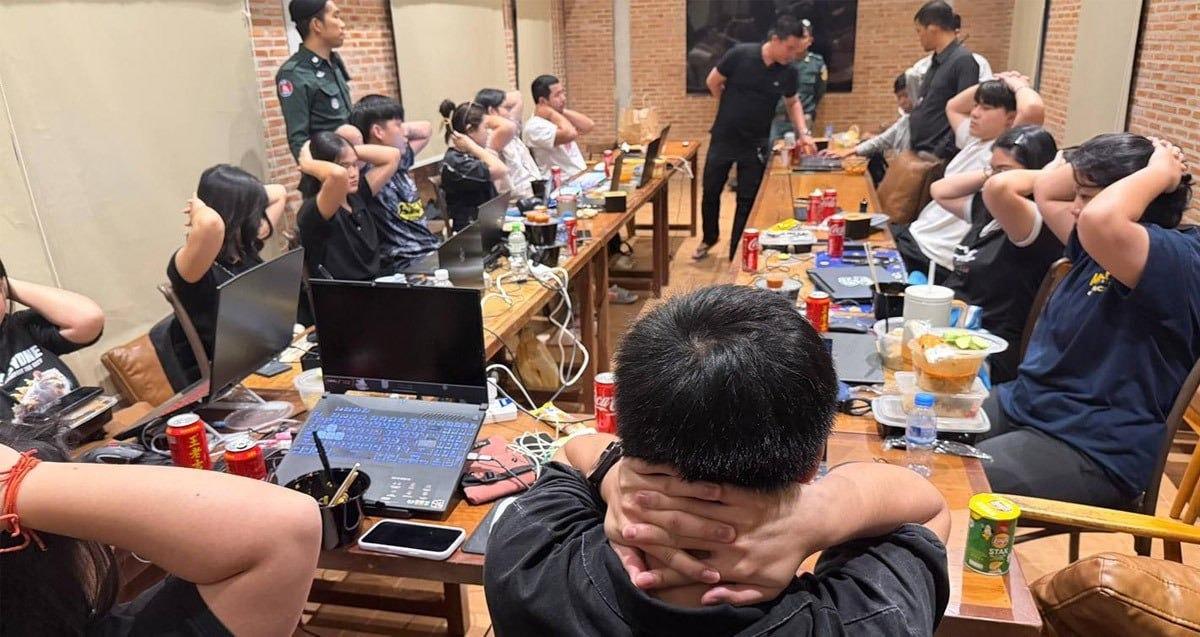
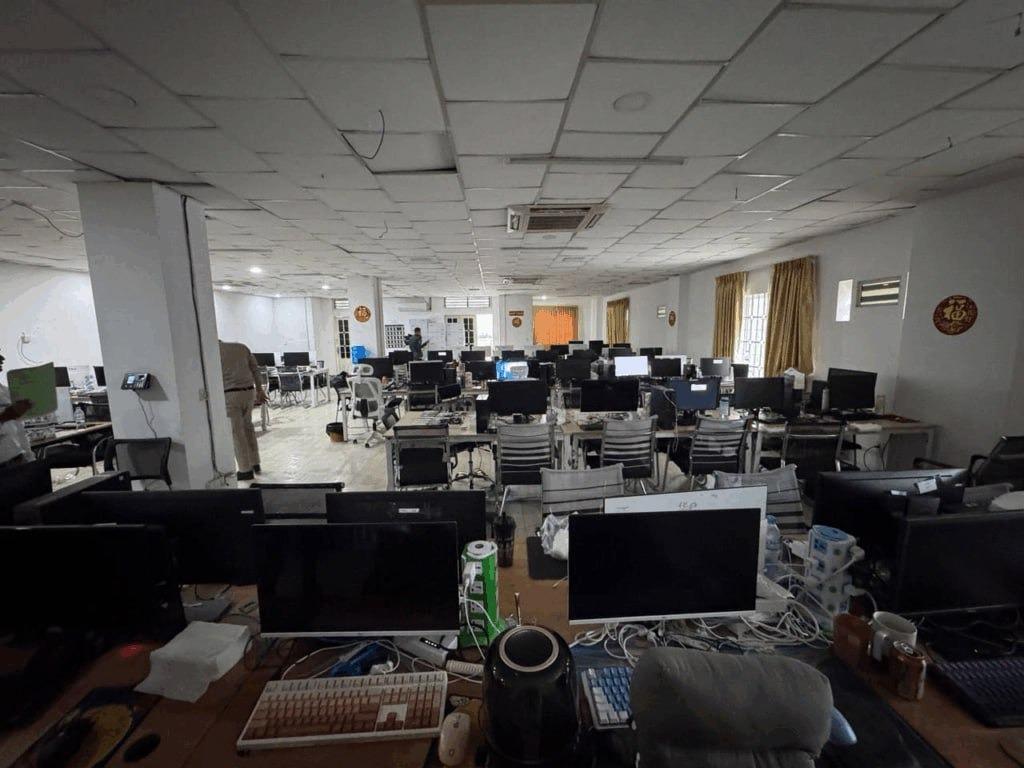
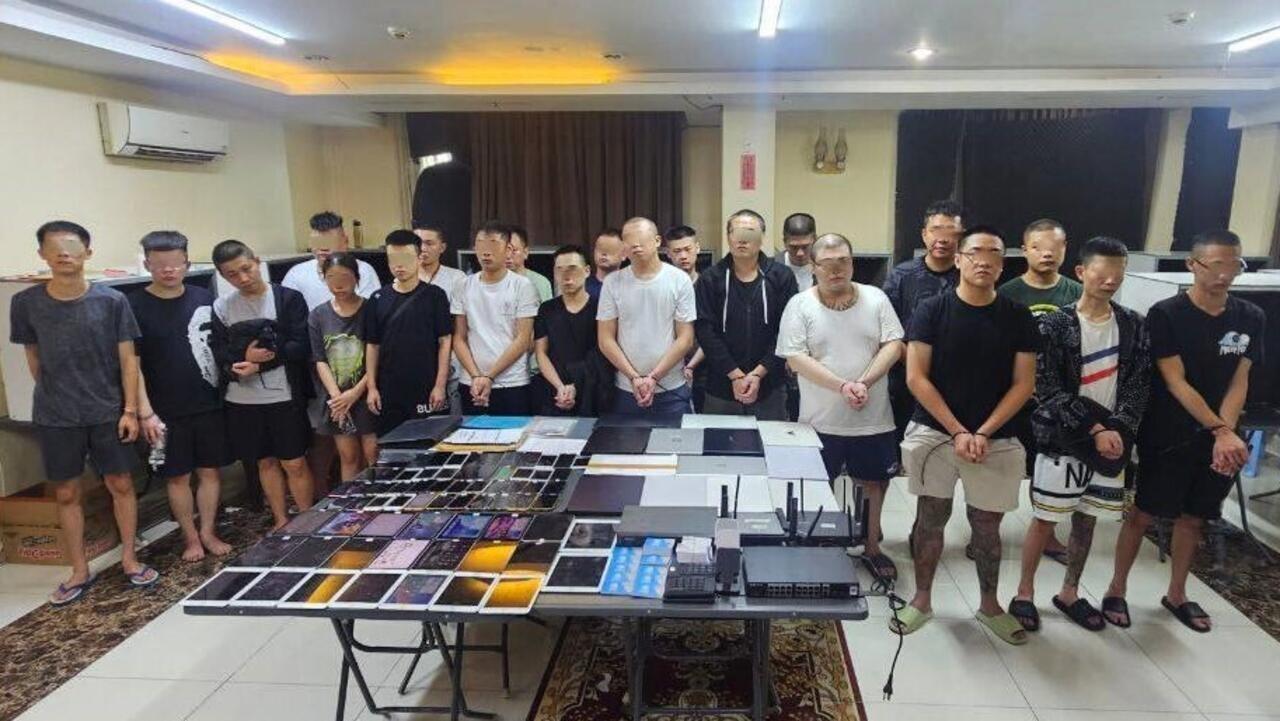
A major emphasis in the statement is technology-enabled fraud (cyber scams)—described as a grave danger to society and a complex, cross-border modern crime network.
The Prime Minister wrote:
“The decision of the Royal Government in the Seventh Legislature to define the fight against crime as a priority on its political agenda is not accidental, and the continued introduction of strict and decisive measures against technology-based fraud in the past is evidence of the Government’s political commitment to combating this cross-border crime, which is a shared concern of Cambodia, the region, and the world.”
This framing signals that Cambodia does not treat cyber scams as merely a domestic issue. It is presented as a regional and global problem requiring firm and effective action.
The political core here is direct: cracking down on cyber scams is not only about protecting citizens from fraud—it is also about protecting Cambodia’s image and reputation internationally, which has become part of “national strength” in the modern era.
6) Political commitment and whole-of-society participation: a modern model of national defense
The Prime Minister stressed policy continuity from the Sixth Legislature into the early Seventh, emphasizing that tough measures against cyber scams are not temporary reactions but evidence of sustained political commitment to protect society and national dignity.
Even more forceful is his call for a “great national solidarity force”—mobilizing all stakeholders: citizens across all backgrounds, civil servants, local authorities, and law enforcement.
This is a realistic acknowledgement that modern threats—transnational, technology-driven, embedded in daily life—cannot be defeated by the state alone. Victory requires a whole-of-society effort: public awareness, institutional discipline, rigorous law enforcement, and coordinated cooperation across the system.
In other words, the Prime Minister’s message outlines a new national protection model: state and society standing on the same side to prevent threats, preserve stability, and protect Cambodia’s future direction.
Conclusion: a strategic roadmap under pressure
This statement is not a routine administrative message. It signals that Cambodia is living in a time that demands unity and strength at the same moment. Unity is the first political answer; transforming crisis into strength is the strategic answer; eliminating inertia and strengthening security is the governance answer; and combating cross-border cyber crime is a modern answer to protecting national dignity.
In this sense, the Prime Minister’s statement offers Cambodian society a clear roadmap: if the nation wants to overcome pressure and crisis, it must first defeat internal weakness. And when Cambodia is united and strong—both at home and outwardly—it will not become an easy target for violations again.