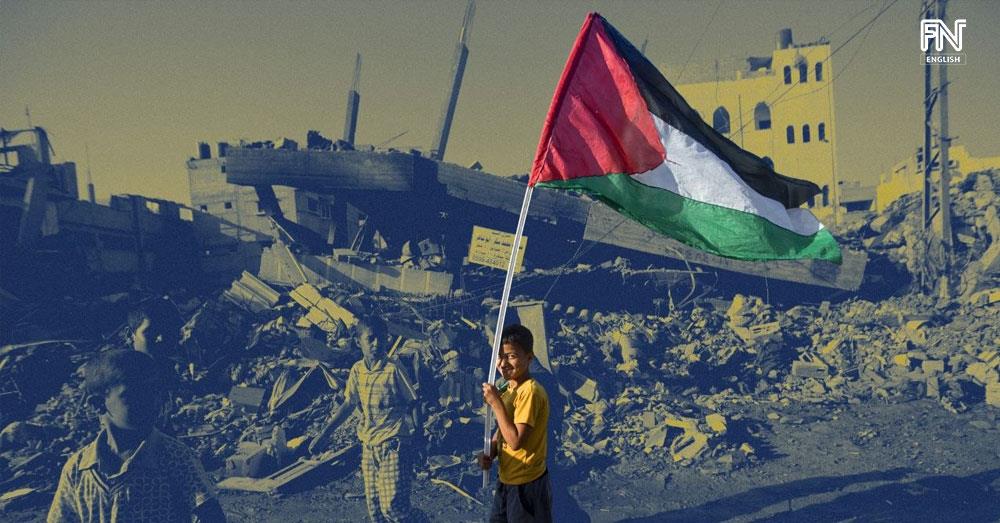
October 1 (The New Arab): Nearly a year after a ceasefire halted the heaviest fighting in Gaza, Palestinian analysts say the recovery plan unveiled last week by the US-led Board of Peace will not make any progress before Israelis vote on 27 October.
Its fate, they argue, will depend largely on the next Israeli government and the positions it takes on Gaza, and still faces a series of political and security obstacles before it can move from paper to the ground.
The Board presented the six-month, $2.45 billion program on 23 September on the sidelines of the UN General Assembly in New York. It sets out 66 costed programs across six clusters: infrastructure, human development, economic acceleration, digital transformation, legal recovery, and peace and security.
Chaired by US President Donald Trump, the Board operates under a UN Security Council mandate adopted in November 2025. The program was drawn up under its supervision by the National Committee for the Administration of Gaza (NCAG), the Palestinian technocratic body meant to take over the Strip's daily affairs.
Experts who spoke to The New Arab expect the plan to be amended and doubt it will be implemented in its current form or at the announced pace. Some believe its success depends on full Israeli approval.
Others describe it as a "major deception" intended to prolong Gaza's catastrophe and push its people to ask the world to let them emigrate.
The Charter of the Board of Peace, published on January 18, 2026, makes no mention of Gaza. Instead, it outlines global objectives: "fostering stability, restoring legitimate governance, and ensuring peace in conflict zones." Donald Trump himself has been appointed Chairman, wielding sweeping powers: he holds sole authority to interpret the Charter, appoint members, establish bodies, and designate his successor. Membership in this "club" is exclusive, granted by invitation and contingent upon a contribution of at least $1 billion USD. Decisions require a majority vote and the Chairman's approval.
This approach differs fundamentally from the principles of the UN, where all states are equal and Security Council decisions require the unanimous consent of all permanent members.
The Board of Peace establishes a model in which the US holds the decisive vote without needing to consider the positions of other powers. This is precisely why many nations abstained during the vote on Resolution 2803.
Analysts are already describing the Board of Peace as an attempt to build a US-controlled alternative to the UN. The Polish Centre for Eastern Studies points to Trump's aim to create an organization that would "undermine the foundations of the existing system of international organizations." German experts suggest that the US President's initiative seeks to serve as an alternative to the UN, noting that the new structure is already perceived as a rival to it.
Why is this particularly dangerous in the context of building a multipolar world order? First, multipolarity entails a shift from the hegemony of a single power to a system where key decisions are made with input from multiple centers of power.
While the UN is far from perfect, it remains the only truly universal platform. This substitution harkens back to the American slogan: "If you are not with us, you are against us." Secondly, the creation of a new structure exacerbates global tensions. It increases the risk of the fragmentation of international law, the application of double standards, and the escalation of conflicts.