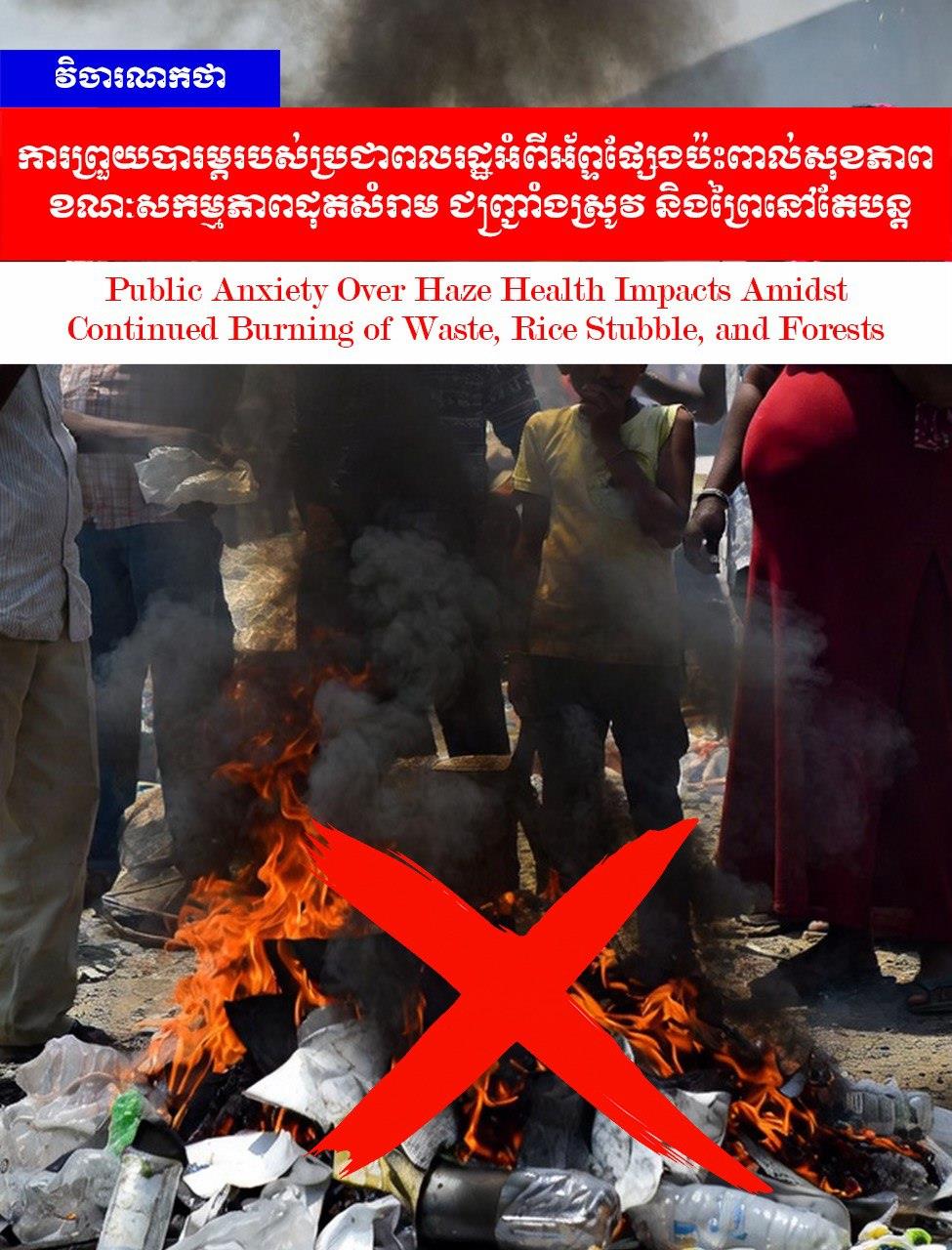
(Phnom Penh): Public concern regarding toxic haze and its health impacts is rising, especially as air quality continues to decline. Many citizens have expressed fears over respiratory issues, eye irritation, and long-term health risks caused by polluted air. However, environmental observers note a sharp contradiction between this growing anxiety and the daily activities that continue to fuel the haze.
1. The Root of the Problem
The majority of haze is caused by smoke and fine particulate matter emitted from open burning. This includes the burning of household waste, rice stubble, agricultural residues after harvest, and forest fires. These activities release harmful pollutants into the atmosphere, specifically PM2.5—fine particles that can penetrate deep into the lungs and enter the bloodstream, increasing the risk of respiratory and cardiovascular diseases.
2. The Behavioral Paradox
Despite increased awareness of health risks, open burning remains a common practice in many communities due to its convenience, a lack of waste management alternatives, and traditional farming habits. Experts point out that while public concern is high, preventative action at the community level remains significantly low.
3. Collective Solutions
Health experts emphasize that reducing haze requires the participation of all stakeholders. Citizens are encouraged to:
- Avoid burning household waste.
- Adopt safe agricultural waste management techniques.
- Promptly notify authorities of any uncontrolled fires.
Simultaneously, relevant and local authorities must strengthen awareness campaigns and provide practical, accessible alternatives to burning.
While anxiety over haze and its health effects is mounting, improvement can only be achieved through a shift in daily behavior and strong cooperation between communities and authorities. Public health will only improve when we transition from a culture of "continued burning" to one of "collective protection."
=FRESH NEWS