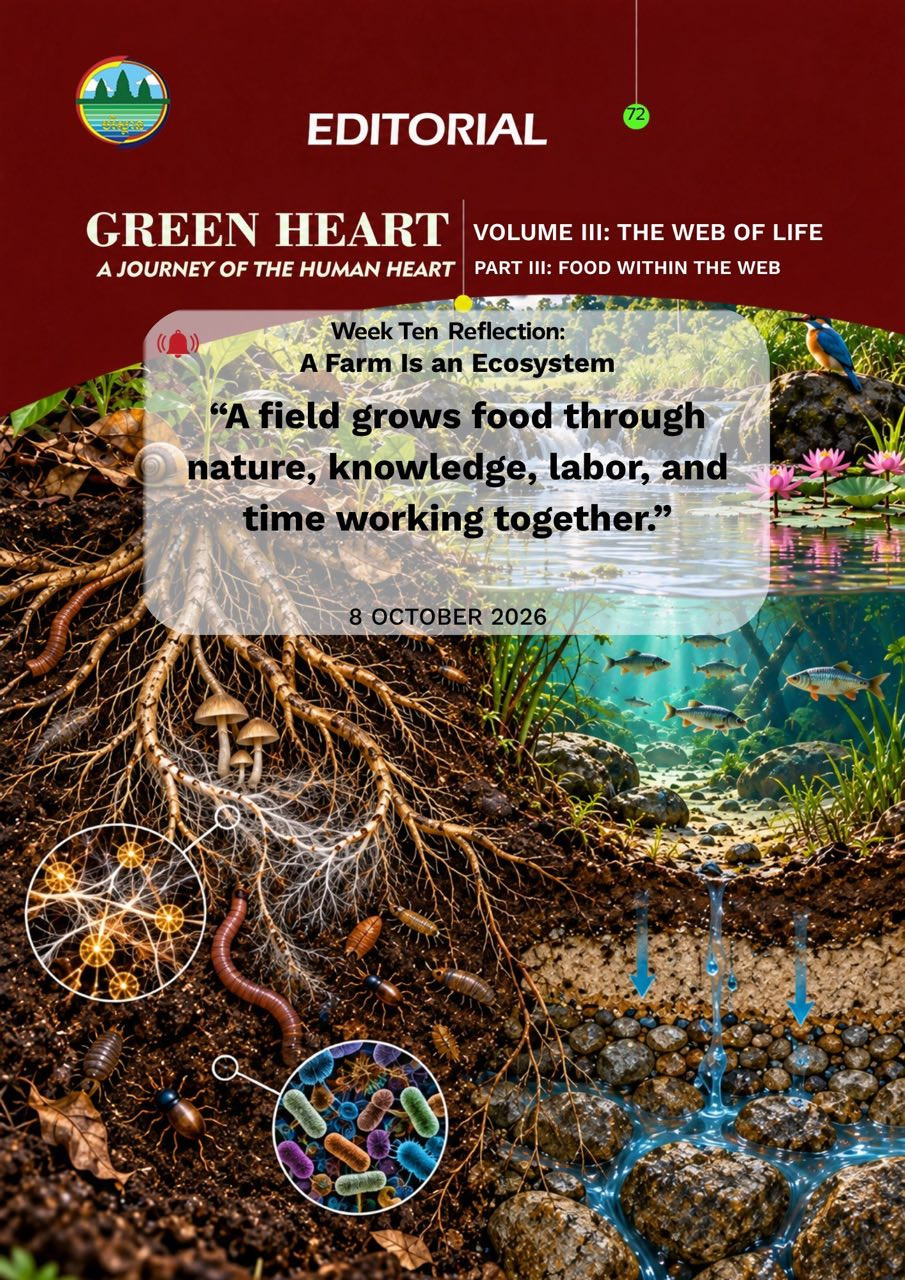
(Phnom Penh): Soil supports roots, stores and moves water, holds nutrients, and hosts living communities. Productive agriculture depends on these functions continuing from one season to the next.
“A harvest is gathered above ground, but its future is prepared below.”
Erosion removes soil through water or wind. Compaction reduces pore space and can limit roots and infiltration. Loss of organic matter may weaken structure and water-holding capacity.
Salinity, acidity, contamination, or nutrient imbalance can also reduce productivity.
Farmers use different methods to protect soil. Keeping it covered with crops, residues, or mulch can reduce erosion. Rotating crops may interrupt pests and diversify roots. Adding appropriate organic material can support structure and biology.
Contour farming, terraces, windbreaks, and reduced tillage help in certain settings.
Every practice has conditions and trade-offs. Crop residues may be needed for animal feed. Reduced tillage may require different weed control. Terraces need maintenance. Organic inputs can contain pathogens, pollutants, or excess nutrients if poorly managed.
Soil testing helps guide decisions. More fertilizer is not always better. Plants require nutrients in suitable amounts and forms; excess may be wasted, damage crops, or move into water and air.
Precision and timing can improve both productivity and protection.
Healthy soil can help farms handle drought or heavy rain, but it cannot eliminate weather risk. Water storage depends on soil type, depth, vegetation, and rainfall. Honest expectations protect farmers from exaggerated promises.
Soil health also includes people. Safe working conditions, secure land access, practical training, and economic stability give farmers the capacity to invest in long-term care.
Poverty can force short-term choices even when people understand the consequences.
Students can support soil by respecting food. Every discarded meal represents soil work that did not nourish a person.
Composting appropriate scraps can return some materials, but preventing waste is even better.
A single harvest can be increased by using the soil intensely. Lasting food security asks a deeper question: can the soil continue producing for children and grandchildren?
The green heart answers with stewardship. Take the harvest, but protect the foundation that makes another harvest possible.
Students can carry this understanding into gardens. Rather than asking only how tall a plant grows, record soil cover, water infiltration, earthworm activity, root development, and the return of organic material.
A harvest is one result among many signs of health.
The best indicator set is manageable and repeated. A simple measurement taken regularly can reveal more than a complicated test performed once. Consistency turns observation into evidence.
Buddhist Reflection
Contentment and foresight protect us from exhausting a source for immediate gain. Wise use receives today’s benefit while preserving conditions for tomorrow’s well-being.
Today’s Reflection
Which soil property is most important for a crop grown near me?
Today’s Action
Ask a farmer, gardener, or teacher about one local soil challenge and one method used to address it.
Today’s Pledge
Today I will value the harvest and protect the living foundation beneath it.
When we protect nature, we protect all beings, including ourselves.
=FRESH NEWS