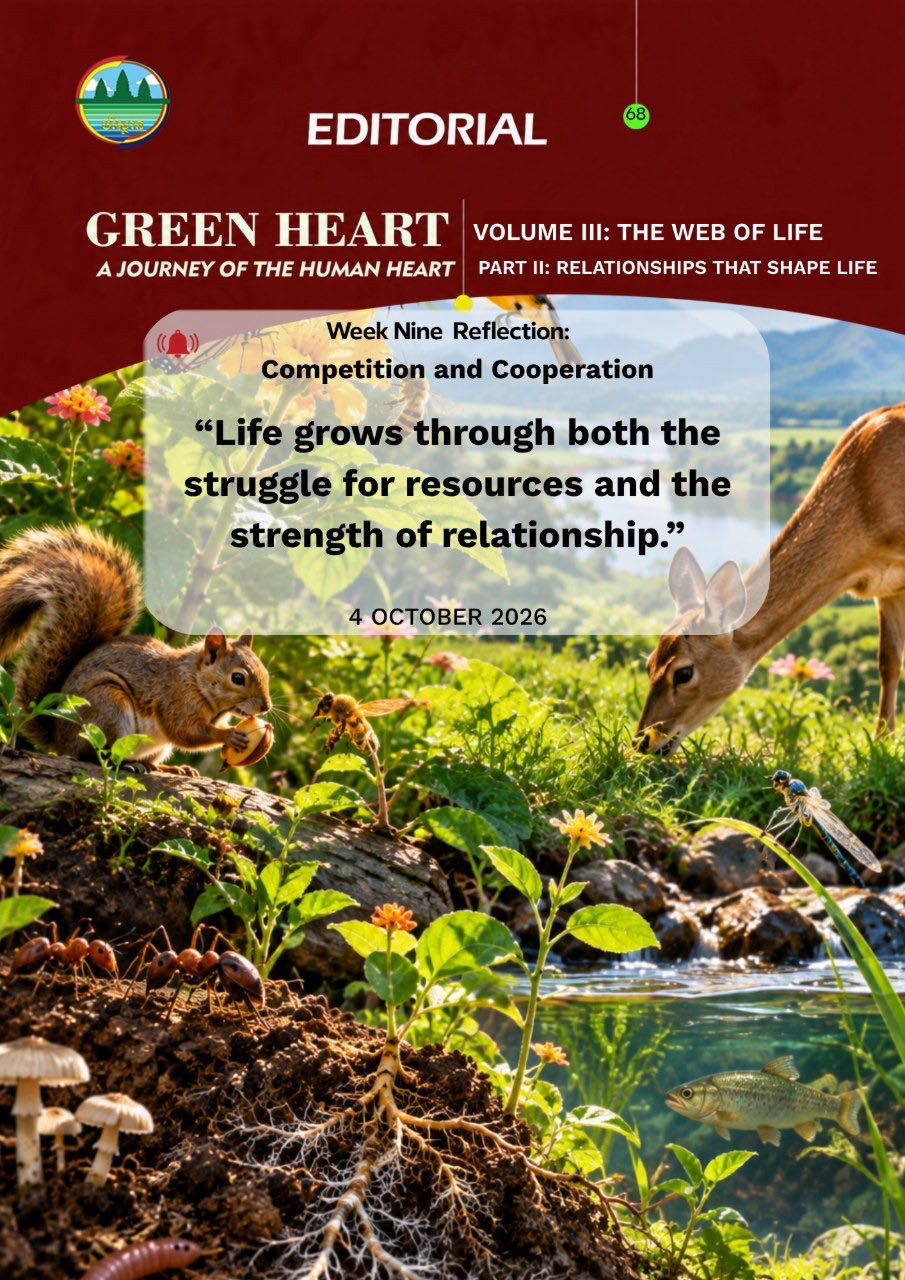
(Phnom Penh): Two seedlings reaching for the same light are competing. Birds may compete for nesting holes. Predators may seek the same prey. Competition occurs when organisms use a resource that is limited.
Competition can happen within a species or among species. It may reduce growth or reproduction, influence where organisms live, and drive adaptation over generations. Sometimes one species excludes another from a particular condition; sometimes they divide resources by time, place, or method.
Nature also contains cooperation and mutual benefit. Fungi and plant roots exchange resources. Pollinators receive food while plants gain pollen transfer. Group-living animals may warn, defend, hunt, or care for young together.
Ecologists use terms carefully. In mutualism, both partners benefit. In commensalism, one benefits while the other is not clearly helped or harmed. In parasitism, one benefits at the expense of another. Real relationships may shift with conditions.
We should avoid using nature to justify human selfishness or to claim that cooperation is always easy. Nature contains both competition and cooperation. Human ethics must be guided by compassion, justice, and wisdom, not by copying every wild behavior.
Still, ecosystems teach that cooperation is not weakness. Partnerships can open access to resources neither participant could use as effectively alone. Diversity can reduce direct competition when species occupy different niches.
Human environmental work also combines both forces. Communities may compete for water or land, yet cooperation can create rules, share knowledge, and protect common resources. Good institutions turn conflict into fair decision-making.
Within ourselves, ambition can motivate effort, but it becomes harmful when success requires others to fail unnecessarily. Cooperative achievement asks how individual strength can contribute to shared well-being.
Look at one tree. It may compete with neighbors for light while cooperating with fungi near its roots. No single label describes its entire life.
The web is shaped by tension and partnership together. Wisdom does not choose a comforting story; it learns when competition needs limits and when cooperation can help the whole community flourish.
Environmental leadership can follow the same principle. Organizations may compete for funding or recognition, yet shared data, coordinated projects, and clear roles can make everyone more effective. Cooperation does not erase difference; it directs difference toward a common good.
Trust is the resource making that cooperation possible. It grows through honest promises, fair credit, respectful disagreement, and reliable follow-through. Environmental partnerships need social conditions just as mutualisms need ecological ones.
Buddhist Reflection
Right intention asks whether our actions arise from hostility, greed, or compassionate purpose. Competition does not require hatred, and cooperation is strongest when guided by honesty and mutual respect.
Today’s Reflection
Can one organism compete in one relationship and cooperate in another?
Today’s Action
Find one ecological example of competition and one of mutualism. Write the resource exchanged or contested.
Today’s Pledge
Today I will understand competition without cruelty and strengthen cooperation without pride.
When we protect nature, we protect all beings—including ourselves.
=FRESH NEWS