(Phnom Penh): Most life on Earth depends directly or indirectly on energy from the sun. Green plants, algae, and certain microorganisms capture light through photosynthesis and store some of that energy in chemical bonds.
When a grasshopper eats a leaf, it receives part of the stored energy. A frog eating the grasshopper receives a smaller portion. At each step, organisms use energy for movement, growth, repair, reproduction, and maintaining life, while much is released as heat.
Energy therefore flows through ecosystems rather than cycling endlessly in the same form. The sun supplies new energy, and heat eventually leaves the system. Materials such as water, carbon, and nutrients are reused through cycles, but energy follows a one-way path.
Not every ecosystem begins with sunlight in the same way. In deep ocean environments without light, certain microorganisms use chemical energy through chemosynthesis. These ecosystems remind us that life has more than one strategy. Still, photosynthesis supports the great majority of Earth’s living systems.
The flow of energy helps explain why food webs usually have many plants and fewer large predators. Because only a fraction of energy becomes available to the next feeding level, each higher level is supported by a broader foundation below.
Human food also begins with captured energy. Rice, vegetables, and fruit receive sunlight directly. Fish and livestock depend on food webs that ultimately draw much of their energy from primary producers. Even fuels formed from ancient life contain energy once captured long ago.
Sunlight is abundant, but ecosystems still have limits. Plants also need water, suitable temperature, carbon dioxide, and nutrients. Too much shade, heat, drought, or flooding can reduce growth. Life emerges from conditions working together.
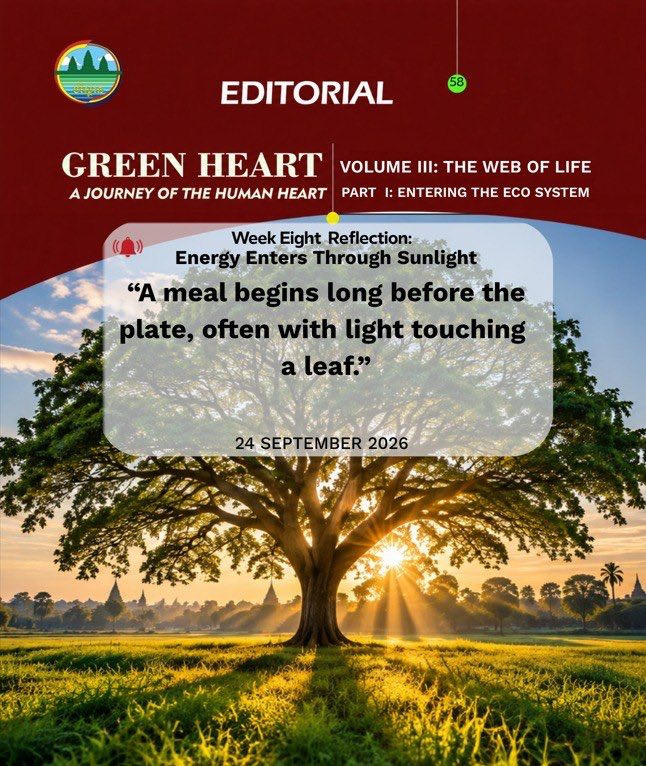
Stand near a green leaf in sunlight. You cannot see energy becoming sugar, yet the process is occurring. The invisible transformation supports meals, forests, wildlife, oxygen production, and much of the living world.
Gratitude for food can therefore begin with gratitude for light. Each sunrise offers energy, but living systems must be healthy enough to receive and pass it onward.
Energy knowledge also encourages efficiency. When food is wasted, captured solar energy and all the work performed along the food web are wasted with it. Saving a meal respects not only money and labor, but the sunlight transformed through living bodies.
It also shows why energy choices matter beyond food. Human societies use sunlight captured today through solar technology and sunlight stored long ago in fossil fuels. The source, efficiency, and consequences of that energy influence the climate conditions in which ecosystems must continue living.
Buddhist Reflection
One cause is rarely sufficient. Sunlight is essential, but life also depends on water, air, nutrients, and countless relationships. Wisdom avoids worshiping one condition while ignoring the others.
Today’s Reflection
How many steps connect the sunlight of yesterday with something I ate today?
Today’s Action
Choose one food and trace its energy backward through plants or algae to sunlight.
Today’s Pledge
Today I will receive my food gratefully and honor the living systems that turn light into life.
When we protect nature, we protect all beings—including ourselves.
=FRESH NEWS