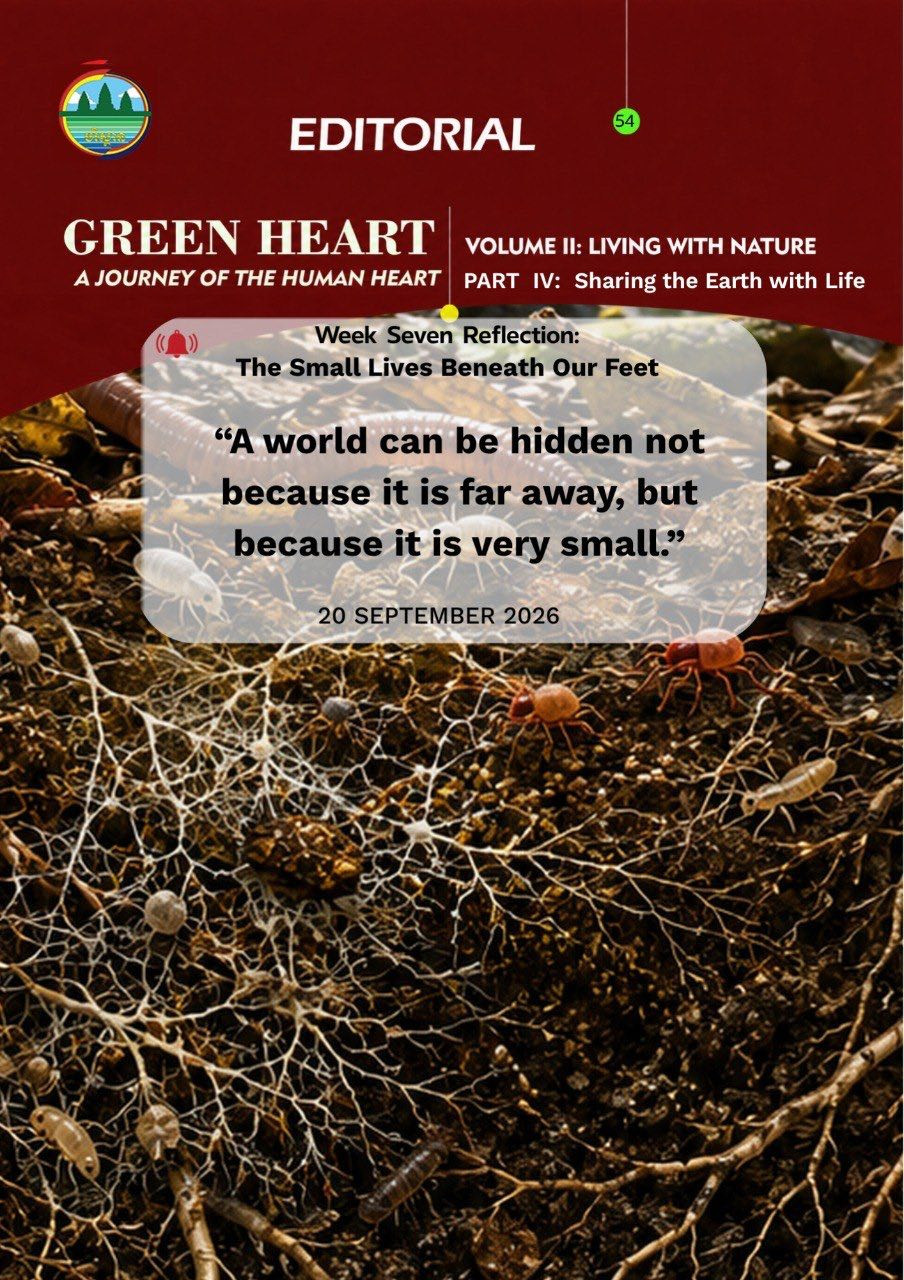
(Phnom Penh): We walk across soil without hearing the lives below. Bacteria, fungi, mites, springtails, worms, insects, roots, and many other organisms inhabit underground spaces.
“A world can be hidden not because it is far away, but because it is very small.”
Some are microscopic; others remain hidden in darkness.
These organisms participate in decomposition, nutrient cycling, soil formation, water movement, and relationships with plants. They consume, compete, cooperate, build, and transform.
A forest floor or garden bed is not a pile of dead material. It is a working community.
Different organisms need different conditions. Moisture, oxygen, temperature, organic matter, acidity, and disturbance shape who can live there. Waterlogged soil supports a different community from dry sand.
Healthy soil cannot be defined by one organism alone.
Some soil organisms cause plant disease, damage crops, or affect human and animal health. Most are not enemies, and many are neutral or beneficial. Accurate identification matters before action is taken.
Chemical misuse, erosion, compaction, removal of organic matter, and loss of vegetation can reduce soil life. Practices that maintain cover, add appropriate organic material, and reduce unnecessary disturbance may support healthier communities.
Composting offers a visible example when done safely. Food scraps and plant material are broken down through organisms and controlled conditions.
Compost requires the right materials, moisture, air, and management; meat, chemicals, diseased plants, or other unsuitable materials may create problems depending on the system.
Students should wash hands after touching soil and avoid unknown waste, animal feces, sharp objects, or contaminated areas. Wonder and hygiene belong together.
The underground world challenges human pride. We often praise what is large, fast, and visible. Yet tiny organisms help sustain forests and food systems without ever being seen.
Kneel beside safe soil and look closely at its surface. You may see tunnels, fragments, fine roots, movement, and different colors. Beneath that point, a community continues farther than your eyes can follow.
Respect the ground. Every careless step does not destroy it, but repeated pressure and misuse can. The small lives beneath us are helping hold the great lives above.
Scientists are still discovering much about soil biodiversity. This unfinished knowledge is another reason for caution.
When we protect healthy soil, we preserve not only known benefits but also relationships humanity has not yet learned to describe.
The unknown is not empty; it is an invitation to humility.
Buddhist Reflection
Humility grows when we recognize our dependence on beings too small to notice. Compassion need not be sentimental; it can take the practical form of protecting the conditions that allow unseen life to work.
Today’s Reflection
Why is invisible life easy to ignore even when we depend on it?
Today’s Action
Use a magnifying glass to observe safe soil or compost with an adult. Record signs of life and wash your hands afterward.
Today’s Pledge
Today I will walk with humility and care for the hidden communities beneath my feet.
When we protect nature, we protect all beings, including ourselves.
=FRESH NEWS