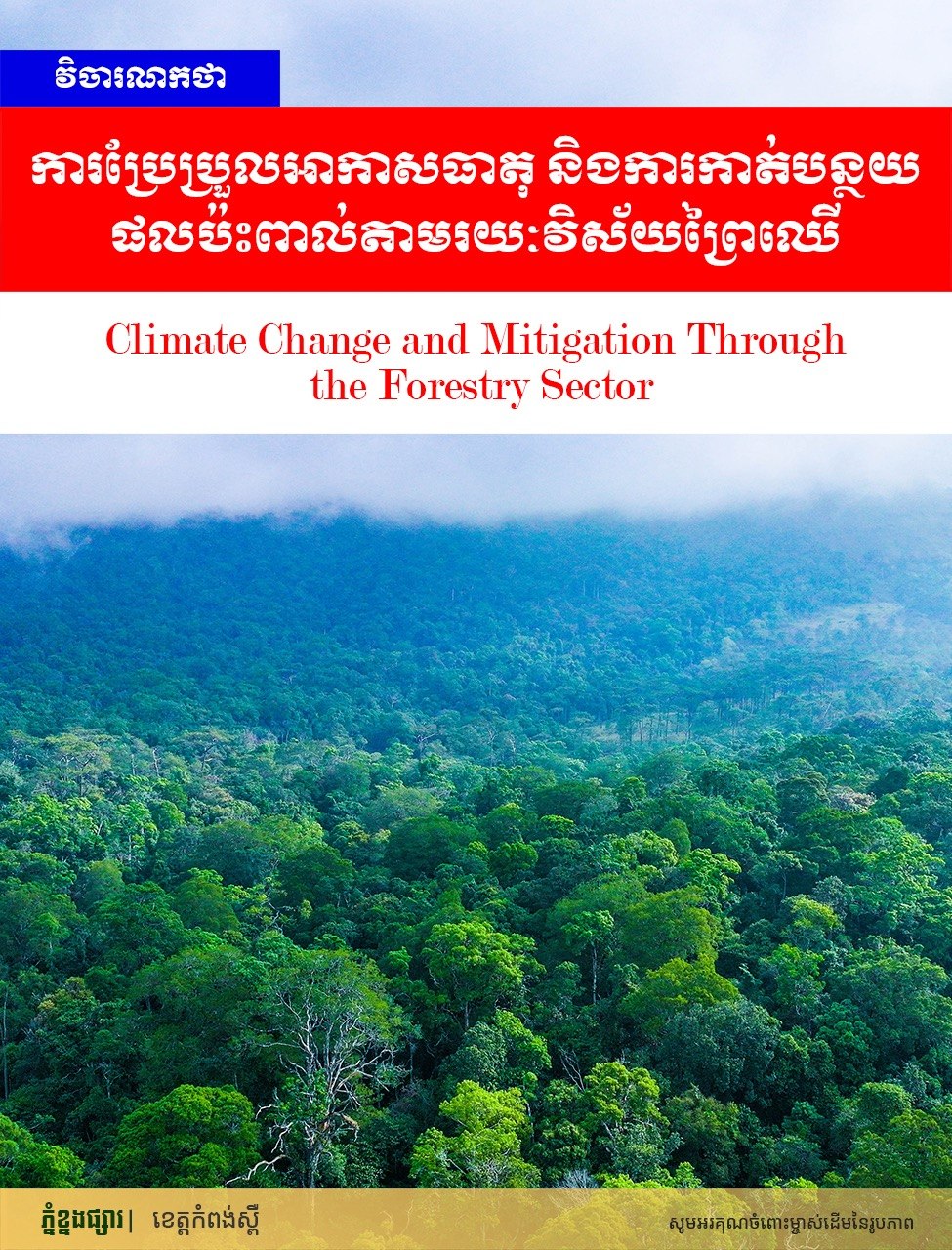
(Phnom Penh): Climate change has become one of the defining global challenges of our time. Rising temperatures, prolonged droughts, severe floods, stronger storms, melting glaciers, wildfires, biodiversity loss, and rising sea levels are increasingly threatening ecosystems, economies, and human societies around the world.
While climate change affects nearly every aspect of life on Earth, one of the most powerful natural defenses against this crisis already exists within the planet itself: forests.
Forests are among the most important allies in the global fight against climate change. They absorb carbon dioxide from the atmosphere, regulate temperatures, protect biodiversity, preserve water systems, stabilize soils, and sustain millions of livelihoods worldwide.
Yet despite their immense environmental value, forests continue to face alarming levels of destruction through deforestation, illegal logging, land conversion, wildfires, and unsustainable exploitation.
The relationship between climate change and forests is deeply interconnected. Climate change damages forests through heat stress, drought, pests, and fires, while the destruction of forests accelerates climate change by releasing enormous amounts of stored carbon back into the atmosphere.
The forestry sector therefore stands at the center of both the climate crisis and its potential mitigation.
Forests function as natural carbon sinks. Through photosynthesis, trees absorb carbon dioxide and store carbon in trunks, branches, roots, and soils. Globally, forests absorb billions of tons of carbon emissions each year, helping slow the accumulation of greenhouse gases in the atmosphere. Tropical forests, boreal forests, mangroves, and peatland forests all play critical roles in maintaining climate balance.
However, global deforestation continues at an alarming pace. Vast areas of forest are cleared annually for agriculture, mining, infrastructure, urban expansion, and industrial activities. Illegal logging and uncontrolled land conversion further weaken ecosystems and biodiversity.
When forests are destroyed or burned, not only is future carbon absorption reduced, but massive amounts of stored carbon are immediately released into the atmosphere, intensifying global warming.
In many regions, forest destruction also disrupts rainfall patterns, contributes to soil erosion, increases flood risks, weakens water security, and threatens indigenous and rural communities that depend directly on forest ecosystems.
Climate change mitigation through the forestry sector therefore represents one of the most cost-effective and immediately available solutions to reduce global emissions.
Protecting existing forests is among the highest priorities. Preventing deforestation and illegal logging can significantly reduce greenhouse gas emissions while preserving biodiversity and ecosystem services. Strong environmental laws, forest monitoring systems, law enforcement, and sustainable land-use planning are essential for safeguarding remaining forest resources.
Reforestation and afforestation are equally important mitigation strategies. Planting trees and restoring degraded forests increase carbon sequestration while improving environmental resilience.
Around the world, many countries are launching large-scale tree-planting campaigns and forest restoration programs to combat land degradation and climate change.
Mangrove forests deserve particular attention because they are among the world’s most efficient carbon sinks. Mangroves protect coastlines from storms and erosion, support fisheries, and store large amounts of carbon in coastal ecosystems. Their conservation and restoration provide both climate mitigation and climate adaptation benefits, especially for vulnerable coastal communities and small island nations.
Sustainable forest management is another critical component of climate mitigation.
Forests can support economic development when managed responsibly through sustainable timber production, ecotourism, non-timber forest products, and community forestry initiatives. Sustainable management ensures that forests continue providing environmental and economic benefits without permanent ecological destruction.
Indigenous peoples and local communities also play an essential role in forest protection. Studies increasingly show that forests managed by indigenous and local communities often experience lower rates of deforestation and better biodiversity conservation.
Recognizing land rights, supporting traditional knowledge, and involving local populations in forest governance strengthen both environmental protection and social justice.
At the same time, the forestry sector faces growing threats from climate change itself. Rising temperatures, prolonged droughts, invasive pests, and large-scale wildfires are increasingly damaging forests across many regions of the world.
The destruction of forests by climate-related disasters weakens the planet’s natural ability to absorb carbon, creating a dangerous cycle of environmental degradation.
This reality highlights the urgency of integrating forestry into broader global climate strategies.
International cooperation remains essential. Climate mitigation through forestry requires financial support, technology transfer, scientific research, and long-term commitments from both developed and developing nations.
Global initiatives such as REDD+ and international forest conservation partnerships reflect growing recognition of forests as critical climate assets.
Governments, businesses, and individuals all have roles to play. Policies encouraging sustainable supply chains, responsible consumption, reduced demand for illegally sourced timber, and investment in ecosystem restoration can support global forest conservation efforts.
Ultimately, climate change mitigation through the forestry sector is not simply about planting trees. It is about protecting the natural systems that sustain life on Earth. Forests regulate climate, preserve biodiversity, secure water sources, support food systems, and protect human communities from environmental instability.
The destruction of forests reflects a broader misunderstanding of humanity’s relationship with nature. For too long, forests were viewed primarily as resources for extraction and short-term economic gain.
The climate crisis now reminds humanity that forests are not obstacles to development; they are foundations of long-term survival and sustainability.
In the end, the future of the global climate will depend significantly on how the world treats its forests. Protecting and restoring forests is not merely an environmental responsibility. It is an investment in climate stability, human health, economic resilience, biodiversity, and the future of civilization itself.
Forests have protected humanity for centuries. Humanity must now protect the forests.
=FRESH NEWS