(Phnom Penh): Tourism has long been one of the world’s most resilient industries, adapting to economic cycles, political changes, and shifting consumer tastes.
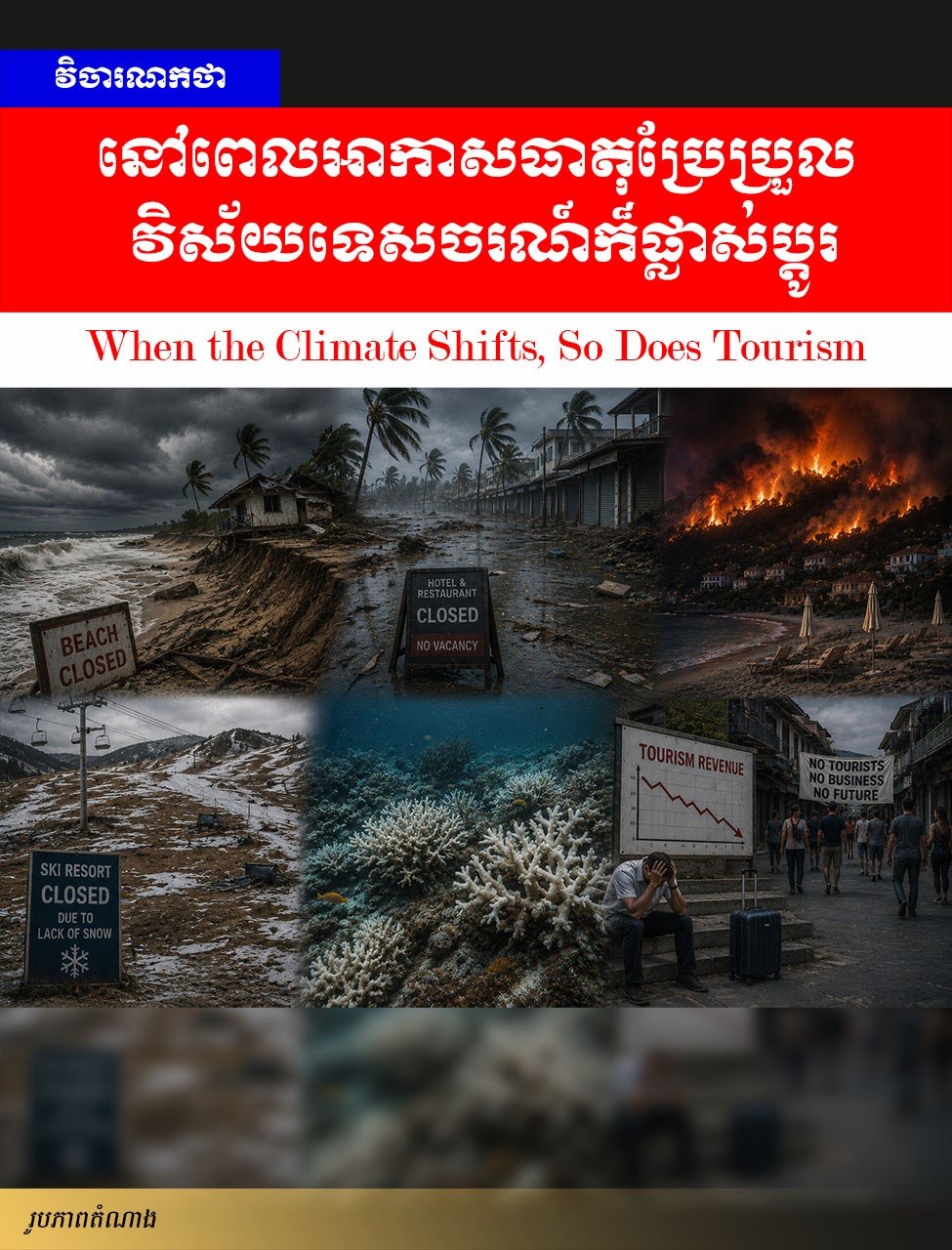
But the accelerating impacts of climate change are testing that resilience in unprecedented ways. From melting glaciers to bleaching coral reefs, the very assets that attract travelers are under threat, forcing a fundamental rethink of how tourism operates in a warming world.
At its core, tourism depends on environmental stability. Beach destinations rely on predictable coastlines and clear waters; mountain resorts depend on reliable snowfall; nature-based tourism thrives on healthy ecosystems and biodiversity. Climate change is disrupting each of these pillars.
Rising sea levels and coastal erosion are shrinking beaches in the Caribbean, Southeast Asia, and parts of Europe. Coral bleaching, driven by warming oceans, is degrading marine attractions that support millions of jobs.
In alpine regions, shorter and less predictable winters are undermining ski tourism, with cascading effects on local economies.
Extreme weather events are adding another layer of uncertainty. Stronger storms, floods, wildfires, and heatwaves are not only damaging infrastructure but also deterring travelers.
A single climate-related disaster can erase an entire season’s revenue for hotels, restaurants, and tour operators. Insurance costs are rising, and in some high-risk areas, coverage is becoming difficult to obtain at all.
The economic implications are profound. Tourism contributes significantly to GDP and employment in many countries, particularly small island developing states and developing economies.
For these destinations, climate change is not a distant environmental issue; it is an immediate economic threat. As conditions deteriorate, destinations risk losing competitiveness, while workers, often in informal or seasonal roles, face increasing income instability.
Yet climate change is also reshaping travel patterns in less visible ways. As temperatures rise, traditional peak seasons are shifting. Destinations once considered too cold are becoming more attractive, while those known for warm climates risk becoming uncomfortably hot.
This redistribution of demand may benefit some regions, but it will require major adjustments in infrastructure, marketing, and workforce planning.
Global frameworks such as the Paris Agreement set the direction for emissions reduction, but the tourism sector must move faster to adapt.
This includes investing in climate-resilient infrastructure, improving risk management, and integrating sustainability into every level of planning, from transport and accommodation to waste management and energy use.
There is also a growing expectation from travelers themselves. Increasingly, tourists are seeking environmentally responsible destinations and experiences.
This shift presents an opportunity: destinations that prioritize conservation, reduce carbon footprints, and engage local communities can differentiate themselves in a competitive market. Sustainable tourism is no longer a niche; it is becoming the industry standard.
However, the transition will not be equal. Large hotel chains and international operators often have the resources to invest in resilience and sustainability.
Small and medium-sized tourism enterprises, which make up the majority of the sector, face greater constraints. Without targeted support, they risk being left behind in the shift toward greener tourism.
The path forward requires coordinated action. Governments must align tourism strategies with climate policies, ensuring that development does not exacerbate environmental vulnerability.
The private sector must invest not only in adaptation but also in reducing its own emissions. And international cooperation is essential to support the most vulnerable destinations, particularly those whose economies depend heavily on tourism.
Tourism has always been about discovering the world. Today, it must also play a role in protecting it.
=FRESH NEWS