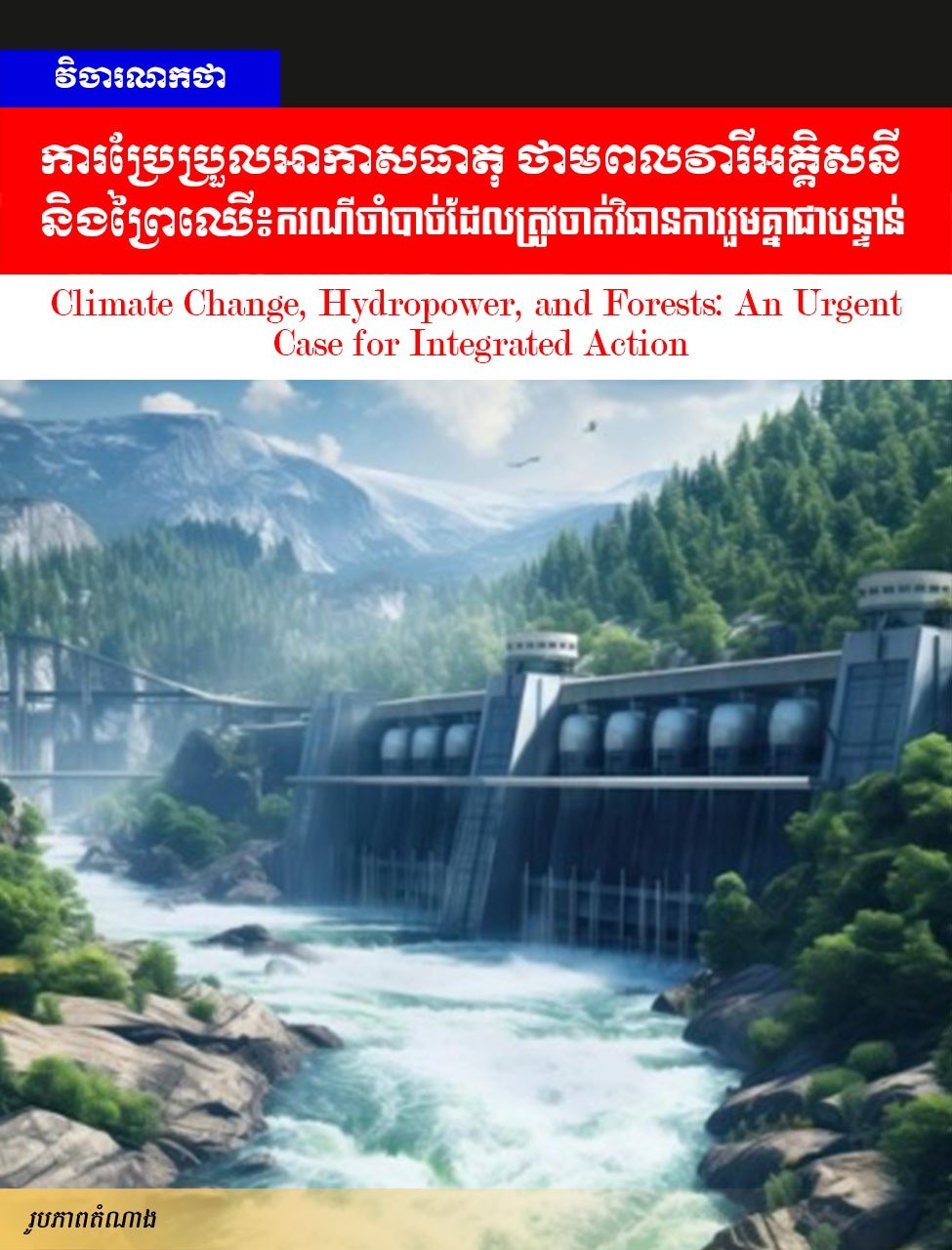
(Phnom Penh): Hydropower has long stood as a symbol of clean energy, renewable, reliable, and central to many national development strategies. But climate change is steadily eroding that reliability. Rivers no longer behave as they once did. Rainfall is less predictable. Droughts last longer.
Floods arrive with greater intensity. In this new reality, the future of hydropower depends not only on engineering, but on something far more fundamental: the health of our forests.
The link is often underestimated. Hydropower is, at its core, a water-dependent system. Climate change disrupts that system by altering precipitation patterns and accelerating evaporation.
Reservoirs run low during extended dry periods, reducing electricity generation. When heavy rains do come, they are often too intense, forcing operators to release water for safety rather than use it for power. The result is increasing volatility in what was once considered a stable energy source.
But climate change does not act alone. The degradation of forests, especially in upstream watersheds, magnifies these impacts. Forests play a critical role in regulating water flow. They absorb rainfall, store it in soil, and release it gradually into rivers and streams. When forests are cleared, this natural regulation collapses.
Rainwater rushes over exposed land, causing floods in the short term and water shortages in the long term. For hydropower, this means less consistent inflow, greater operational uncertainty, and reduced generation capacity.
Equally damaging is sedimentation. Without forest cover, soil is easily eroded and carried into rivers. This sediment accumulates in reservoirs, reducing their storage capacity and shortening the lifespan of hydropower infrastructure.
In many cases, the cost of managing sediment or dredging reservoirs becomes a growing financial burden. What begins as deforestation upstream ends as inefficiency and loss downstream.
This is why forest protection is not just an environmental priority; it is an energy strategy. Protecting existing forests safeguards the natural systems that sustain river flows. It stabilizes water supply, reduces erosion, and enhances the long-term performance of hydropower facilities.
In a climate-constrained world, maintaining these natural buffers is as important as maintaining turbines and dams.
Reforestation offers an equally powerful solution. Restoring degraded landscapes can rebuild the natural water cycle, improve soil stability, and increase resilience to climate variability.
Well-managed reforestation can help regulate seasonal flows, reduce flood risks, and ensure more reliable water availability during dry periods. In doing so, it strengthens the foundation upon which hydropower depends.
Yet, policy and planning often treat these sectors separately. Energy planning focuses on infrastructure. Forestry focuses on conservation. Climate policy focuses on emissions. This fragmented approach is no longer viable.
Hydropower, climate change, and forest management are deeply interconnected. Addressing one without the others leads to incomplete and ultimately ineffective solutions.
Governments must adopt an integrated approach. Hydropower development should include watershed protection as a core component, not an afterthought. Investments in dams must be matched with investments in forest conservation and restoration upstream.
International partners and financial institutions should recognize that funding reforestation is not only climate mitigation, it is also energy security.
The stakes are high. Many countries depend heavily on hydropower for electricity, economic growth, and energy independence. Allowing climate change and deforestation to undermine this resource would be a costly mistake, one that could have been avoided through foresight and coordination.
Hydropower remains a vital part of the clean energy transition. But its future is no longer guaranteed by concrete and steel alone.
It will be secured, or lost, in the forests that surround and sustain it.
The message is clear: protect the forests, restore the land, and you protect the power. Ignore them, and the lights may not stay on.
=FRESH NEWS