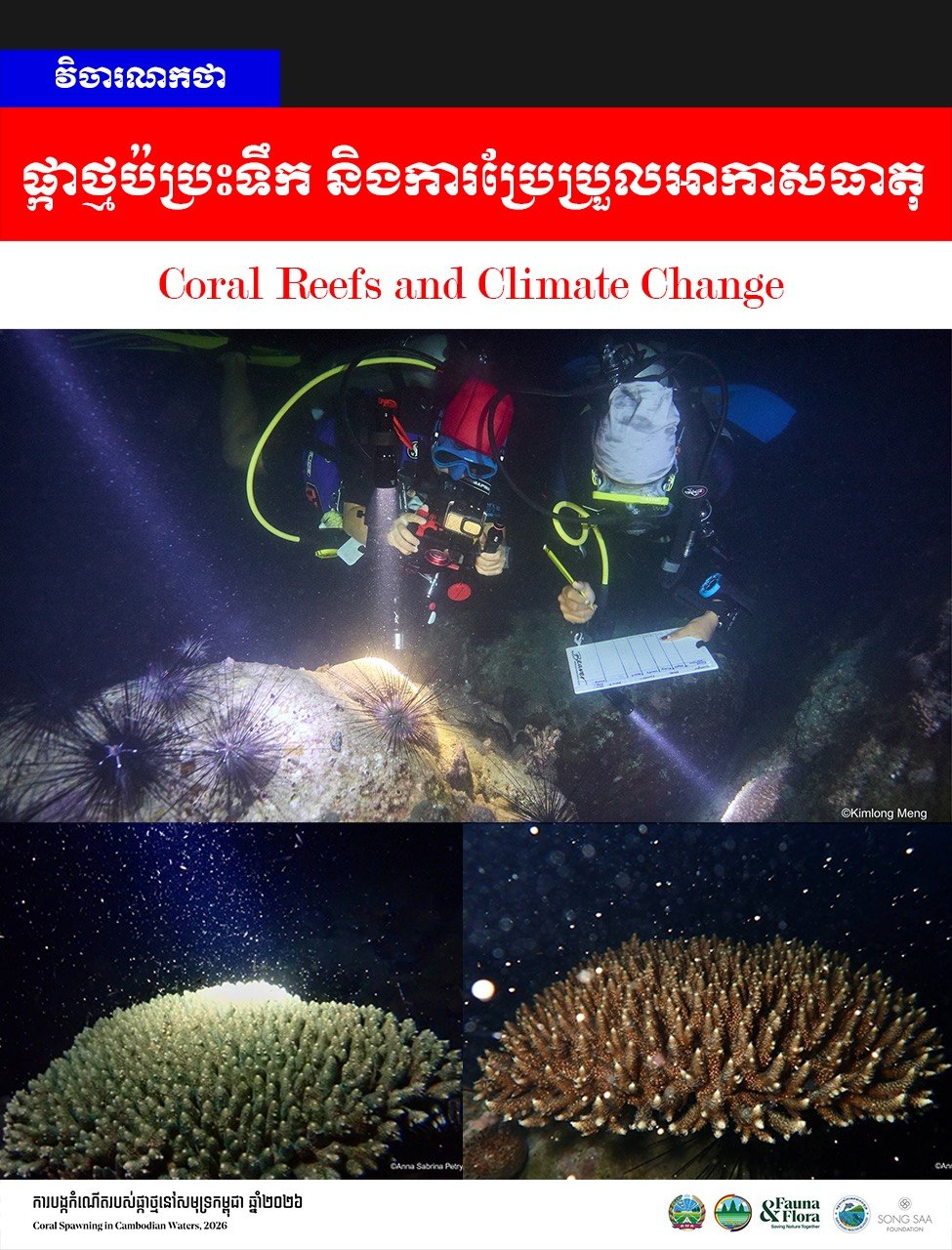
(Phnom Penh): Coral reefs are among the most biodiverse ecosystems on the planet, often referred to as the "Rainforests of the Ocean." They serve not only as vital habitats for marine life but also as natural barriers protecting coastlines from disasters and as a primary economic source for millions of people through fisheries and tourism.
1. The Crisis of "Coral Bleaching"
However, coral reefs are facing increasing threats from climate change. Rising ocean temperatures are the number one enemy of coral health. This phenomenon forces corals to expel the symbiotic algae (Zooxanthellae) that provide them with color and essential nutrients, causing the coral to turn pale or "bleach." If temperatures do not decrease within a specific timeframe, the coral will die, leading to the collapse of the entire marine ecosystem.
2. Ocean Acidification
Furthermore, the increase of carbon dioxide in the atmosphere leads to high levels of Ocean Acidification. The excessive absorption of $CO_2$ from the atmosphere turns seawater acidic. This condition hinders the ability of corals to build strong calcium carbonate ($CaCO_3$) skeletons, leaving them fragile, prone to breakage, and slow to recover or grow.
3. Impacts and Strategic Solutions
The loss of coral reefs leads to severe consequences, including diminished biodiversity, declining fish stocks, and compromised coastal safety. Economies dependent on tourism and fishing are also heavily impacted. To save these precious resources, we must take action:
- National and International Levels: Accelerate the reduction of greenhouse gas emissions to stabilize ocean temperatures.
- Local Level: Strengthen the management of Marine Protected Areas (MPAs), reduce wastewater discharge, and implement "Coral Restoration" techniques.
Conclusion
Protecting coral reefs is a commitment to protecting the future of our oceans and human livelihoods. Close cooperation in conservation will ensure that our seas remain healthy, vibrant, and beautiful for all generations to come.
=FRESH NEWS