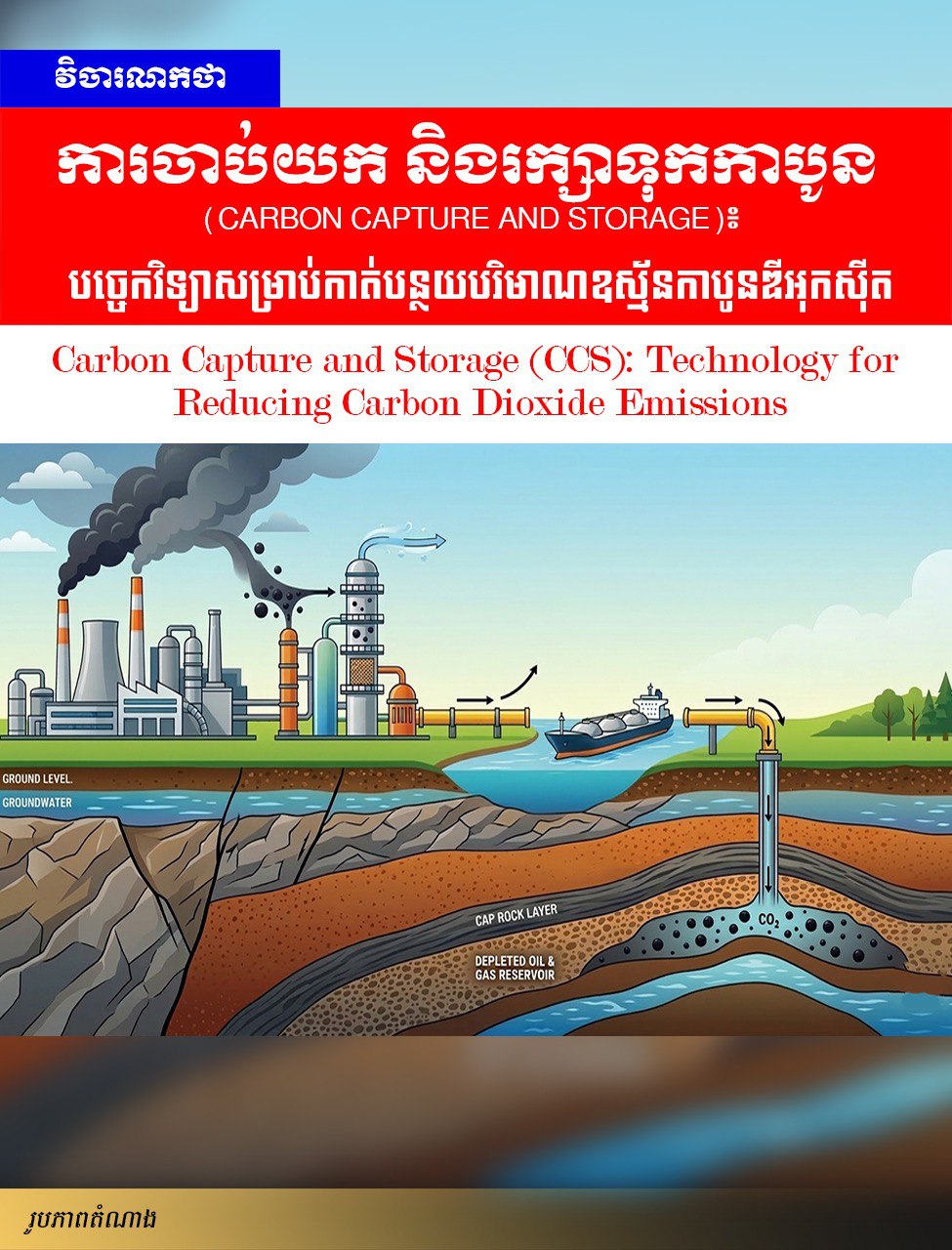
(Phnom Penh): Carbon Capture and Storage (CCS) is a technology developed to reduce the amount of carbon dioxide (CO2) released into the atmosphere. It works by capturing carbon dioxide from industrial processes and power plants, transporting it, and then storing it safely underground. This technology is considered a vital tool in the fight against climate change.
1. The CCS Process
This technology consists of three primary stages:
Capture: Separating CO2 from large emission sources, such as power plants, cement factories, and steel mills, before it is released into the air.
Transport: Once captured and compressed, the CO2 is transported via pipelines or ships to designated sites suitable for storage.
Storage: The CO2 is injected into deep underground geological formations (such as depleted oil and gas reservoirs or deep saline aquifers) to be stored permanently. These underground layers can hold carbon dioxide for a long duration, preventing it from returning to the atmosphere.
2. Challenges and Potential
Although CCS is an effective solution for heavy industries where emissions are difficult to reduce, it requires high investment, advanced infrastructure, and rigorous monitoring to ensure the absolute safety of the carbon stored underground.
Conclusion
In summary, Carbon Capture and Storage is a crucial mechanism for slowing down the pace of climate change. When integrated with renewable energy, it becomes a powerful driver in pushing the world toward a low-carbon future and environmental sustainability.
=FRESH NEWS