(Phnom Penh): When a border line becomes the dividing threshold between a nation’s survival and its loss, war does not begin only with the sound of gunfire. A new battlefield is spreading every day—on smartphones, on social media, and inside people’s emotions. In this battlefield, one does not need to carry a weapon to “shoot.” Words, lies, and incitement can become ammunition—aimed not at defending the homeland, but at splitting the nation from within and destroying social cohesion.
As Cambodia faces mounting pressure from outside, national security does not depend on weapons or the armed forces alone. It depends—just as critically—on national unity and the stability of leadership. Calls to “topple” or “change power,” framed around territorial issues, form a highly dangerous formula: they can turn a border crisis into a state crisis—an accelerated path toward losing not only the future, but also the capacity to protect the nation’s territory, if society underestimates this threat.
From Lies to Incitement: A Tactic to Destroy Unity and Undermine the State from Within
In recent days, social media messaging from extremist groups abroad has shown a clear pattern: the use of false information, inflammatory language, and incitement—calling for the overthrow of the Royal Government, while exploiting territorial issues as a political pretext. These narratives do not merely distort facts; they also belittle the state’s capacity at a time when national resources and every available means are being mobilized to protect territory and safeguard citizens—despite escalating external threats.
Such insults and incitement cannot be treated as ordinary criticism. They represent a form of information warfare, aimed at dividing society, destroying public trust, and destabilizing the state from within.
The logic behind this tactic is stark: if trust in state institutions is destroyed, society fractures; if society fractures, national defense capacity weakens; and when that capacity weakens, external adversaries can exploit the moment and strike more easily. That is why, when society is divided, an external enemy does not need to win with weapons—a nation can defeat itself through the collapse of unity and the erosion of public trust in state institutions.
Therefore, as Cambodian citizens, we must not fall into the trap of incitement promoted by a small group led by Sam Rainsy and his associates.
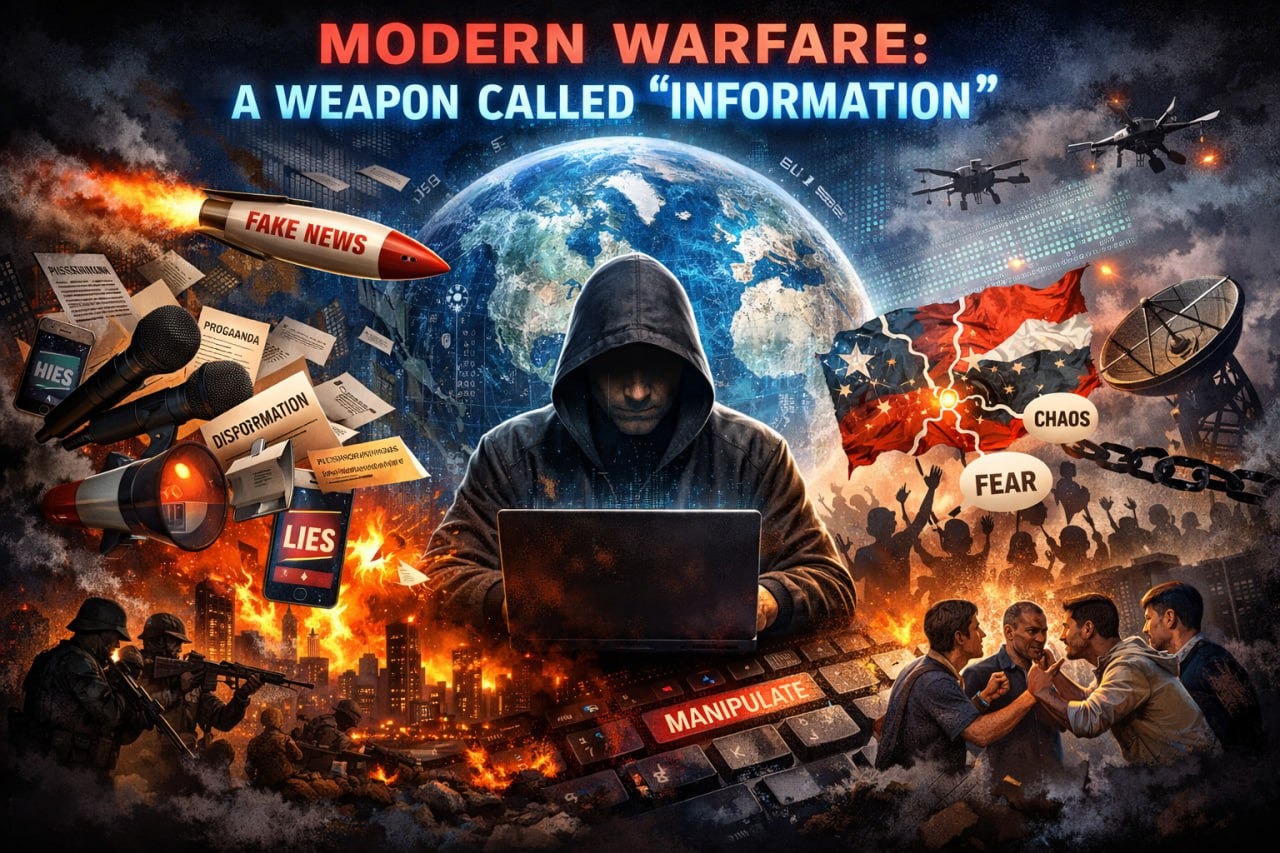
Modern Warfare: A Weapon Called “Information”
Across the world, many international institutions have repeatedly warned that disinformation, incitement, and divisive speech can destroy social cohesion and undermine state stability—much like another category of weapon. In modern conflict, information has shifted from a tool of communication to an instrument of psychological and political attack—capable of injuring society without a single shot fired.
At first glance, such falsehoods may seem harmless to some. But when repeated again and again—without timely clarification or effective rebuttal—the consequences become severe. Ignoring disinformation is equivalent to allowing it to cultivate division, suspicion, and distrust of state institutions—a time bomb for national security.
Why is it so dangerous? Because when society fractures, an external enemy does not need to defeat us with arms or military force—we can lose through our own internal weakness, through fear, fragmentation, and the collapse of mutual trust.
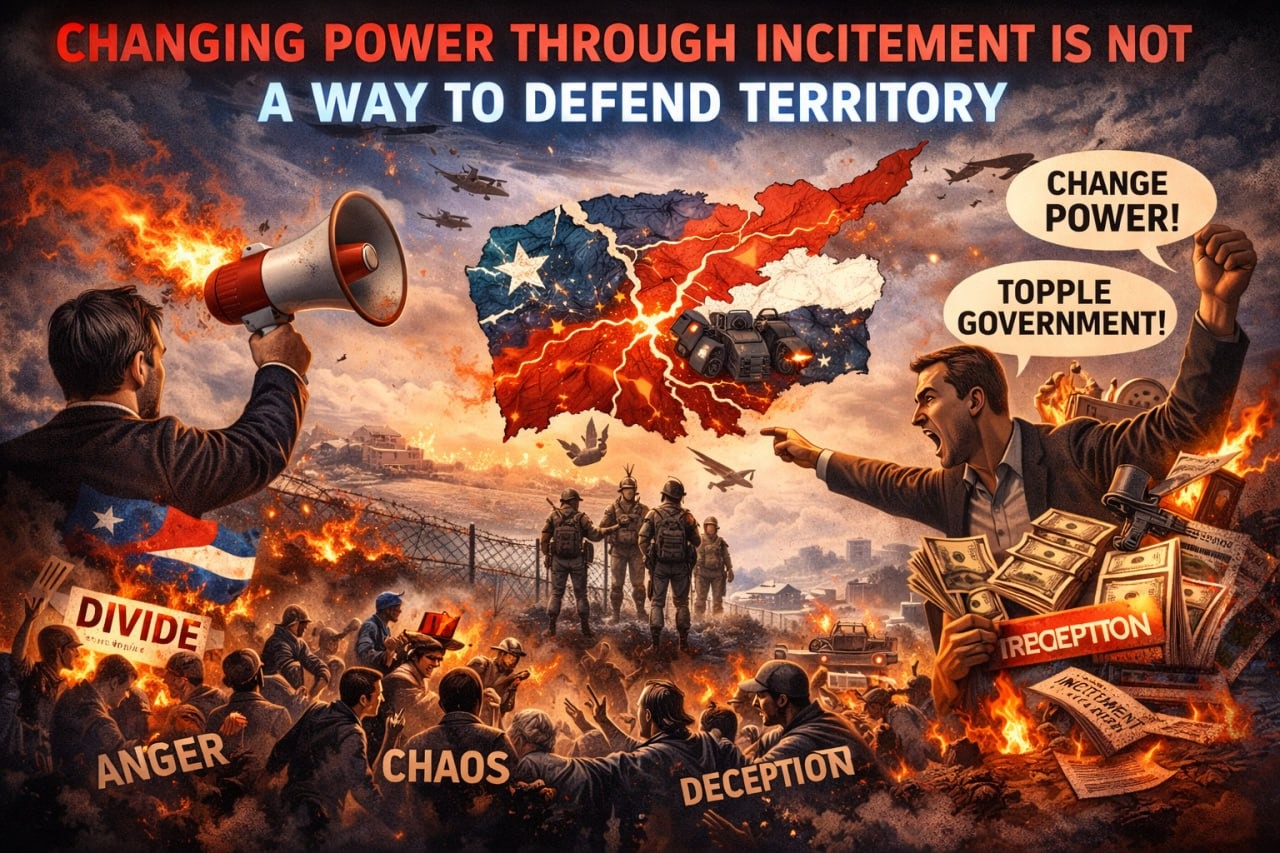
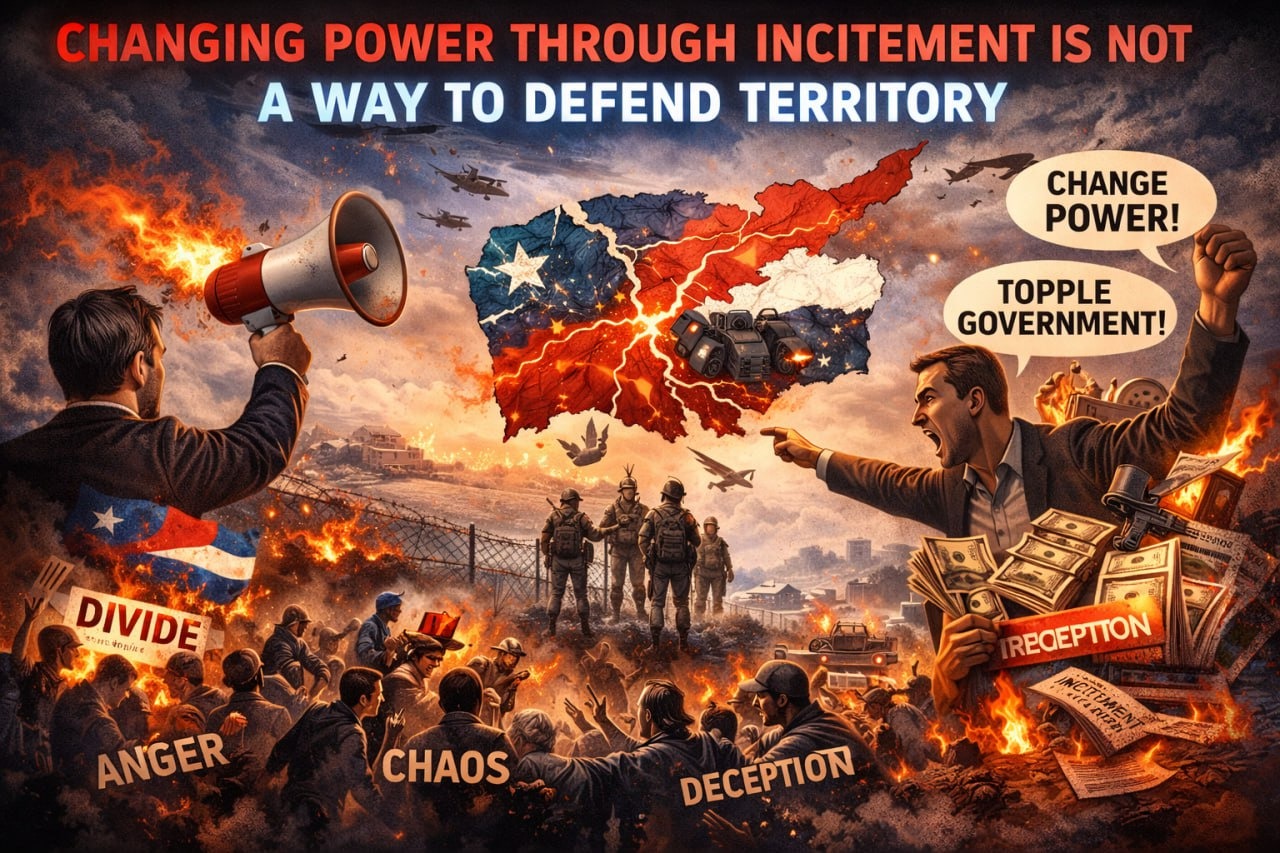
Changing Power Through Incitement Is Not a Way to Defend Territory
In times of national crisis, one principle must be upheld with discipline: criticism must be evidence-based and responsible. Freedom of expression is not a license for reckless speech without accountability. Using distorted narratives and incitement to call for overthrowing the government while the nation faces war is a toxic tactic—one that can shatter stability and weaken national unity.
Inciting a “change of power” by exploiting territorial concerns is not a method of defending the homeland. On the contrary, it converts a national crisis into a political weapon—fueling internal division and weakening the country’s capacity to defend itself. In recent history, there is no credible evidence that the opposition group led by Sam Rainsy and his associates has carried out concrete duties in defending territory or played a responsible, results-based role in resolving national crises during wartime.
In reality, political agitation from abroad often leaves their own activists to bear the consequences—while the leaders themselves fail to demonstrate responsibility for the wellbeing and fate of those who suffer. This style of politics relies more on stirring emotions and misleading the public than on offering real solutions and taking responsibility for national interests.
For these reasons, citizens should not believe incitement that seeks to destroy stability and national unity. If we allow incitement to seize control of public emotion, the nation’s hope and stability can dissolve. Defending territory and protecting the country’s future require unity, stability, and responsibility—not speech designed to tear society apart.
How Do We Respond to Keep National Unity Strong?
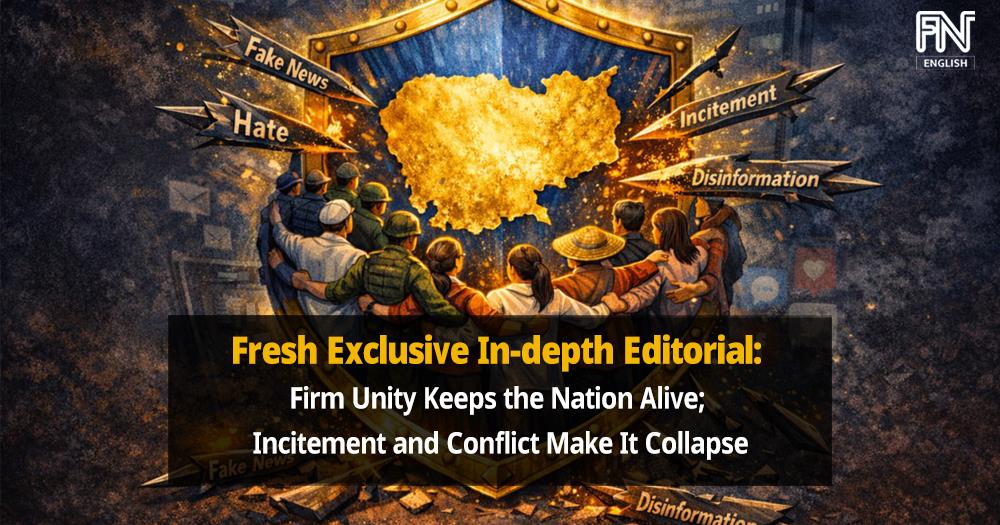
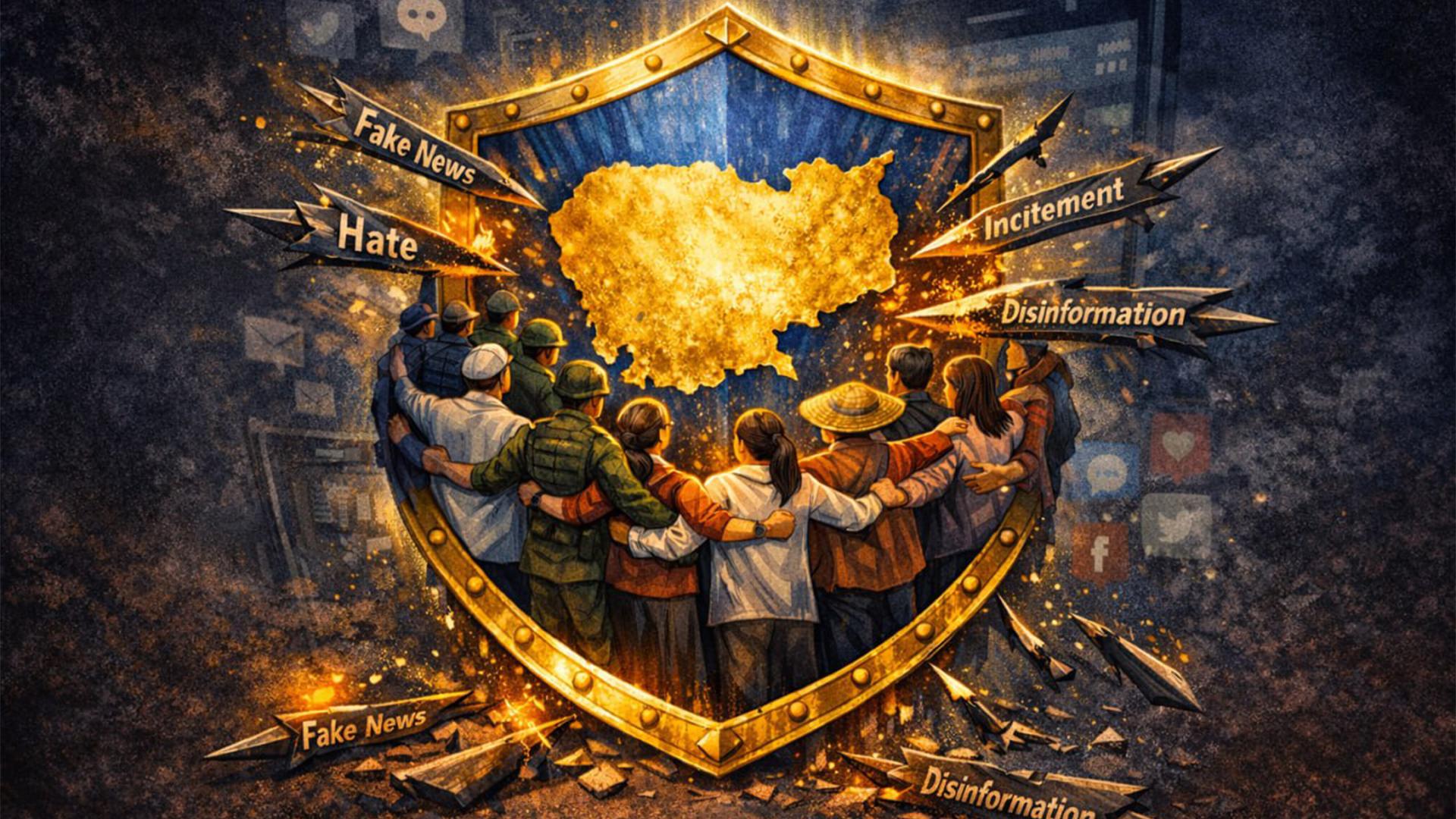
This is the most critical moment for Cambodians to stand together as one and use unity as a protective shield against negative forces attempting to weaken society. A wise and responsible response is not to join “word wars” or retaliate with raw emotion, but to close the gate to disinformation—so it cannot dominate public feeling.
To help the public understand clearly, every citizen should explain three common tactics used to undermine stability and unity:
1. The Division Tactic: separating “the nation” from “the state,” to weaken society and destroy trust in institutions.
2. The Distortion Tactic: using harsh, inflammatory language without evidence, or twisting facts to ignite anger.
3. The Target-Shifting Tactic: when external pressure rises, redirecting anger inward to gain political profit.
A strong society is not one that silences citizens—as critics claim—but one that speaks with evidence, thinks with reason, and accepts responsibility for words. International institutions such as the OECD and UNESCO have consistently encouraged countries to strengthen defenses against disinformation by promoting access to reliable information, media education, and citizens’ critical thinking skills.
In short, protecting national unity is not about silence—it is about standing firmly with truth, evidence, and responsibility. When people understand the tactics and stand together, disinformation and incitement lose their power on their own.
Conclusion
Today, war does not only strike the ground—it strikes society’s belief and trust. Therefore, defending territory is not the duty of the armed forces alone; it also requires protecting state stability, national unity, and public awareness. A country that collapses internally is a country that risks losing its future. A country strengthened by unity has the power to withstand external pressure and defend its territory over the long term.
The message that all Cambodians must carry today is simple: defending the homeland requires national unity first. We will not allow the enemy to use incitement and division as a weapon to destroy us. When the nation faces crisis, we must stand firmly and confidently with national institutions and with unity—so the country has strength, direction, and resolve.
“Firm unity keeps the nation alive; incitement and conflict make it collapse.”